Waves
fill in the blanks
Photosynthesis
Engineering
Planets
100
What defines the amplitude of a wave?
a. The distance between the crest of a wave and its trough
b. The maximum displacement of a point on the wave from its rest position
c. The distance between two consecutive crests or troughs
d. The number of waves that pass a point in one second
b. The maximum displacement of a point on the wave from its resting position.
(how high or low a wave is from resting point)
100
To find the __________ of the __________ in meters per __________, we use the formula: speed = distance/_______.
Use 4 of these words:
speed wave miles second time distance
To find the __speed____ of the __wave____ in meters per ____second_, we use the formula: speed = distance/_time__.
100
Which part of the plant conducts photosynthesis?
a. flowers
b. stem
c. roots
d. leaves
d. leaves
100
7. Which of the following are examples of constraints in an engineering
challenge?
a. You can only use paper and tape to build the bridge
b. The bridge must be at least 3 feet long
c. The bridge must hold at least 50 pounds
d. You cannot spend more than $100,000 on materials to build the bridge
a. You can only use paper and tape to build the bridge
d. You cannot spend more than $100,000 on materials to build the bridge
100
Think about what you have learned about mass and gravity. Which planet is
likely to have the strongest gravitational pull?
a. Mars
b. Neptune
c. Jupiter
d. Venus
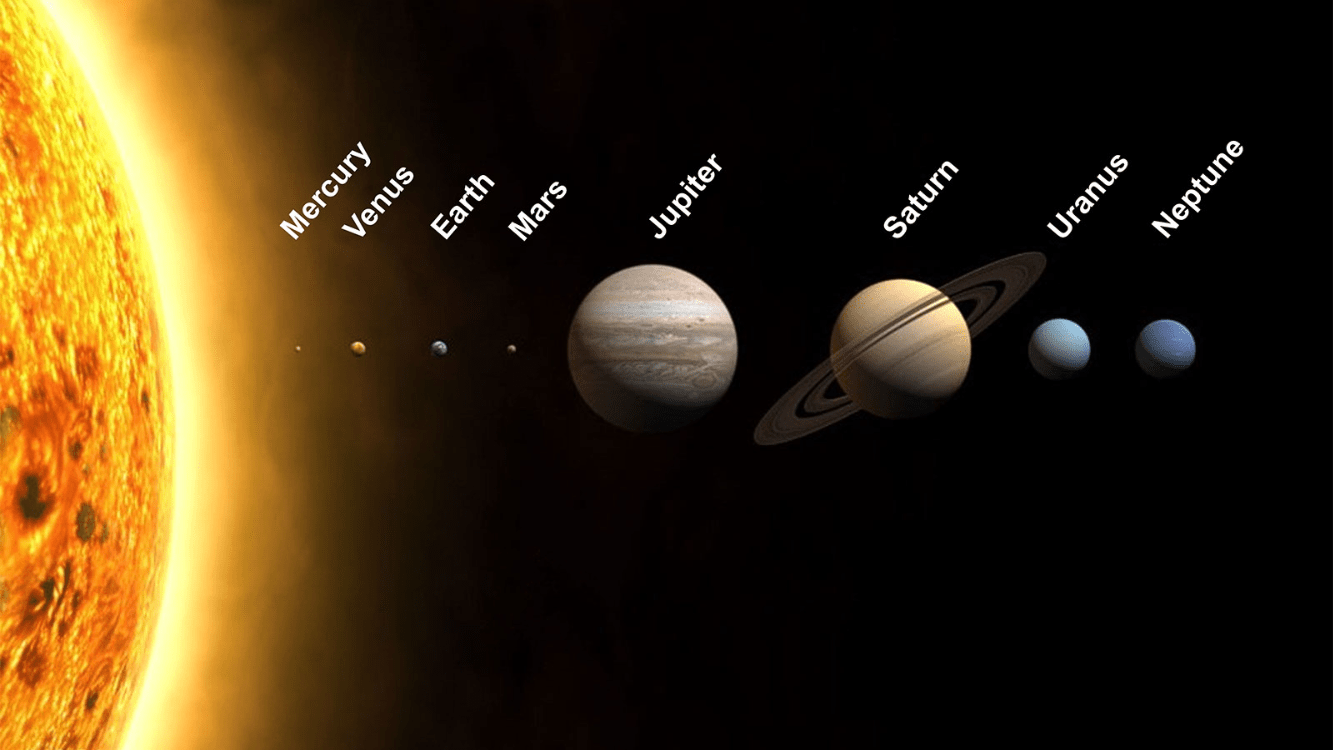
c. Jupiter
200
If a wave as a frequency of 10 Hz and a wavelength of 2 meters, what is its speed?
a. 5 m/s
b. 10 m/s
c. 12 m/s
d. 20 m/s
d. 20 m/s
200
A ___________ farther from the Sun not only has a longer orbit than a closer planet does, but it also travels _______ since the Sun’s ________________ pull on it is weaker. Therefore, the larger a planet’s ___________, the longer the planet takes to complete it.
Use four of the words to fill in the blanks
path slower rotation orbit gravitational planet
A _planet_ farther from the Sun not only has a longer orbit than a closer planet does, but it also travels __slower__ since the Sun’s _gravitational__ pull on it is weaker. Therefore, the larger a planet’s _path_, the longer the planet takes to complete it.
200
What are the two main ingredients needed for photosynthesis?
a. sunlight and water
b. soil and water
c. nutrients and soil
d. carbon dioxide and soil
a. sunlight and water
200
8. In an engineering project, what are criteria?
a. steps to follow to complete the project
b. Rules that limit how you can solve a problem
c. Features that the final product must have to be successful
d. A list of materials you can use in your project
c. Features that the final product must have to be successful
200
Which planet is closest in size to Earth?
a. Mars
b. Neptune
c. Mercury
d. Venus
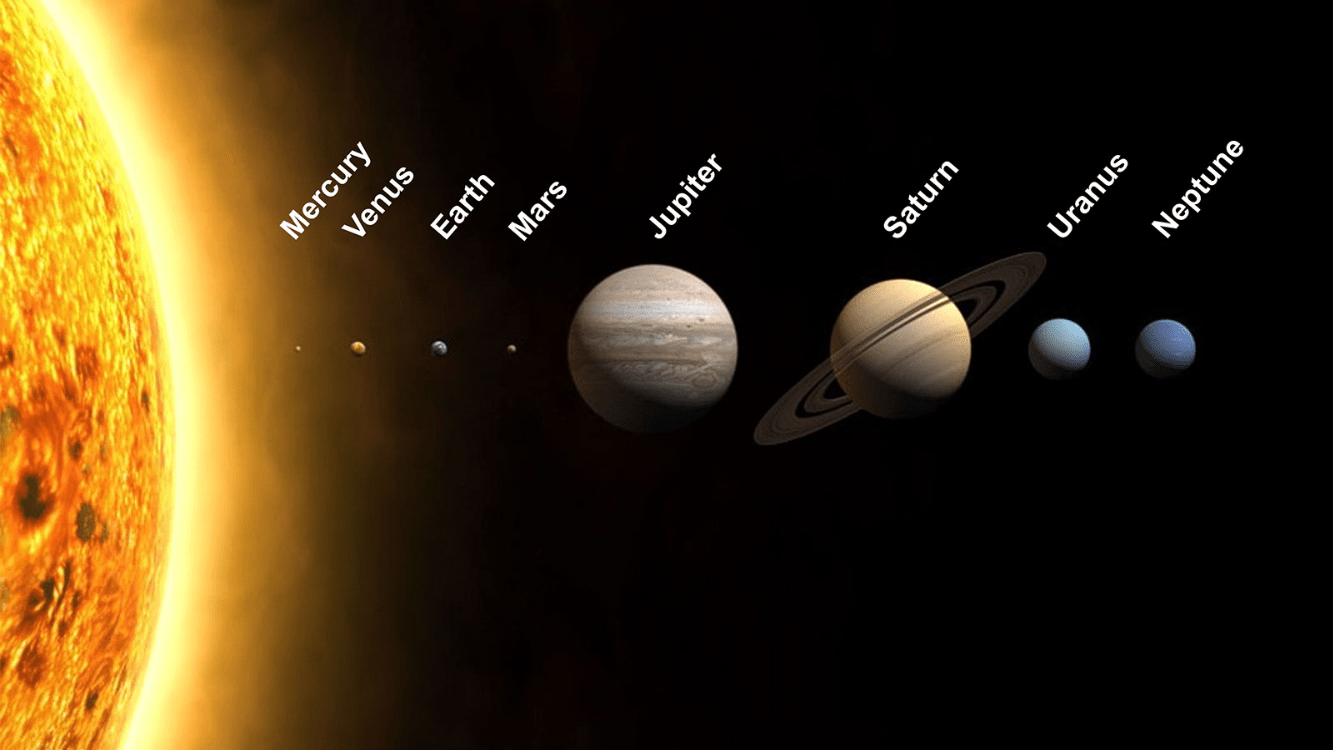
d. Venus
300
When a wave is absorbed by a material, what happens to the wave's energy?
a. It is reflected into the medium from which it came
b. it is transmitted through the material without loss
c. It is converted into other forms of energy within the material
d. it increases the amplitude of the wave
c. It is converted into other forms of energy within the material
300
What does the diagram demonstrate?
a. The parts of a plant and how they function
b. Plants and animals need water to live
c. Plants take in carbon dioxide and release oxygen
d. Plants consume soil for food
e. All of the above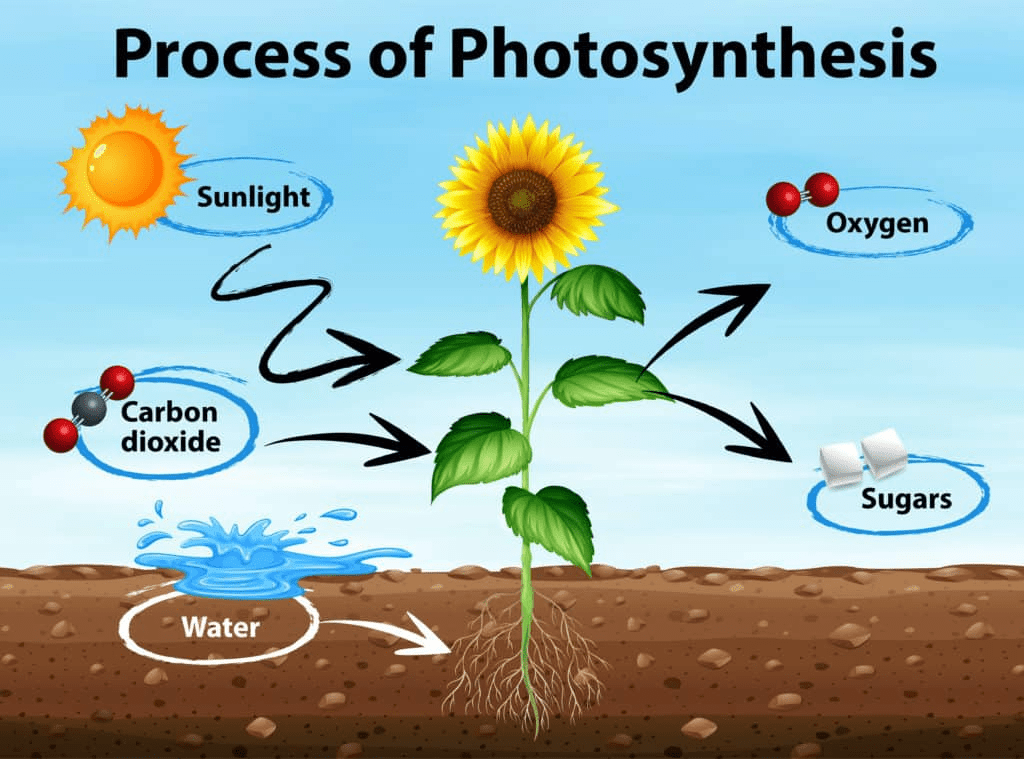
c. Plants take in carbon dioxide and release oxygen
300
Jupiter's diameter is about 11 times that of the Earth’s, and the Sun's diameter is about 10 times Jupiter’s.
If you made a scale model and had the
Earth at 1mm. What would the approximate
diameter of Jupiter be?
a. 11 mm
b. 11 cm
c. 11.2mm
d. 111mm
a. 11 mm
400
5. A wave travels 300 meters in 6 seconds. What is the speed of the wave in meters per second (m/s)?
a. 50 m/s
b. 20 m/s
c. 1800 m/s
a. 50 m/s
400
Which statement is supported by the evidence in the text and photo?
a. The number of moons a planet has is directly related to its diameter
b. Jupiter is about 100 times the diameter of the Earth
c. Mars is about half the size of the Earth
d. The Sun is the largest object in our solar system
e. Mercury is the smallest planet in the solar system
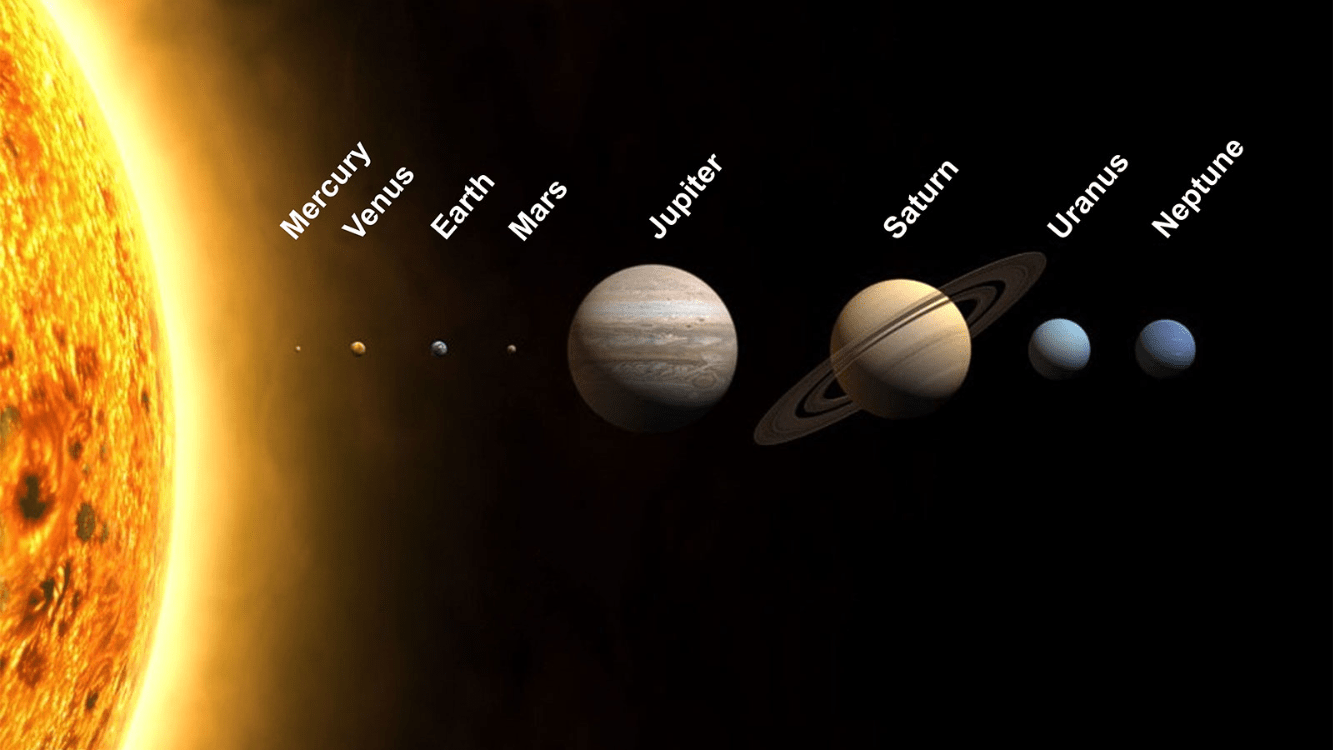
Jupiter's diameter is about 11 times that of the Earth’s, and the Sun's diameter is about 10 times Jupiter’s.
c. Mars is about half the size of the Earth
d. The Sun is the largest object in our solar system
e. Mercury is the smallest planet in the solar system
500
Which statements are true about digital signals? (3)
a. Digital signals represent information using a series of 0s and 1s
b. Digital signals can only be used for audio and video data
c. Digital signals are less susceptible to interference and noise compared to analog signals
d. Digital signals represent information using a series of waves
e. Digital signals allow for easy storage and retrieval of data
a. Digital signals represent information using a series of 0s and 1s
c. Digital signals are less susceptible to interference and noise compared to analog signals
e. Digital signals allow for easy storage and retrieval of data
500
You and your 6th-grade class are designing a playground. It must include safety features like foam mats and ramps for people in wheelchairs. It must also include some climbing equipment. The playground can only take up 1800 sq ft, and you have a maximum budget of $40,000 dollars. The playground must be completed in 6 months.
Identify the following as either criteria or constraints.
a. The playground must include ramps for wheelchair access, ensuring that
children of all abilities can enjoy the playground
b. Foam mats to cushion falls that comply with local safety standards
c. The maximum budget for the project is $40,000
d. The playground area is capped at 1800 square feet
e. The playground must feature some form of climbing equipment
f. The playground must be completed in 6 months
a. Criteria
b. Criteria
c. Constraint
d. Constraint
e. Criteria
f. Constraint