Energy
Heat Transfer
Weather & Climate
Biomes & Ecosystems
Resources and Human Impact
100
Stored energy
What is potential energy?
100
The energy of heat
What is thermal energy?
100
The source of the energy for convection on Earth
The Sun
100
Living and non-living factors in an ecosystem, respectively.
What are biotic and abiotic factors
100
A resource that is limited due to geologic processes.
What is a nonrenewable resource?
200
The law that states that energy can neither be created nor destroyed, only converted from one form of energy to another.
What is the Law of Conservation of Energy?
200
The heat transfer that occurs when warm air rises and cool air sinks.
What is convection?
200
Between the land and the sea, the one that heats and cools the fastest.
What is the land?
200
The biome in which there are many trees that lose their leaves seasonally.
What is the temperate deciduous forest?
200
Wind turbines, solar panels, hydroelectric dams, and biomass
What are alternative energy sources? (Also acceptable: renewable resources)
300
The two factors that affect kinetic energy
What are mass and speed?
300
The energy transformation that occurs that causes this man's hands to burn as he takes a hot pot off the stove with his bare hands.

What is conduction?
300
The largest system of ocean currents that transports water and heat around the world.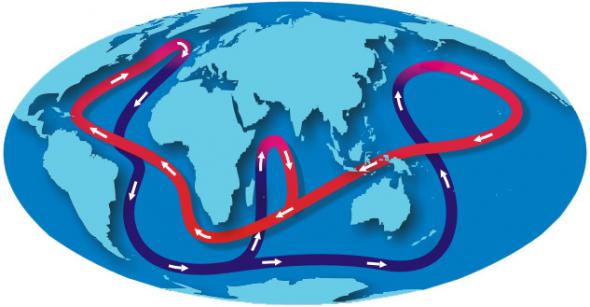
What is the Global Conveyor Belt?
300
In this food web, the source of energy for the goat AND that organism's ecosystem role.

What is the green plant and producer?
300
The type of mining that involves removing huge amounts of land and causes a decrease in biodiversity.
What is surface mining?
400
The point at which kinetic energy is the highest as this pendulum swings.

What is point 3?
400
The type of heat transfer that occurs when the Gulf Stream brings warm ocean water from Florida to England.

What is convection?
400
The city that is most likely experiencing CLOUDS but will see CLEAR SKIES soon.

What is Cleveland?
400
The amount of energy found in each organism that is successfully passed on to the next trophic level. Explain what happens to the rest of the energy.
What is 10%? The other 90% is lost as heat, used by the organism, and/or not consumed as bones/fur/etc.
400
The 3 types of resources that emit carbon dioxide into the atmosphere
What are coal, oil, and natural gas?
500
Explain the transformation of energy as a person stretches and releases a rubber band sling shot.
When the person stretches the sling shot, it gains elastic potential energy. As they release the sling shot, the elastic potential energy transforms into kinetic energy.
500
A crayon placed on a dark driveway in bright sunlight melted into a colorful puddle. Explain the energy transformations that occured that caused the crayon to melt.
Solar radiation heated the driveway and then heat transferred to the crayon by conduction
500
The maps show a front as it moves east across the United States. Identify the front and describe the weather change that can be expected for Amarillo, Texas.

The cold front will bring cooler temperatures with thunderstorms and rain, which causes the moisture in the warm air to condense and release large amounts of energy.
500
Explain the patterns in a predator-prey model.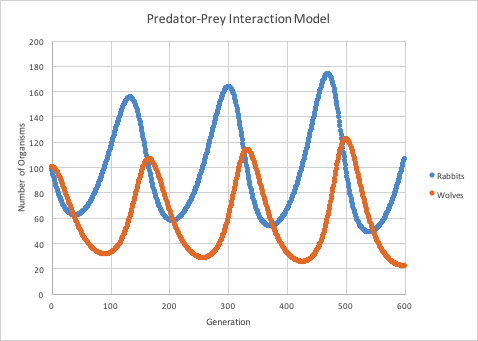
The prey population will drop/rise first, and the predator population will follow.
The populations will rise until they exceed their carrying capacity.
500
Explain the major steps of the hydrologic cycle.
(must name at least 5!)
Water vapor evaporates from water or through transpiration. Water vapor condenses into clouds then falls as precipitation. It either enters the groundwater through infiltration or becomes surface runoff.