Ecosystems
Ecosystems 2.0
Water
Types of Energy
Energy 2.0
Random
100
Which factor is a biotic element of an Arctic tundra?
A strong wind
B cold temperature
C snowy owl
D frozen soil
C snowy owl
100
A coniferous forest biome has long, cold, snowy winters. It contains pine and spruce trees, elk, moose, and gray wolves. Which factor is an abiotic element in this biome?
A moose
B spruce trees
C snow
D gray wolves
C snow
100
Which best explains why cold-water currents flow beneath warm-water currents?
A Cold water is more dense than warm water.
B Cold water contains less pollution than warm water.
C Warm water contains more oxygen than cold water.
D Warm water has more potential energy than cold water.
A Cold water is more dense than warm water.
100
The energy of a bow changes when the string is pulled back.
Which change will occur in the bow after the string is released?
A Nuclear potential energy will decrease.
B Elastic potential energy will decrease.
C Chemical potential energy will increase.
D Gravitational potential energy will increase.
B Elastic potential energy will decrease.
100
Lighting a match is best described as a transformation of
A mechanical energy into potential energy.
B kinetic energy into potential energy.
C chemical energy into light and heat energy.
D electrical energy into heat and chemical energy.
C chemical energy into light and heat energy.
100
The blades of a wind turbine are moving. The wind that moves the blades is caused by the
A density currents generated in oceans.
B atmosphere being unevenly heated.
C formation of cumulus clouds.
D buildup of greenhouse gases.
B atmosphere being unevenly heated.
200
A new organism has been discovered in an isolated forest area. This new organism is multicellular and receives nutrition from dead trees. How will this organism most likely be classified?
A producer
B decomposer
C scavenger
D predator
B decomposer
200
Which set of abiotic factors is typical in rain forest biomes?
A warm temperatures and large amounts of precipitation
B hot temperatures and very little precipitation
C cool temperatures and low amounts of precipitation
D extremely cold temperatures and freezing precipitation
A. warm temperatures and large amounts of precipitation
200
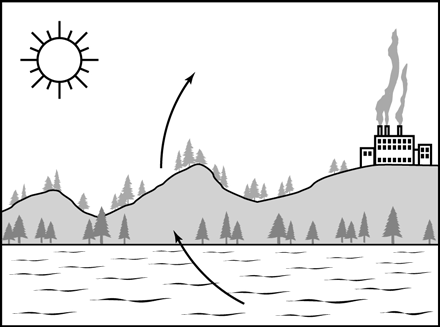 The arrows in the diagram represent air movement.This air movement is a result of
A the waves pushing against the land.
B the sun heating the land and water differently.
C water evaporating from plant leaves.
D particles of pollution entering the air.
B the sun heating the land and water differently.
200
A circuit contains a battery, wires, and a buzzer. The diagram represents the energy transformations that
occur in the circuit.
Chemical Energy to ? to Sound Energy
Which type of energy is needed to complete the diagram?
A Gravitational Energy
B Light Energy
C Electrical Energy
D Heat Energy
C Electrical Energy
200
A solar panel absorbs energy from the sun and transforms some of the energy into electrical energy. Which best explains what happens to the remaining energy?
A The remaining energy increases.
B The remaining energy is destroyed.
C The remaining energy is absorbed into the air.
D The remaining energy changes into other forms.
D The remaining energy changes into other forms.
200
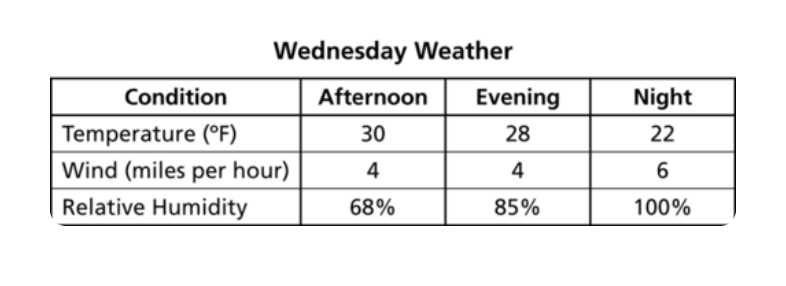 The table below shows some weather conditions on a Wednesday. Based on the data in the table, which weather prediction is best for Thursday?A warm with a possibility of rain
B cold with a possibility of snow
C hot with clear skies
D cool with gusty winds
B cold with a possibility of snow
300
Which question would best help a student classify an organism as a decomposer?
A Does it feed on plants?
B Does it break down dead material?
C Does it use sunlight to make its own food?
D Does it have parts that attract pollinators?
B Does it break down dead material?
300
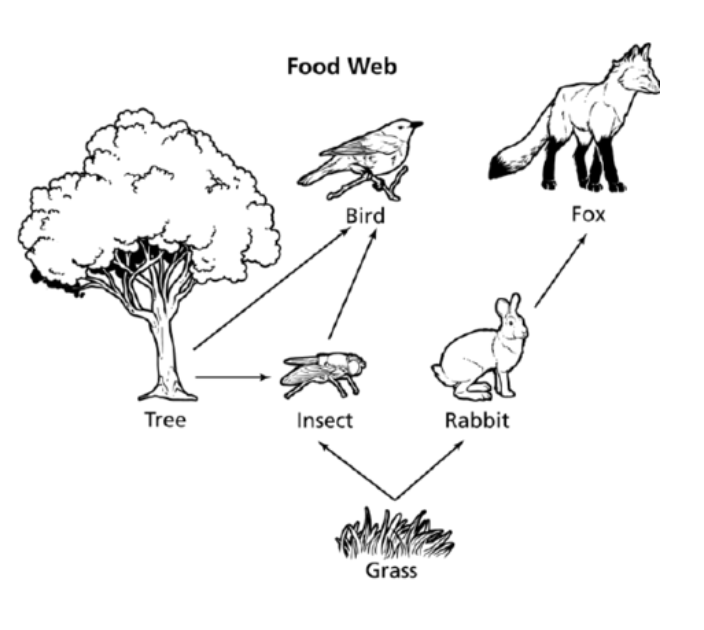
A food web is shown.
Which two organisms from this food web are both classified as consumers?
A Tree and Bird
B Insect and Fox
C Rabbit and Grass
D Grass and Tree
B Insect and Fox
300
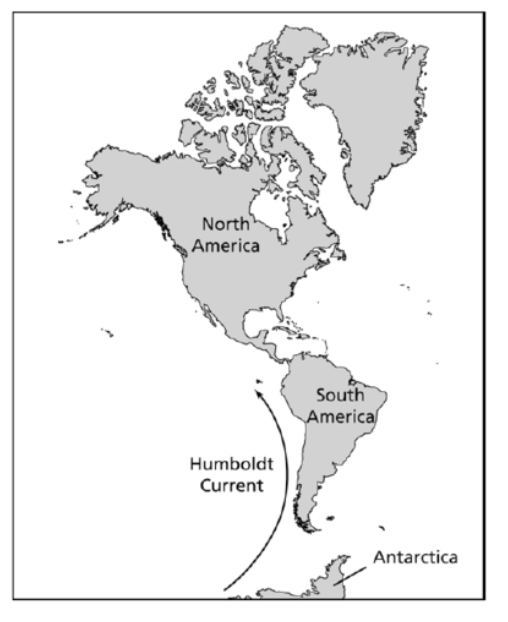
The diagram shows the location of the Humboldt Current. Which of these best describes the Humboldt Current?
A a cold current that carries cold water from the pole northward to the tropics
B a cold current that carries cold water from the tropics southward to the pole
C a warm current that carries warm water from the pole northward to the tropics
D a warm current that carries warm water from the tropics southward to the pole
A. a cold current that carries cold water from the pole northward to the tropics
300
When a lamp is turned on, only about 10% of the energy is transformed into light. What happens to the rest of
the energy?
A The remaining energy is destroyed.
B Energy that is not transformed into light becomes thermal energy.
C The rest of the energy is changed into a solid state of matter.
D Energy is recycled back into the electrical circuit.
B Energy that is not transformed into light becomes thermal energy.
300
When a student pressed the button on a battery-powered flashlight, the light bulb began to glow. The first step in this energy transformation is mechanical. What are the next steps in this energy transformation?
A electrical to light to chemical
B chemical to electrical to light
C chemical to light to electrical
D electrical to chemical to light
B chemical to electrical to light
300
The diagram shows the movement of air during a thunderstorm. The rising and falling of air during a thunderstorm directly results from
A lightning.
B precipitation.
C heat convection.
D cloud formation.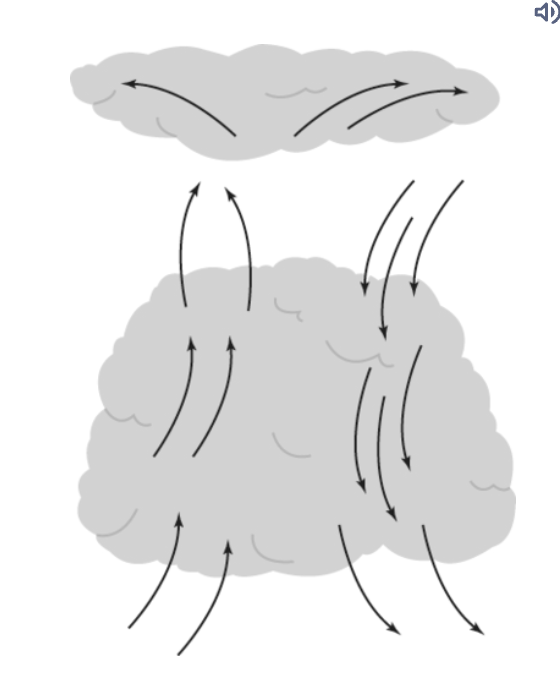
C heat convection.
400
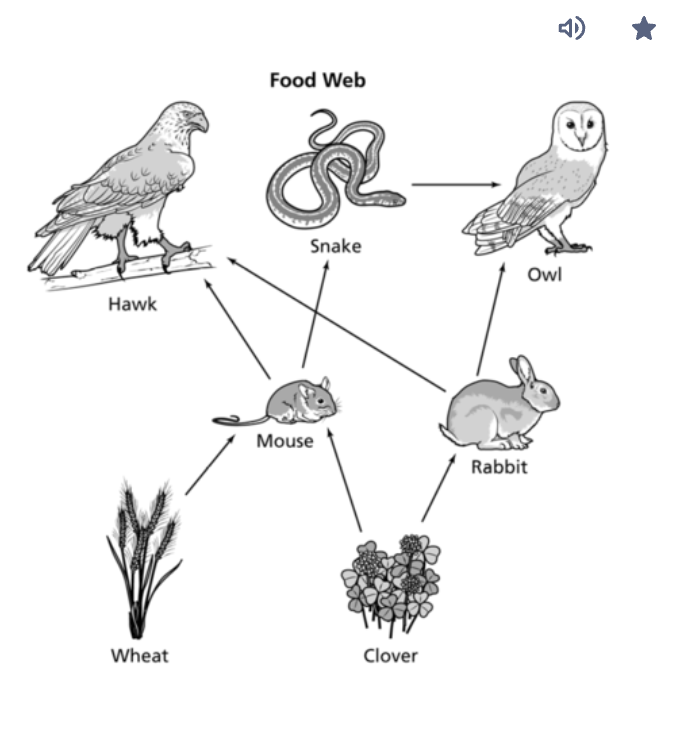
Which animal from this food web receives energy directly from producers?
A Hawk
B Snake
C Owl
D Mouse
D Mouse
400
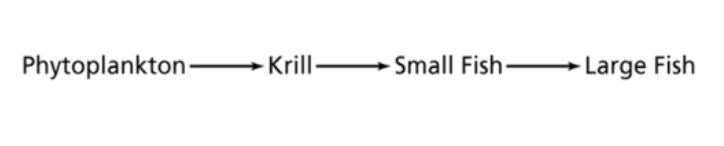
An ocean food chain is shown.
What is the role of krill in this food chain?
A scavenger
B producer
C consumer
D decomposer
C consumer
400
What causes differences in air pressure on earth?
Unequal heating of the earth by the sun
400
Which best demonstrates a transformation of chemical energy into mechanical energy?
A a marble rolling down a track
B a lantern burning fuel
C a match lighting a candle
D a motorcycle using gasoline
D a motorcycle using gasoline
400
Upgrade: free 7-day trial

- Science
- Earth Science
- Environmental Science
Save
Groups
TN READY 6th Grade SCIENCE REVIEW from old TCaP practice
12 studiers today
3.4 (9 reviews)
Flashcards
Learn
Test
Blocks
Blast
Match
The drawing shows a student pressing down on a spring and then letting go. What happened to the energy that the student used to push the spring down?
A The spring absorbed a different kind of energy.
B The spring returned the energy to the student.
C The spring modified some of the energy into matter.
D The spring changed the energy into a different kind of energy.
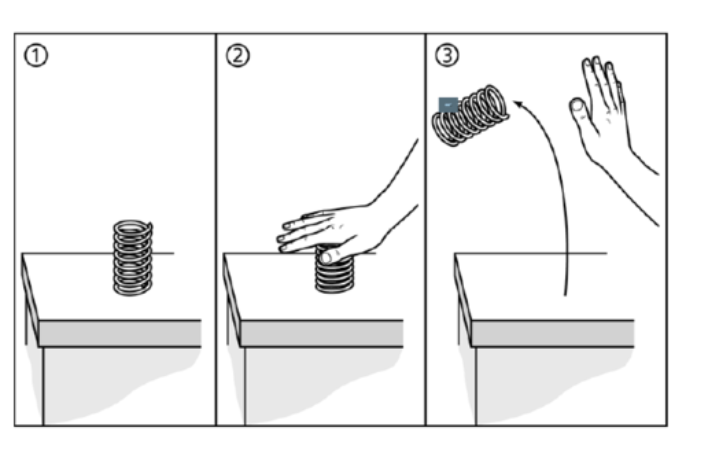
D The spring changed the energy into a different kind of energy.
400
Which condition will most likely lead to the formation of winds on Earth?
A the shifting of tectonic plates
B geothermal activity
C the rotation of Earth on its axis
D uneven heating of Earth's surface
D uneven heating of Earth's surface
500
Leeches usually live in freshwater ecosystems. Leeches feed on the blood of other animals, such as fish. The leeches do not kill the fish, but the fish are weakened by the leeches. Which best describes the relationship between leeches and fish?
A predator-prey
B consumer-scavenger
C producer-decomposer
D parasite-host
D parasite-host
500
What is an energy pyramid?
A triangular diagram that shows in ecosystems loss of energy.
500
Which of the following processes increases the density ocean water?
increasing salinity
500
The diagram shows a toy car on a ramp.
At which point on the ramp will the toy car have the greatest kinetic energy?
A 1
B 2
C 3
D 4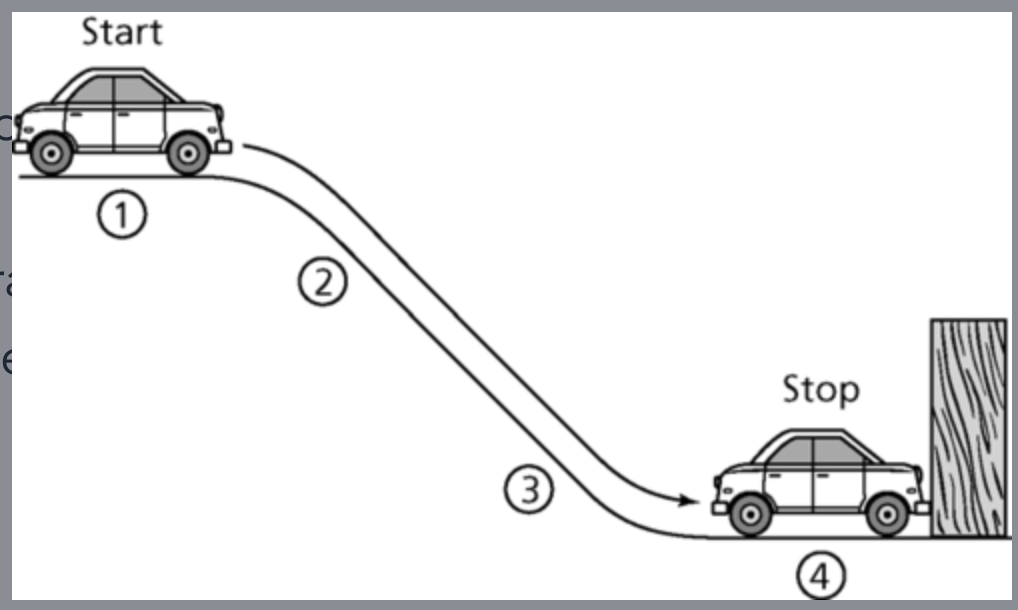
C 3
500
A tire swing is shown.
As the tire swings back and forth, a relationship occurs between which two types of energy?
A heat and electromagnetic
B mechanical and nuclear
C potential and kinetic
D physical and chemical

C potential and kinetic
500
Wind causes the blades of a windmill to turn.
The energy in the wind that causes the blades of a windmill to turn is produced by the
A clouds.
B oceans.
C rain.
D sun.
D sun.