What in Translation?
てーててててーてて
Cause
かんじ・カタカナ
これはなんですか
100
Translate the following:
I forgot my homework.
しゅくだいをわすれました。
100
Translate the following:
Please open the window.
まどをあげてください。
100
Translate the following:
ばんごはんをつくりましょうか。
Shall I make dinner?
100
Read out loud and Translate the following:
外国に行って、おいしいコーヒーをのみます。
I go to a foreign country and drink delicious coffee.
100
Translate the following:
A: I have no money.
B: That's tough, isn't it?
A: おかねがありません。
B: たいへんですね。
200
Translate the following:
メアリーさんはソラさんにきょうかしょをかります。
Mary borrows a textbook from Sora.
200
Turn these verbs into て-form:
1. あむ
2. はいる
3. いく
4. せんたくする
1. あむ → あんで
2. はいる → はいって
3. いく → いって
4. せんたくする → せんたくして
200
Translate the following:
きのうあまりねませんでした。たくさんしゅくだいがありましたから。
Yesterday I barely slept. (Because) I had a lot of homework.
200
Turn these words from romaji/hiragana to katakana.
1. にゅーよーく
2. ja-narisuto
3. ばすけっとぼーる
4. shoppingumo-ru
1. にゅーよーく → ニューヨーク
2. ja-narisuto → ジャーナリスト
3. ばすけっとぼーる → バスケットボール
4. shoppingumo-ru → ショッピングモール
200
バーベキューに行きます。Which of the following would you not find?
1. ハンバーガー
2. シャワー
3. サラダ
4. ファイル
5. フライドチキン
2 and 4 (シャワー、ファイル)
300
Translate:
つぎのページをよんでください。
Please read the next page.
300
Translate the following:
May I use my personal computer in class?
クラスでパソコンをつかってもいいですか。
300
Translate the following:
This Japanese homework is hard, isn't it? Shall I help you?
このにほんごのしゅくだいはむずかしいですね。てつだいましょうか。
300
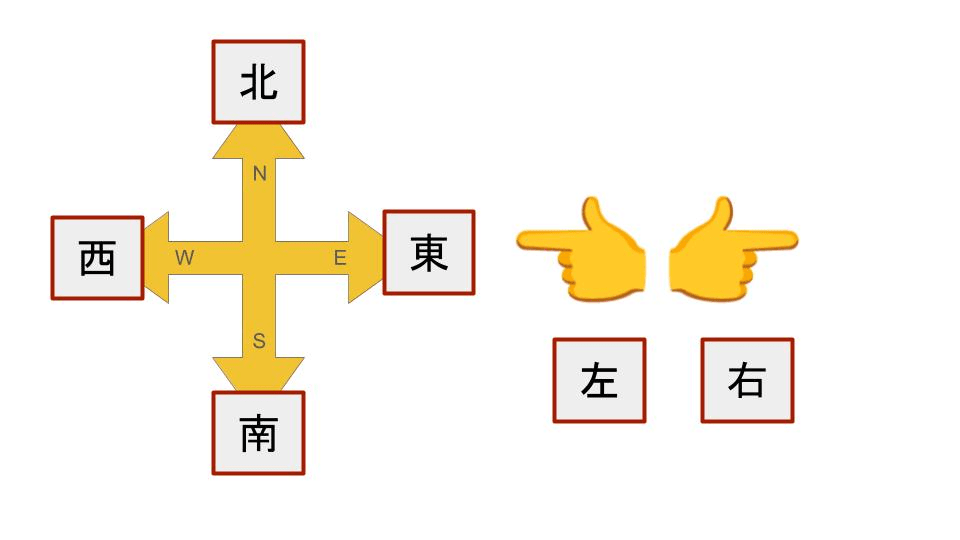
Fill in the blanks:
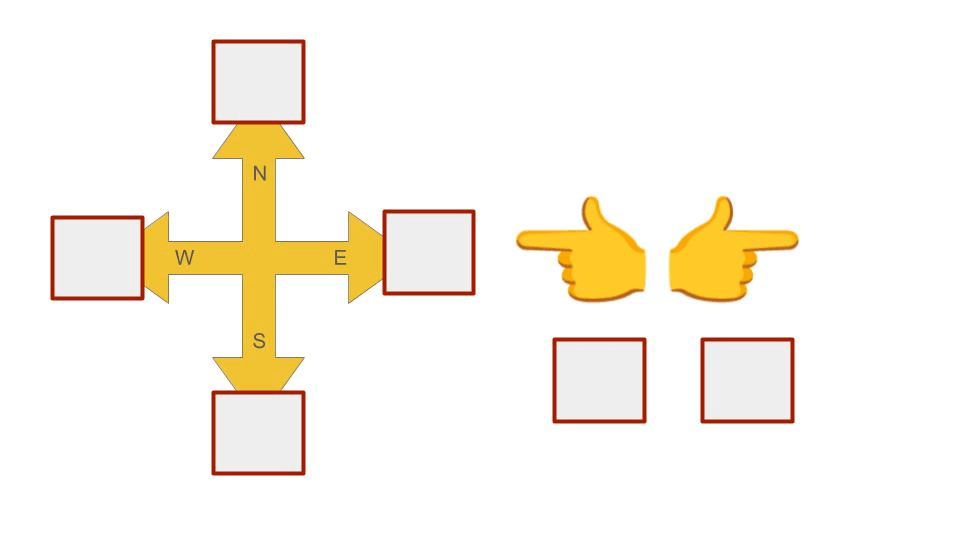
Kanji Box:
右、左、口、出、東、西、分、南、北、外、国
300
Translate the following:
Because it is 12:30, I will shower and go to sleep. Good night.
じゅうにじはんですから、シャワーをあびて、ねます。おやすみなさい。
400
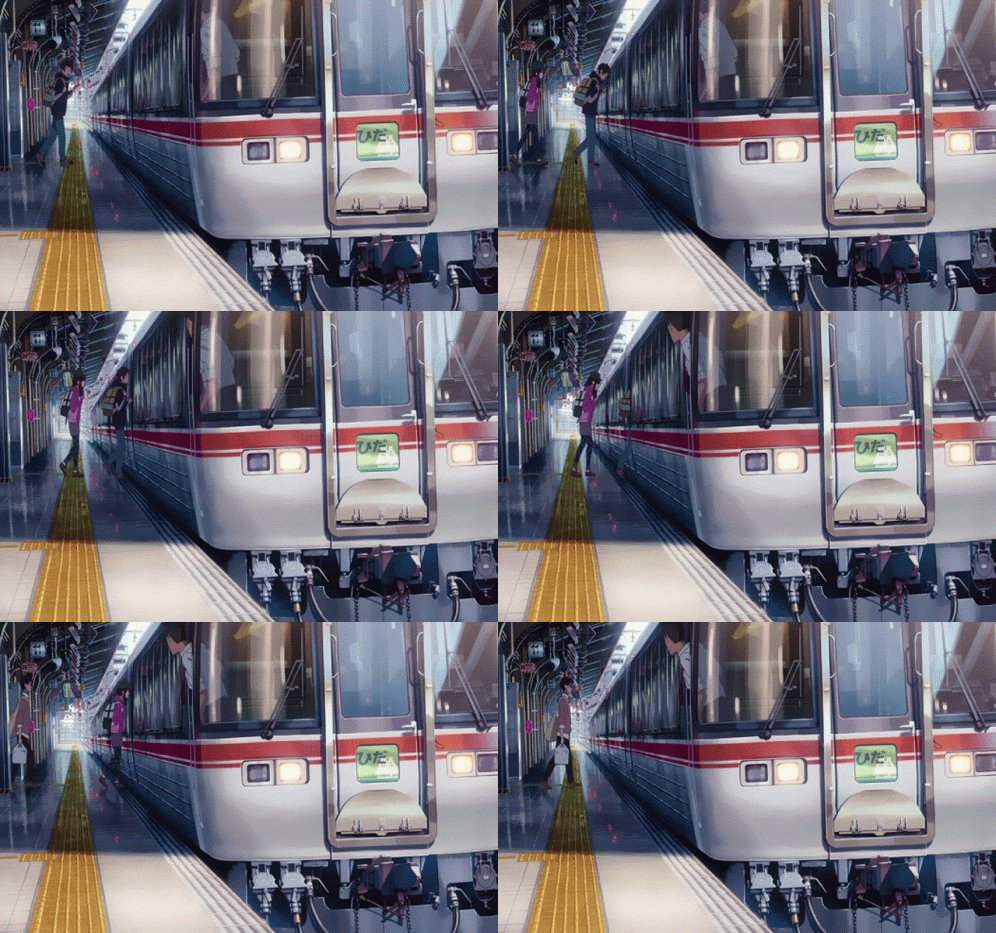
Translate:
にもつをもって、でんしゃをのって、すわりました。
I carried/held my bag, boarded the train, and sat down.
400
Make a full sentence about something a teacher told you you were not allowed to do in class (using て-form)
Ex. You must not use your phone, You must not talk (when the teacher is teaching), You must not eat.
クラスで________てはいけません。
Ex. クラスででんわをつかってはいけません。
400
Using から in your response, respond to the following statement.
せんしゅうまつテレビを見ましたか。
[open answer]
Ex. はい、見ました。にちようびにスーパーボウルがありましたから。
Ex. あまりテレビを見ませんから、せんしゅうまつもみませんでした。

400
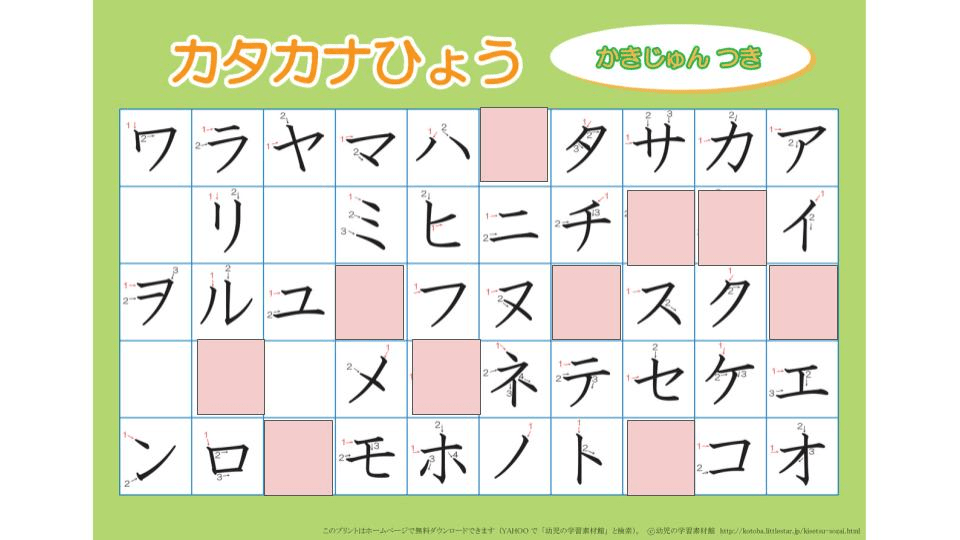
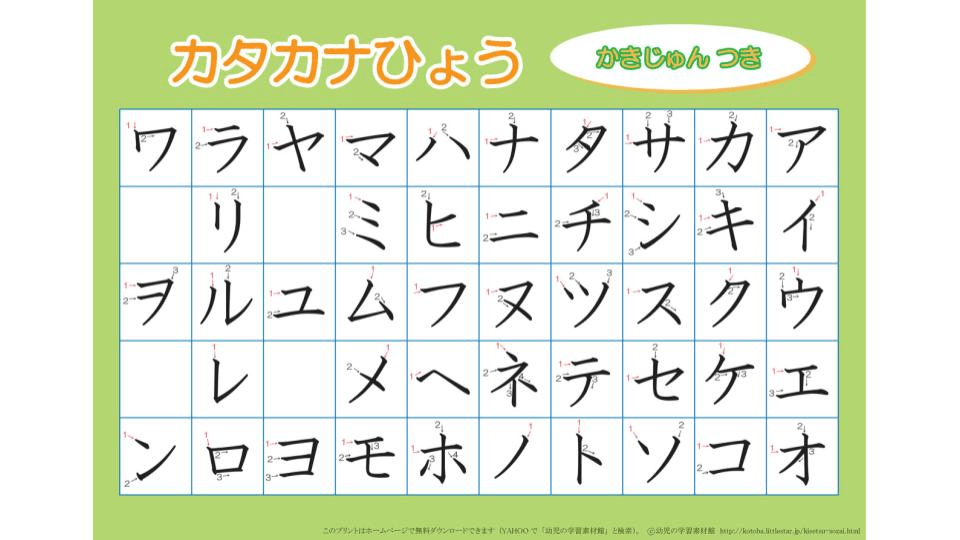
Fill in the katakana chart
400
Read Aloud and Translate the following:
A: パーティーにケーキをもってきましょうか。
B: いいえ、けっこうです。シーさんはケーキをかいましたから。
A: Shall I bring a cake to the party?
B: No, thank you (or no, it's fine). (Because) Shi bought cake.
500
Translate:
At night, I take a shower, turn off the light, and sleep.

よる(に)シャワーをあびて、でんきをけして、ねます。
500
How do you conjugate る and う-verbs in て-form?
(Hint: You may sing the song)
る → て
_______
う-verbs (final character...)
う、つ、る → って
む、ぶ、ぬ → んで
す → して
く → いて (exception: いく → いって)
ぐ → いで
くる → きて
する → して
500
Translate the following:
Because there are kids here, you must not smoke.
ここでこどもがいますから、たばこをすってはいけません。
500
Read the sentence out loud + Translate:
フィリップス先生は大学でエアコンをつけて、アイスクリームを食べます。あついですから。
Answer (for Translation):
Professor Phillips turns on the AC at the college and eats ice cream. (Because) it is hot.
500
Translate the following, then answer with a full sentence.
すみません、いそぎましたから、さいふをわすれました。おかねをかりてもいいですか。
Excuse me, because I was hurrying, I forgot my wallet. Can I borrow (some) money?
[answer: open]
Ex. はい、どうぞ。
Ex. すみません。わたしもおかねがありません。ごめんなさい。