Story Elements
Figurative Language
Grammar/Writing Wednesday
Point of view
Irony
The Giver
Vocabulary
100
The bell rang as backpacks slammed shut. Students poured into the hallway, weaving past lockers while teachers called out reminders about homework.
Question:
Identify the setting of this passage.
A school hallway between classes / during the school day
100
The idea stuck in her mind, refusing to let go no matter how hard she tried to ignore it.
Question:
Identify the figurative language used in this sentence and explain why.
Metaphor — the idea is compared to something that can physically stick, without using like or as
100
Ben ran quickly to catch the bus.
Question:
Identify the adverb in this sentence.
quickly
100
I couldn’t believe my luck when I opened the letter. My hands shook as I read the first line, and I knew my summer was about to change.
Question:
Identify the narrative point of view used in this passage.
First person
(Uses “I,” “my,” “we.”)
100
What type of irony is being displayed here? 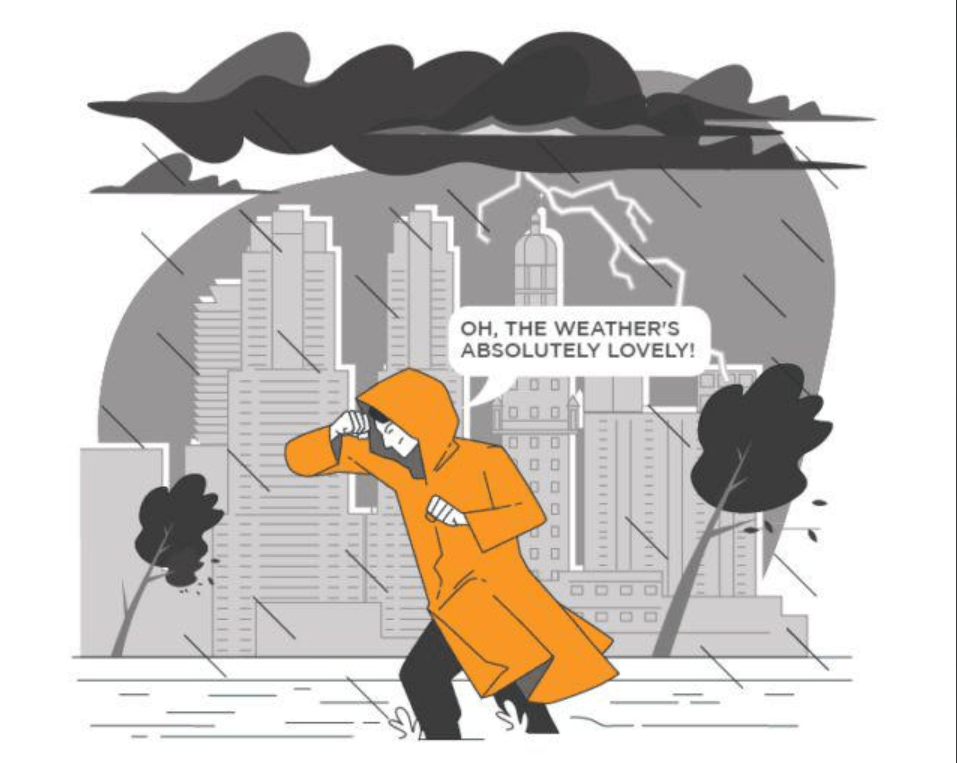
Verbal Irony
100
What kind of society does The Giver take place in?
A controlled utopian/ dystopian society.
100
Based on the sentence below, what does the word exile mean?
After breaking the rules, the leader was sent into exile, forced to leave his homeland and live far away from his people.
the state of being barred from one's native country, typically for political or punitive reasons.
200
The forest was silent except for the crunch of leaves under Mia’s shoes. She slowed her steps, certain she was being watched.
Identify the mood of this passage.
Tense / eerie / suspenseful
200
The firework BOOMED, and the crowd gasped as sparks filled the sky.
Question:
What type of figurative language is shown by the word BOOMED?
Onomatopoeia — the word imitates a sound
200
Running through the crowded hallway.
Question:
Is this a complete sentence or a fragment?
If it is a fragment, rewrite it as a complete sentence.
Fragment
Corrected sentence should include a subject.
200
You step onto the stage and feel the lights warm your face. Your heart pounds as the crowd waits for you to speak.
Question:
Identify the narrative point of view used in this passage.
Second person
(Uses “you” to place the reader in the story.)
200
What type of irony is displayed in the image below.

Situational Irony
200
What special role is Jonas selected for, and why is it important?
Receiver of Memory; he alone can hold the community’s memories
200
Based on the sentence below, what does the word ethnicity mean?
The class learned about the many cultures, languages, and traditions that make up a person’s ethnicity.
Belonging to a social group with a shared culture, language, or heritage.
300
When the group lost the game, everyone complained. Thomas clapped his hands and said, “We’ll do better next time. Let’s practice.”
Question:
What does this passage reveal about Thomas’s character?
He is optimistic / encouraging / determined / a leader
300
The quiet creek curled calmly through the clearing.
Question:
Identify the figurative language used in this sentence.
Alliteration — repetition of the c sound at the beginning of words
300
They’re planning to leave ______ backpacks by the door.
Question:
Which homophone correctly completes the sentence (their, there or they're)?
their
300
Jasmine stood at the bus stop, checking the time on her phone again. She felt her stomach twist as the minutes passed and wondered if she would be late for school. Cars rushed by, but Jasmine barely noticed them, focused only on the bus she hoped would arrive soon.
Question:
Identify the narrative point of view used in this passage.
Third person limited
(The narrator reveals Jasmine’s thoughts and feelings only.)
300
What type of irony is displayed below? 
Dramatic Irony
300
What is the main conflict in The Giver?
Character vs society.
Jonas struggles with the lack of individual choice in his society.
300
Based on the sentence below, what does the word Embellish mean?
As the rumor spread, each person seemed to embellish it, changing the original story more and more with every retelling.
to make something more attractive or interesting by adding decorative details or additional features
400
The town council announced plans to close the local library to build a shopping center. Students organized a petition, but the decision had already been approved.
Question:
Identify the type of conflict shown in this passage.
External conflict — character vs. society
400
The word determined and the word stubborn both describe someone who won’t give up, but they create different feelings.
Question:
Which concept explains the difference in how these words feel to the reader?
Connotation — the emotional or implied meaning of a word
(Denotation = dictionary definition)
400
Please push in your chair before you leave.
Question:
Identify the type of sentence and add the correct punctuation.
Imperative
./! (Just a period is also acceptable because the word please indicates tone).
400
As the class lined up for the field trip, Mr. Collins worried that the rain clouds would ruin the day. Several students whispered excitedly, hoping the trip would be canceled, while others felt disappointed at the thought. Across the parking lot, the principal watched calmly, already aware that the buses had been delayed.
Question:
Identify the narrative point of view used in this passage.
Third person omniscient
(The narrator knows the thoughts of multiple characters.)
400
Rain soaked through Leo’s jacket as thunder cracked overhead. The picnic table was already covered in puddles, and the wind sent napkins flying across the park. Leo shoved his hands into his pockets, looked up at the dark sky, and said, “Well, this turned out to be the perfect day for a picnic.”
Question:
Identify the type of irony used and explain why.
Verbal irony — Leo says something positive while clearly meaning the opposite
400
What is one major theme of The Giver?
Freedom is more important than comfort
Choice is necessary for humanity
Emotions make life meaningful
Any life lesson supported by the text
400
Based on the sentence below, what does the word lamented mean?
She lamented the lost opportunity, speaking sadly about what could have been different.
To mourn or feel deep sadness.
500
At the beginning of the year, Serena avoided group work whenever possible. When her teacher assigned a team project, Serena stayed quiet and let others make the decisions. After the group earned a low grade, Serena realized she hadn’t spoken up when she had good ideas. On the next project, she shared her thoughts and worked closely with her teammates, and their grade improved.
Question:
What is the theme of this passage?
Using your voice leads to growth / Taking responsibility improves outcomes / Learning from mistakes helps you improve
(Any clear life lesson supported by the text is acceptable.)
500
Read the excerpt below:
“I wandered lonely as a cloud
That floats on high o’er vales and hills,
When all at once I saw a crowd,
A host, of golden daffodils;
Beside the lake, beneath the trees,
Fluttering and dancing in the breeze.”
— William Wordsworth
Question:
Identify two types of figurative language used in this poem.
Simile — “lonely as a cloud”
Personification — the daffodils are “dancing”
500
I wanted to go outside but the rain kept falling.
Identify the coordinating conjunction and rewrite this sentence with correct comma usage.
Coordinating Conjunction - but
I wanted to go outside, but the rain kept falling.
500
The bell rang loudly as students filled the hallway. Marcus closed his locker, adjusted his backpack, and walked toward the classroom. He paused at the doorway, then took a seat in the back row and opened his notebook.
Question:
Identify the narrative point of view used in this passage.
Third person objective
(Only observable actions are described.)
500
The school announced a special “Quiet Day” to remind students to use inside voices in the hallways. Posters were hung, announcements were made, and teachers warned everyone to keep noise to a minimum. That afternoon, the fire alarm malfunctioned and blared nonstop for nearly twenty minutes, echoing through every hallway in the building.
Question:
Identify the type of irony shown in this situation.
Situational irony
(A day meant to be quiet becomes extremely loud.)
500
“If everything’s the same, then there aren’t any choices! I want to wake up in the morning and decide things!”
Question:
What theme does this quote reveal?
Choice is essential to freedom / Life without choice lacks meaning
500
Based on the sentence below, what does the word discordant mean?
The band’s music turned discordant, and several audience members covered their ears at the clashing sounds.
Harsh, jarring, disagreeable in sound.
600
For weeks, Lila trained for the spelling bee, studying every night and worrying she would forget a word under pressure. During the competition, she advanced through each round, growing more nervous as the crowd watched. In the final round, the judge asked Lila the most difficult word she had practiced. The room fell silent as she took a deep breath and began to spell.
Question:
Which event is the climax of the story?
When Lila begins spelling the most difficult word in the final round
(or when she responds to the hardest word, showing the turning point
600
“Who has seen the wind?
Neither I nor you:
But when the leaves hang trembling,
The wind is passing through.
Who has seen the wind?
Neither you nor I:
But when the trees bow down their heads,
The wind is passing by.”
— Christina Rossetti
What does the wind most likely symbolize in this poem?
Possible Correct Responses
Invisible forces that affect our lives
Feelings or emotions that cannot be seen but can be felt
Change that cannot be seen directly but is noticed through its effects
600
remember to pack a lunch bring a water bottle and wear comfortable shoes
Question:
Identify the sentence type
Rewrite the sentence using correct capitalization, punctuation and commas
1. Imperative sentence
2. Remember to pack a lunch, bring a water bottle, and wear comfortable shoes.
600
Lena folded the paper carefully and placed it in her backpack. She walked past her friends without speaking and chose an empty table in the cafeteria. When the bell rang, she stood up, pushed in her chair, and headed to her next class.
Question:
Identify the narrative point of view used in this passage.
Third person objective
600
Ella folded the note carefully and slid it into her backpack, certain no one had noticed. She walked into class smiling, thinking she had avoided trouble. What Ella didn’t know was that the note had slipped onto the floor earlier that morning, and the teacher had already picked it up and read it before class began.
Question:
Identify the type of irony used in this passage.
Dramatic irony
(The reader knows something the character does not.)
600
“It was the first time he had ever lied.”
Question:
What does this moment reveal about Jonas’s character?
Jonas is beginning to change
He is becoming more independent from the rules
He is questioning his society
He is no longer blindly obedient
600
Based on the sentence below, what does the word celestial mean?
The mural on the ceiling showed celestial scenes, with glowing lights arranged like something from far beyond Earth.
positioned in or relating to the sky, or outer space as observed in astronomy.