Flow of Energy
Levels of Organization
Body Systems
Even more Body Systems!
Reproduction
Selection
100
The amount of energy that moves from one trophic level to the next when one organism eats another.
%10
100
The lowest level of organization.
Cell
100
This system uses electrical signals to act as the control center for your body.
Nervous System
100
The body system responsible for producing offspring.
Reproductive System
100
The two variations of Reproduction
Asexual and Sexual
100
The two variations of selection.
Natural and Artificial
200
What an organism must eat in order to be a Tertiary Consumer.
Secondary Consumer
200
The most complex level of organization.
Organism
200
This system brings air into your body in order to retrieve oxygen.
Respiratory System
200
These two systems work together to break down food for nutrients and then remove the waste from the body.
Digestive System and Urinary System
200
Only requires one parent.
Asexual Reproduction
200
Humans choosing which organisms reproduce.
Artificial Selection
300
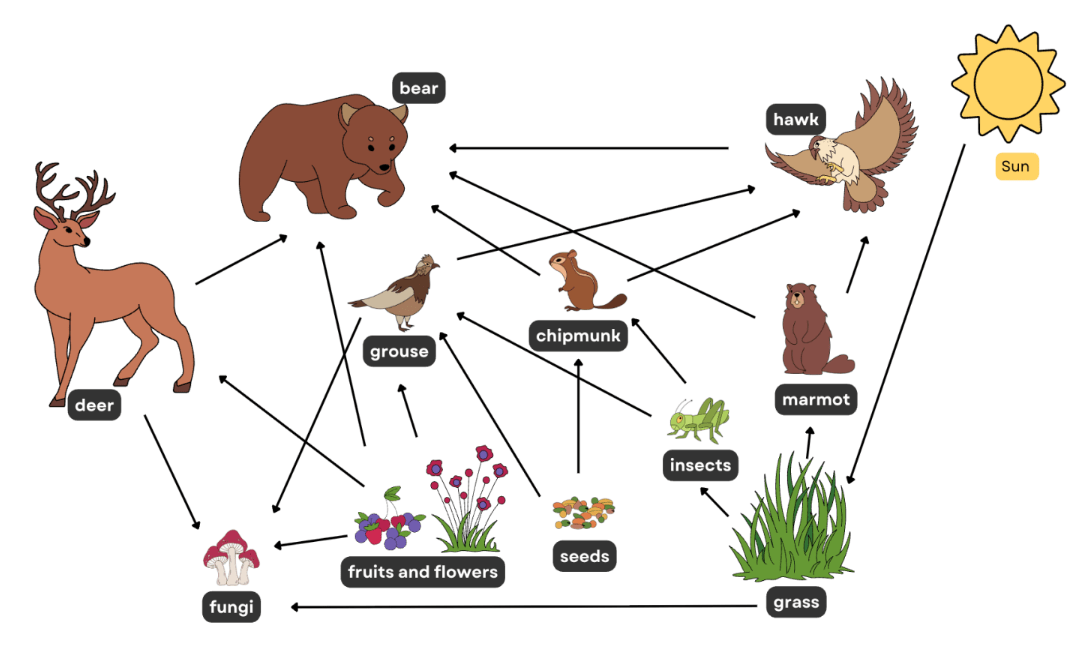
The type(s) of consumer(s) that the bear is.
Primary, Secondary, and Tertiary.
300
The two levels of organization that need to be switched in the following sequence; cell > tissue > organ > organism > organ system
Organism and Organ System
300
Skeletal, Cardiac, and Smooth, are the 3 types of organs this system has.
Muscular System
300
This body system acts as the delivery system for moving various things like hormones and oxygen around the body.
Circulatory System
300
Requires more time and energy but has greater genetic diversity.
Sexual Reproduction
300
The Environment choosing which organisms survive in order to reproduce.
Natural Selection
400
The amount of kcal a tertiary consumer would get in an energy pyramid where a primary consumer gets 270 kcal.
2.7 kcal
400
The stomach working with the small and large intestines is an example of this level of organization.
Organ System
400
This body system uses chemical messengers to regulate things like your emotions, sleep cycle, metabolism, and more.
Endocrine System
400
This body system produces antibodies and protects you from various infections.
Immune System
400
Offspring of asexual reproduction are this answer of their parents.
Clones
400
Genetic variation and beneficial traits support this type of selection.
Natural Selection
500
What happens to the other %90 of energy that doesn't go up the energy pyramid.
It is lost/used as heat and life processes.
500
Because skin contains nervous tissue, blood tissue, and dermal tissue it is this level of organization.
Organ.
500
Stores minerals, produces blood cells, and supports the body’s movement.
Skeletal System
500
This system contains your bodies largest organ, keeps harmful substances out of your body, and keep beneficial things inside your body.
Integumentary System
500
These are all types of Asexual reproduction. (list 2)
Binary Fission, Budding, Fragmentation, or Vegetative Propagation
500
The thing(s) that humans desire when using selective breeding.
Specific Traits