Atom Anatomy
Periodic Table
Identifying Reactions
Valence Electrons
Counting Atoms
Chemical Formulas
Balance Reaction
Ions and Isotopes
100
This part of an atom has a positive charge.
proton
100
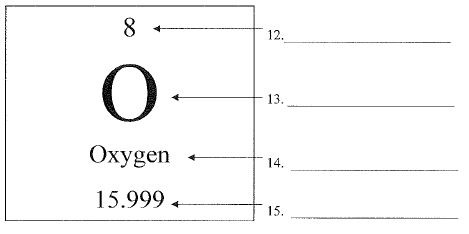
What is number 15 called?
atomic mass
100
H2 +O2 --> H2O
synthesis
100
Potassium has this many valence electrons.
1
100
NH4 has this many atoms.
5
100
-->
yields
100
_C + _O2 --> _CO2
1C + 1O2 --> 1CO2
100
This is an atom that has the same number of protons, neutrons and electrons. It has no charge.
neutral atom
200
Protons and neutrons are found in this center part of the atom.
nucleus
200
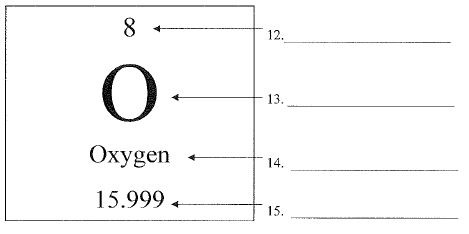
What is number 14 called?
element name or chemical name
200
Cl2 + NaBr --> NaCl + Br2
single replacement
200
Scandium has this many valence electrons.
3
200
2C2H3N5 has this many atoms.
20
200
What is the 4 in this formula?
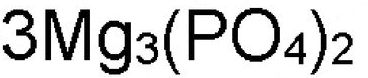
subscript
200
_Al2O3 --> _Al + _O2
2Al2O3 --> 4Al + 3O2
200
This is an atom that has gained neutrons and now has a higher atomic mass than a neutral atom.
heavy isotope
300
The part of the atom that has no charge (neutral).
neutron
300
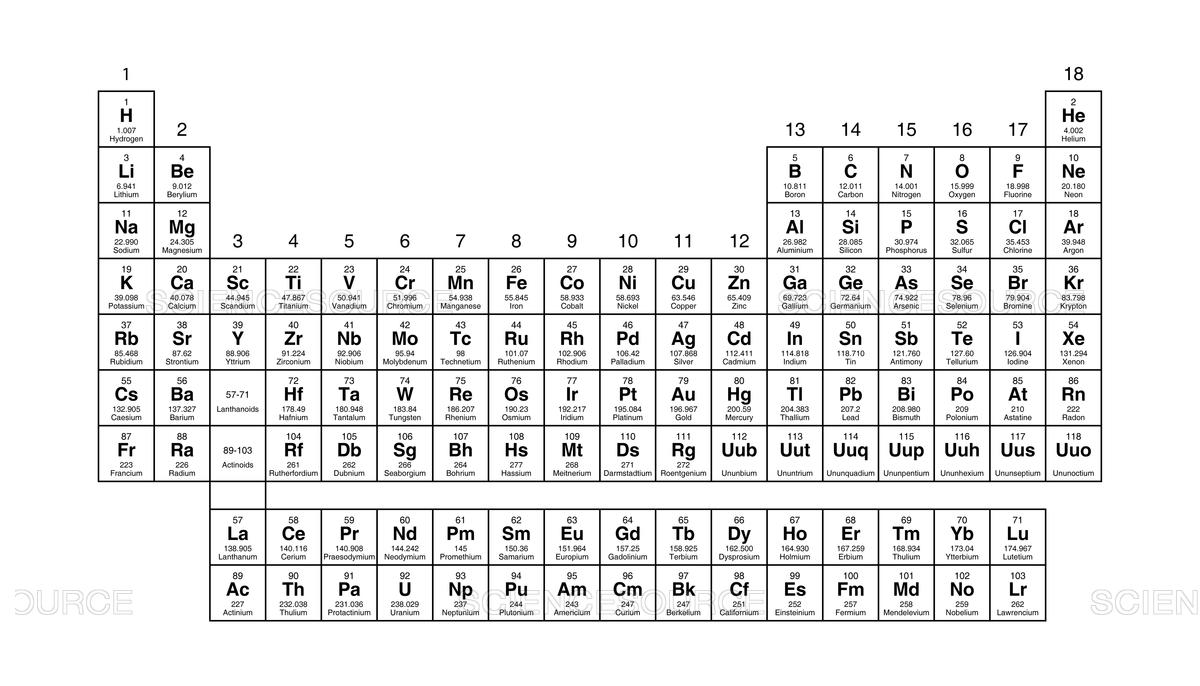 The columns on the Periodic Table are called this.
groups
300
CaCO3 --> CaO + CO2
decomposition
300
Arsenic has this many valence electrons.
15
300
2C4H8FCOOH has this many HYDROGEN atoms.
18
300
What is the 3 in the following formula?
3H2O
coefficient
300
_Mg + _HCl --> _MgCl2 + _H2
1Mg + 2HCl --> 1MgCl2 + 1H2
300
This is an atom that has gained electrons. It now has a negative charge.
anion
400
These negative parts of the atom are found in levels orbiting around the center.
electrons
400
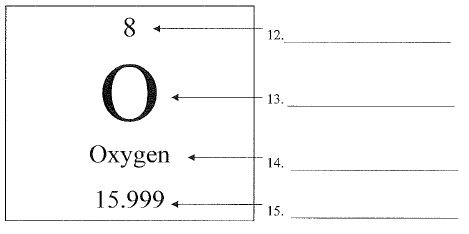
What is number 12 called?
Atomic Number
400
Na2S + HCl --> NaCl + H2S
double replacement
400
Xenon has this many valence electrons.
0 or 18
400
2S4H5(F2Ti3)3 would have this many atoms.
48
400
What is Mg in this formula?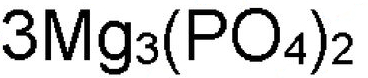
chemical symbol or element symbol
400
_CH4 + _O2 --> _CO2 + _H2O
1CH4 + 2O2 --> 1CO2 + 2H2O
400
This is an atom that has LOST neutrons and now has a smaller atomic mass than a neutral atom.
light isotope
500
List how many electrons can fit into all the shells (energy levels) in order from the first shell (level) to the seventh.
2, 8, 8, 18, 18, 32, 32
500
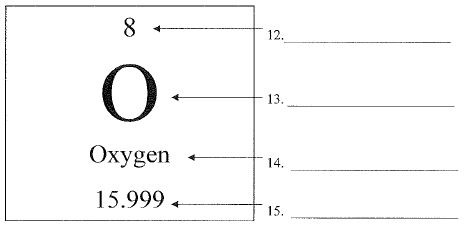
What is number 13 called?
chemical symbol or elemental symbol
500
CH4 + O2 --> CO2 + H2O
combustion
500
Boron has this many valence electrons.
3
500
4(NH4)3PO4 would have this many atoms.
80
500
What is between the 4 and the 2 in this formula?
3Ba3(PO4)2
parenthesis or brackets
500
_NH4OH --> _H2O + _NH3
1NH4OH --> 1H2O + 1NH3
500
This is an atom that has LOST electrons and now has more protons than electrons. It has a positive charge.
cation
600
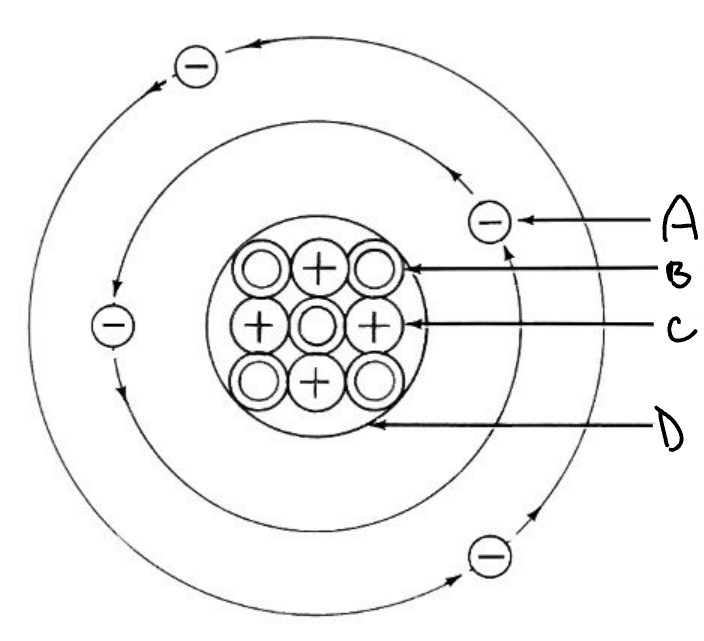 Name all 4 things that the letters are pointing to.
A-electron
B-neutron
C-proton
D-nucleus
600
You find the number of neutrons in an atom by doing this.
atomic mass - atomic number
600
K2CrO4 + AgNO3 --> Ag2CrO4 + KNO3
Double Replacement
600
Aluminum has this many valence electrons.
3
600
3Cr(NH3)6(NO3)3 would have this many NITROGEN atoms.
27
600
What does a coefficient do?
multiplies everything in the formula or tells you how many molecules there are
600
_CaF2 + _AlN --> _Ca3N2 + _AlF3
3CaF2 + 2AlN --> 1Ca3N2 + 2AlF3
600
What do we call an atom that does not have equal protons and electrons and has a charge?
ion
700
Protons, neutrons and electrons are all types of what?
Subatomic particles
700
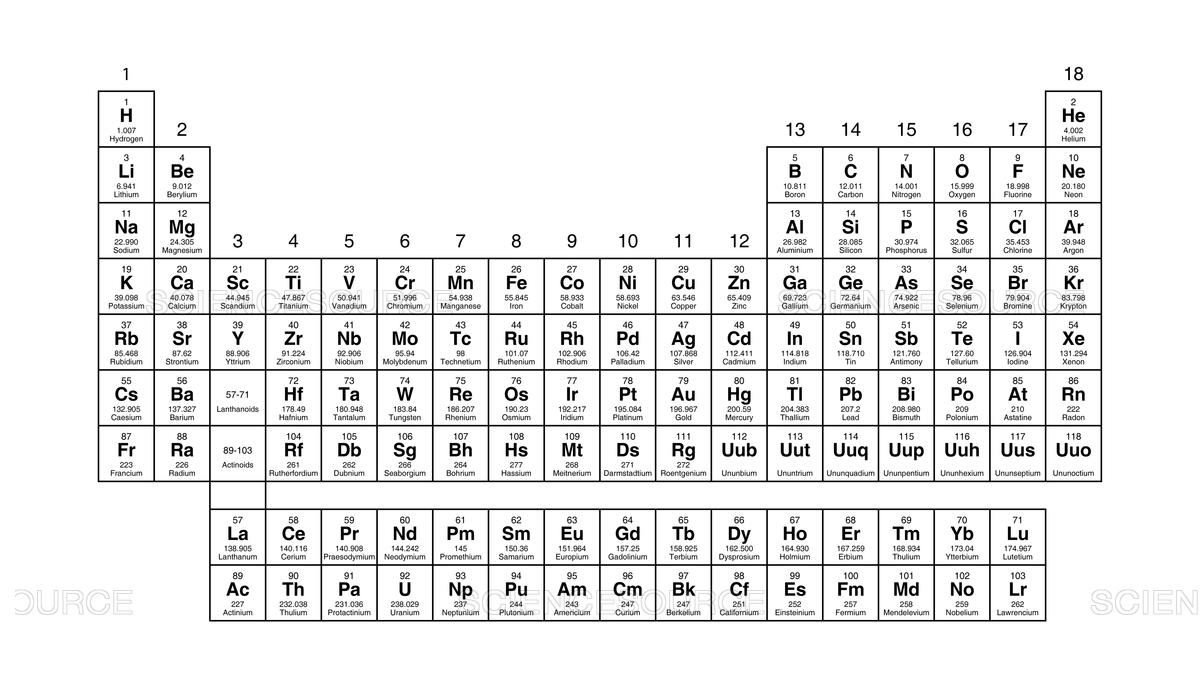 The rows on the Periodic Table are called this.
periods
700
H2CO3 --> H2O + CO2
decomposition
700
List all of the "Noble Numbers"
2, 10, 18, 36, 54, 86
700
2K4Fe(SCN)6Cr2(SO4)3 has how many total atoms?
80
700
What does a subscript do?
Tells you how many atoms you have of the element symbol that came before it
700
_C6H14 + _O2 --> _CO2 + _H2O
2C6H14 + 19O2 -->12CO2 + 14H2O
700
What do we call an atom that has more or less neutrons than it is supposed to have which changes its atomic mass?
isotope
800
Who created the Periodic Table?
Dmitri Mendeleev
800
(NH4)3PO4 + Pb(NO3)4 --> Pb(PO4)4 + NH4NO3
double replacement
800
Name one of the two most active groups on the Periodic Table.
Alkali Metals or Halogens
800
4(NH4)3PO4 + 3Pb(NO3)4 --> 1Pb(PO4)4 + 12NH4NO3
262
800
What do parenthesis or brackets do?
Connects a smaller set inside a formula. They always come in pairs.
800
_(NH4)3PO4 + _Pb(NO3)4 --> _Pb(PO4)4 + _NH4NO3
4(NH4)3PO4 + 3Pb(NO3)4 --> 1Pb3(PO4)4 + 12NH4NO3