Reading 7th Grade
Figurative Language
Review
7th Grade Random
MISC
100
When a narrator uses "I, Me," it is written in this point of view
Cuando un narrador utiliza "yo, a mí", la narración está escrita desde este punto de vista.
First Person
Primera Persona
100
What type of figurative language is this?
I told you a million times to sit down!
¡Te he dicho un millón de veces que te sientes!
Hyperbole
100
What do you call the part of speech that is a person, place, thing, or idea?
¿Cómo se llama la parte de la oración que se refiere a una persona, un lugar, una cosa o una idea?
A. Noun/Sustantivo
B. Adjective/Adjetivo
C. Verb/Verbo
A. Noun/Sustantivo
100
What is an antonym and synonym?
¿Qué es un antónimo y un sinónimo?
Antonym - a word that means the opposite (hot, cold)
Antónimo: una palabra que significa lo contrario (caliente, frío)
Synonym - Words that mean the same (happy, joyful)
Sinónimo: Palabras que significan lo mismo (feliz, alegre)
100
What are context clues?
¿Qué son las pistas contextuales?
Clues within the text that help you figure out meaning.
Pistas dentro del texto que te ayudan a descifrar el significado.
200
When the narrator uses "She, He, they" it is written in this point of view.
Cuando el narrador utiliza "Ella, Él, ellos", la narración está escrita desde este punto de vista.
Third Person
Tercera Persona
200
What type of figurative language is this?
"The bright orange walls screamed at her as she walked into the room."
"Las paredes de color naranja brillante le resultaron estridentes al entrar en la habitación."
A. Simile/Símil
B. Personification/Personificación
C. Alliteration/Aliteración
B. Personification/Personificación
200
Poems are not written in paragraphs, they are written in _______.
Stanzas/Estrofas
200
What is it called when you are pairing what you read with what you know to make an educated guess based off of things that have happened?
¿Cómo se llama el proceso de combinar lo que lees con lo que ya sabes para hacer una suposición fundamentada basada en hechos que ya han ocurrido?
A. Making a Prediction/Haciendo una predicción
B. Making an Inference/Hacer una inferencia
C. Summarizing/En resumen
B. Making an Inference/Hacer una inferencia
200
What is the feeling the narrator wants to have the reader to have?
¿Qué sentimiento quiere el narrador que experimente el lector?
Mood/Ánimo
300
The message or lesson that can apply to the story
El mensaje o la lección que se puede extraer de la historia.
Theme
Tema
300
What type of figurative language is this?
It's raining cats and dogs.
Lueve a cántaros.
A. Metaphor/Metáfora
B. Idiom/Modismo
C. Alliteration
B. Idiom/Modismo
300
What do you call the part of speech that describes a noun?
¿Cómo se llama la parte de la oración que se refiere a un sustantivo?
A. Noun/Sustantivo
B. Adjective/Adjetivo
C. Verb/Verbo
B. Adjective/Adjetivo
300
What is an Antagonist?
¿Qué es un antagonista?
A "Bad guy" or "Villian"?
¿Un "chico malo" o un "villano"?
300
How do you support a claim?
¿Cómo se respalda una afirmación?
With evidence
Con evidencia
400
What do you call what the story is mainly about?
¿Cómo se llama el tema principal de la historia?
Central or Main idea
Idea central o principal
400
What type of figurative language is this?
When the canary keeled over, the coal miners left the cave.
A. Metaphor/Metáfora
B. Idiom/Modismo
C. Alliteration
C. Alliteration
400
What do you call the part of speech that is an action word?
¿Cómo se llama la parte de la oración que se refiere a una palabra de accion?
A. Noun/Sustantivo
B. Adjective/Adjetivo
C. Verb/Verbo
C. Verb/Verbo
400
What is the onomatopoeia in the text?
¿Cuál es la onomatopoeia en el texto?
I was going to be late for school again because I couldn't zip my jacket!
Iba a llegar tarde a la escuela de nuevo porque no podía subirme la cremallera de la chaqueta.
ZIP
400
The "star speckled sky" is which type of figurative language.
La expresión "cielo salpicado de estrellas" ¿qué tipo de lenguaje figurado representa?
A. Simile/Símil
B. Personification/Personificación
C. Alliteration/Aliteración
C. Alliteration/Aliteración
500
What type of text structure is it when you say how things are similar and different within a text?
¿Qué tipo de estructura textual se utiliza cuando se describen las similitudes y diferencias entre los elementos de un texto?
A. Cause and effect/Causa y efecto
B. Problem and Solution/Problema y solución
C. Compare and Contrast/Comparar y contrastar
C. Compare and Contrast/Comparar y contrastar
500
Which figurative language is the following sentence?
She is a tornado when she gets angry!
¡Es un torbellino cuando se enfada!
A. Metaphor/Metáfora
B. Idiom/Modismo
C. Alliteration
A. Metaphor/Metáfora
500
What is the prefix in this word AND what does it mean?
¿Cuál es el prefijo de esta palabra y qué significa?
Unkindness
A. Un = ?
B. Kind = ?
C. Ness = ?
A. un is the prefix and it means...
500
Label the parts of a plot diagram.
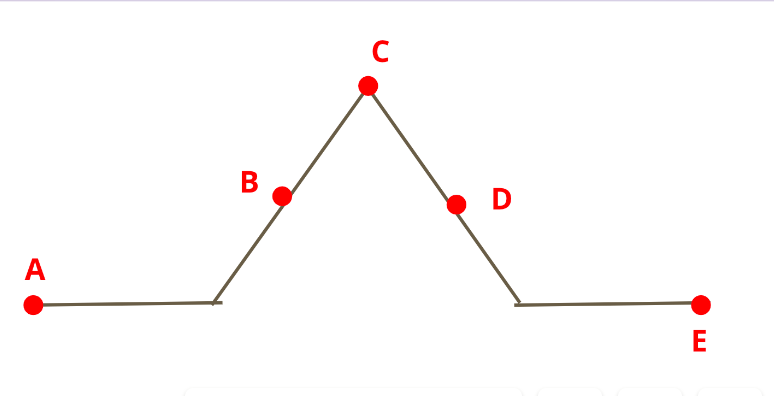
A. Exposition/Exposición
B. Rising Action/Acción ascendente
C. Climax
D. Falling Action/Acción descendente
E. Resolution/Resolución
500
What type of figurative language is the phrase, "Hit the lights."
¿Qué tipo de lenguaje figurado es la frase "Apaga las luces"?
A. Idiom/Modismo
B. Personification/Personificación
C. Alliteration/Aliteración
A. Idiom/Modismo