Reciprocating Engines
Engine Classificaiton
Propellers
Intake Systems
Combustion and Exhaust
100
List the four strokes in the four-stroke reciprocating engine cycle
Intake
Compression
Power/Combustion
Exhaust
100
Spark or Compression
What is the ignition system?
100
Efficient for long-range cruising.
Has a higher pitch
Induces more drag
What is a cruise fixed-pitch propeller?
100
This induction system mixes fuel and air in the carburetor before sending it to the intake manifold.
What is Carburetor system?
100
Spark Plug tips that are too hot, Spark plug insulators that are cracked,Carbon deposits that have built up on the spark plugs can all cause this.
What is pre-ignition?
200
An electrical current is sent through a spark plug, which IGNITES the fuel-air mixture.
What is Spark Ignition?
**Spark ignition systems are widely used due to their lightweight components.
200
This cooling system uses water or oil, is more complex and heavier, has more stable operating temperatures, and has a longer lifespan.
What is liquid cooling?
200
Blade pitch adjusted by the pilot during flight.
Maintains RPM despite changes to power, air density, and temperature.
What is a constant-speed variable-pitch propeller?
200
A fuel injection system delivers fuel and air ____ to the cylinder.
What is directly?
200
The reason why an oil temp gauge shows too hot and an oil pressure gauge shows too low.
What is an insufficient supply of oil?
300
Air inside the cylinder is compressed until its temperature rises high enough to IGNITE the fuel.
What is Compression Ignition?
**Compression ignition systems are less complex in design as they do not need an electrical system to provide ignition; however, they are generally heavier, as tougher materials are needed to withstand such high temperatures and pressures.
300
This cylinder arrangment has pistons arranged on opposite sides of the crankcase, always has an even number of cylinders, and has a high power-to-weight ratio.
What is horizontally-opposed engines?
300
To increase the propeller pitch a pilot will do this
What is decrease propeller RPM?
300
This creates an area of low pressure in the carburetor.
What is the venturi?
300
The cause of these dangers: Carbon monoxide entering the cabin of an airplane, decrease in engine performance, an engine catching on fire.
What is a damaged exhaust system?
400
Without an adequate amount of this, a reciprocating engine will seize.
What is oil?
400
The rapid expansion of gases from THIS creates enough pressure to move the pistons in the cylinder, resulting in useful work.
What is combustion?
400
This regulates engine and propeller RPMs, indicated by the tachometer
What is the propeller control?
400
This mixture is used at low altitudes when air density is high.
What is Rich?
400
A pilot does a post-flight check by turning the ignition switch to "off" and back "on" quickly to see if the engine continues to run.
What is post-flight magneto check?
500
Put the following in correct order and name each stroke as you say the order.
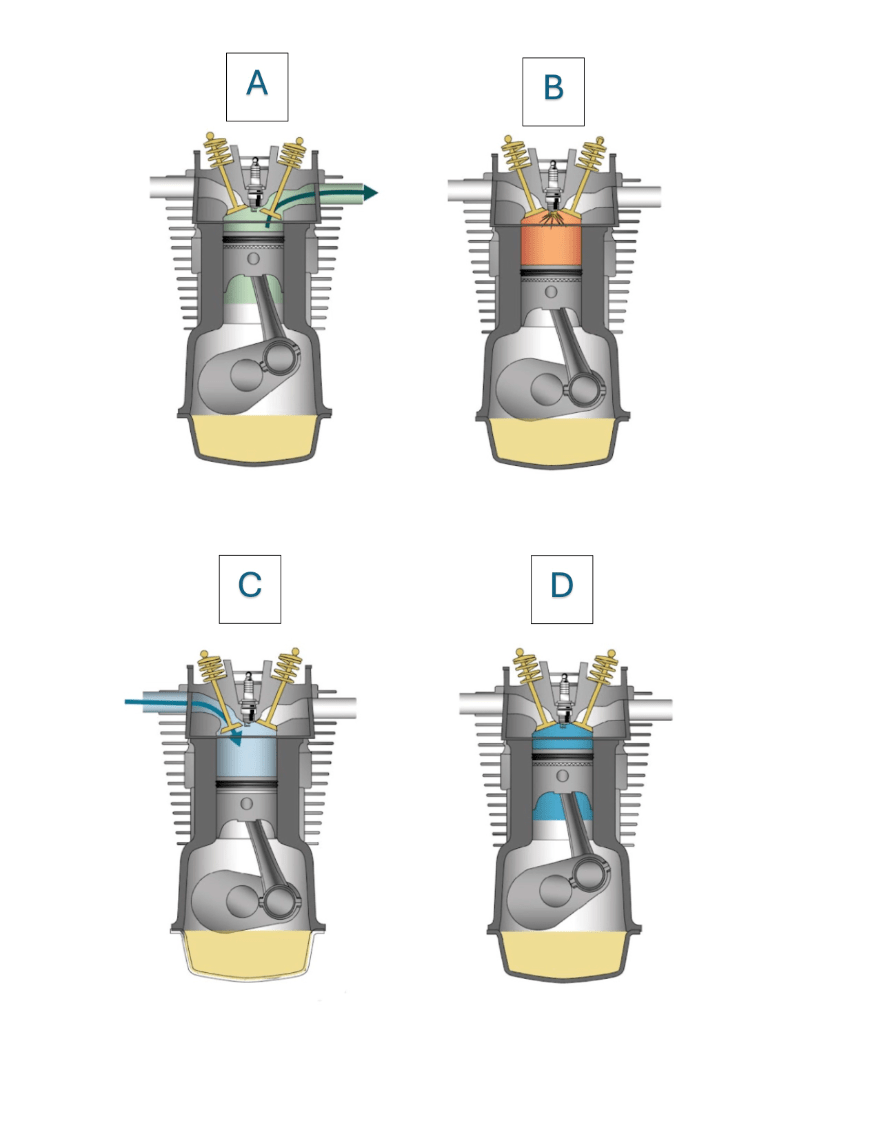
C - Intake,
D - Compression,
B - Power,
A - Exhaust
500
Reciprocating engines can be classified in a number of ways. Name 4 different classification groups that you learned about and the classifications within each group
Ignition: Spark and Compression
Cylinder arrangement: Radial, in-line, v-type, horizontally-opposed
Method of cooling: Liquid or air
Number of Strokes: 2 or 4
500
The pilot first pushed in the propeller control to increase the RPMs of the engine and the propeller. Then, the pilot pushed in the throttle to increase manifold pressure.
What is a power increase?
*Adjustments must be made in the correct order to minimize stess on the engine and propeller
500
Pilot takes off from Honolulu airport on a cool day would set the fuel-air mixture to this?
What is Full Rich?
The full rich position represents the greatest amount of fuel introduced into the fuel-air mixture for a high air density, such as you would find at sea level.
500
List four reasons an engine needs oil.
Lubrication
Sealing
Cleansing
Cooling