Vocabulary
Westfield Q's
Chemical Reactions
Reactants and Products
Randomness
100
The tiny pieces that all matter is made of are called
a. chunks
b. atoms
c. ions
d. stuff
Atoms
100

What was the reddish-brown substance in the water in Westfield?
a. dirt
b. rust
c. slime
d. sand
Rust
100
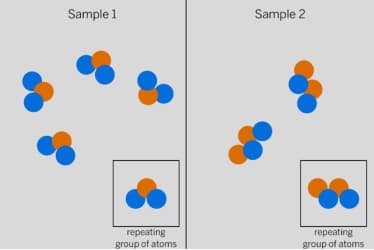
These substances will have __________ properties.
a. the same
b. different
different
100
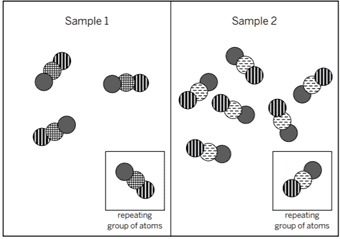
The diagram shows the repeating groups of atoms that make up two samples. The properties will be different because ________.
The molecules are made of different types of atoms
100
What is another name for Sodium Chloride?
(Hint: You can find it on your kitchen table!)
Salt
200
a group of atoms bonded together is called
a. molecule
b. bunch
c. chemical
d. a solid
Molecule
200
The rust formed from the iron pipes chemically reacting to the fertilizer.
Could the rust form without the fertilizer?
a. Yes
b. No
No
200
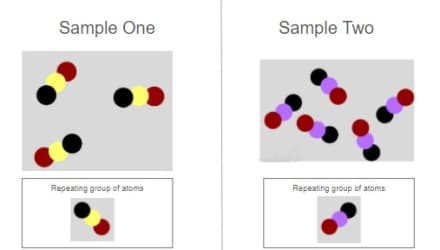
These substances have the exact same properties. True or False?
False
200
During a chemical reaction, atoms cannot be ______ or ______.
a. rearranged or changed
b. liquid or solid
c. created or destroyed
d. bigger or smaller
Created or destroyed
200
What is another name for Calcium Carbonate?
(Hint: You can find it in an art class)
Chalk
300
A process in which atoms rearrange to form new substances is called
a. mixing
b. transformation
c. chemical reaction
d. phase change
Chemical Reaction
300
What two molecules reacted to create the rust molecule?
a. Iron and Oxygen
b. Sodium and Nitrogen
c. 2 Oxygen molecules
d. 2 Iron Molecules
Iron and Oxygen
300

In this reaction, how many total hydrogen atoms and oxygen atoms are in the reactants?
4 Hydrogen and 2 Oxygen
300
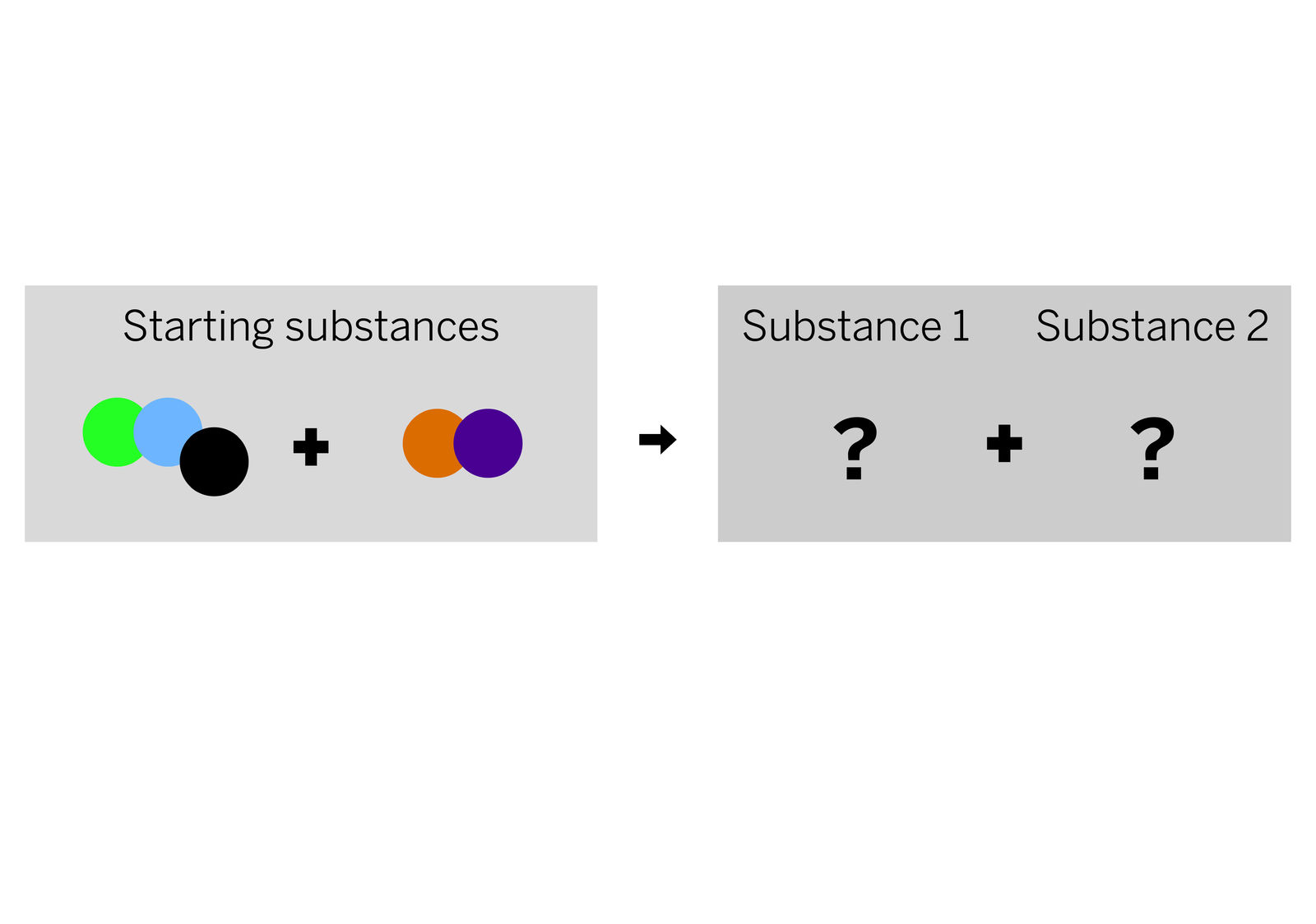

Deb is a chemist, and she is developing a chemical to help foods stay fresh longer. She mixed a liquid substance and a solid substance together in a sealed container. The diagram above shows the repeating groups of atoms that make up the two starting substances.
Which of the diagrams shows the repeating groups of atoms that make up the products?
C
300
What law states that "During a chemical reaction, atoms cannot be created or destroyed"?
a. The Law of the Levitation of Energy
b. The Law of the Conversation of Atoms
c. The Law of the Explanation of Chemicals
d. The Law of Conservation of Matter
The Law of Conservation of Matter
400
An ending substance that is made during a chemical reaction.
a. reactant
b. product
c. concoction
d. potion
Product
400
What did the tokens represent that were rearranged in the chemical reaction model?
Colors for each type of atom showing how they rearranged during the chemical reaction
400
In this chemical equation, which of the molecules is one of the reactants? 
Methane and Oxygen
400
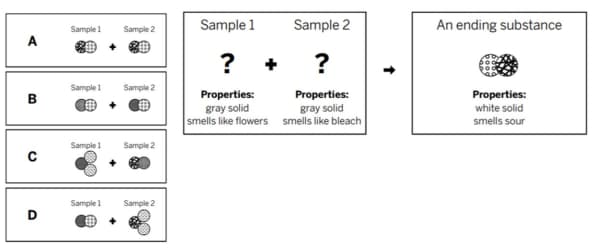
Mr. Cosgrove mixed two samples together: a solid that smells like flowers and a solid that smells like bleach.
Which of the diagrams shows the repeating groups of atoms that make up the reactants?
D
400
Oxygen, Hydrogen, Helium, Nitrogen
What are these atoms examples of?
a. elements
b. ions
c. electrons
d. molecules
elements
500
Something that can be observed about a substance, such as color, smell or boiling point.
a. character
b. flavor
c. item
d. property
Property
500
What evidence supported the claim about how the reddish-brown stuff ended up in the Westfield water supply?
- The reddish-brown substance didn't look like either the pipe substance or fertilizer
- All three substances were made of different repeating atom groups
500
In this chemical equation, which of the molecules is one of the products?
Water
Carbon Dioxide
500
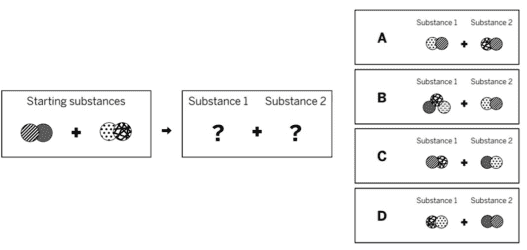
Ms. Schoolcraft is a chemist who is making a chemical to add to swimming pools in order to make the water safer. She mixed two solid substances together in a sealed container. The diagram above shows the repeating groups of atoms that make up the two starting substances. After mixing, Ms. Schoolcraft found two liquid substances in the sealed container. (Nothing had escaped.) Which of the diagrams to the right shows the repeating groups of atoms that make up the products?
c
500
You pour a clear liquid into a beaker with baking soda a white powder, and it immediately starts to foam and bubble up.
How do you know for sure a chemical reaction has taken place?
- Color change
- Phase Change (formation of gas, liquid, solid)
- Temperature change