Tectonic Processes
Plate Boundaries
Weathering & Erosion
Littoral Zone
Currents &
Tides
Tides
100
State the boundary type that occurs where the mid-ocean ridge is present, between the two plates.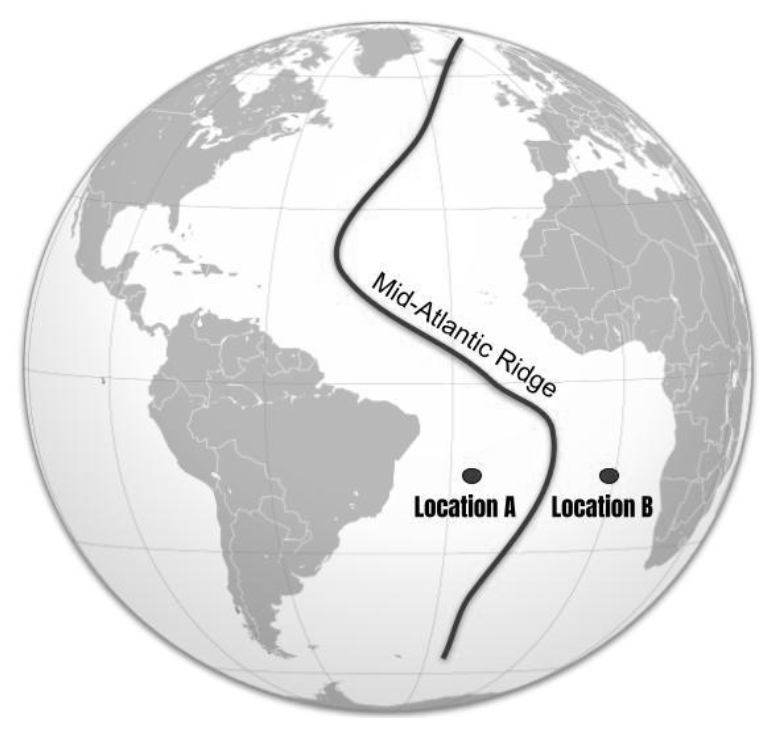
Divergent
100
State AND explain (with correct terminology) how this boundary works.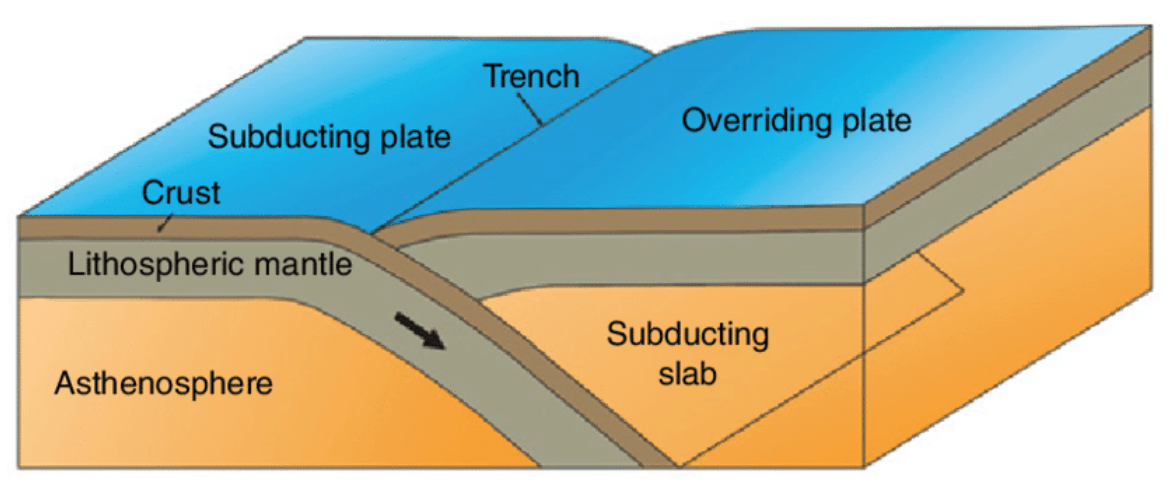
Convergent. The denser oceanic plate is forced underneath the other, less dense, continental plate forming a subduction zone.
100
List the type of weathering for each example:
Ocean waves
Lichens
Oxidation
Ocean - Physical
Lichens - Organic/biological
Oxidation - Chemical
100
This area is least exposed to weathering and erosion
Muddy Shore
100
Give 3 reasons why upwelling so important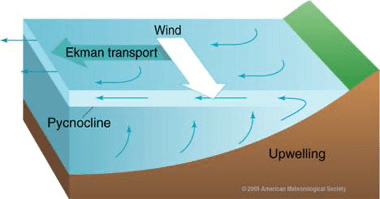
Delivers cold, nutrient-rich water to the surface. Increased phytoplankton populations at the surface. Stronger food web because of the nutrient rich water. Helps local economy - fishing for food/income.
200
Name all 5 Earth Layers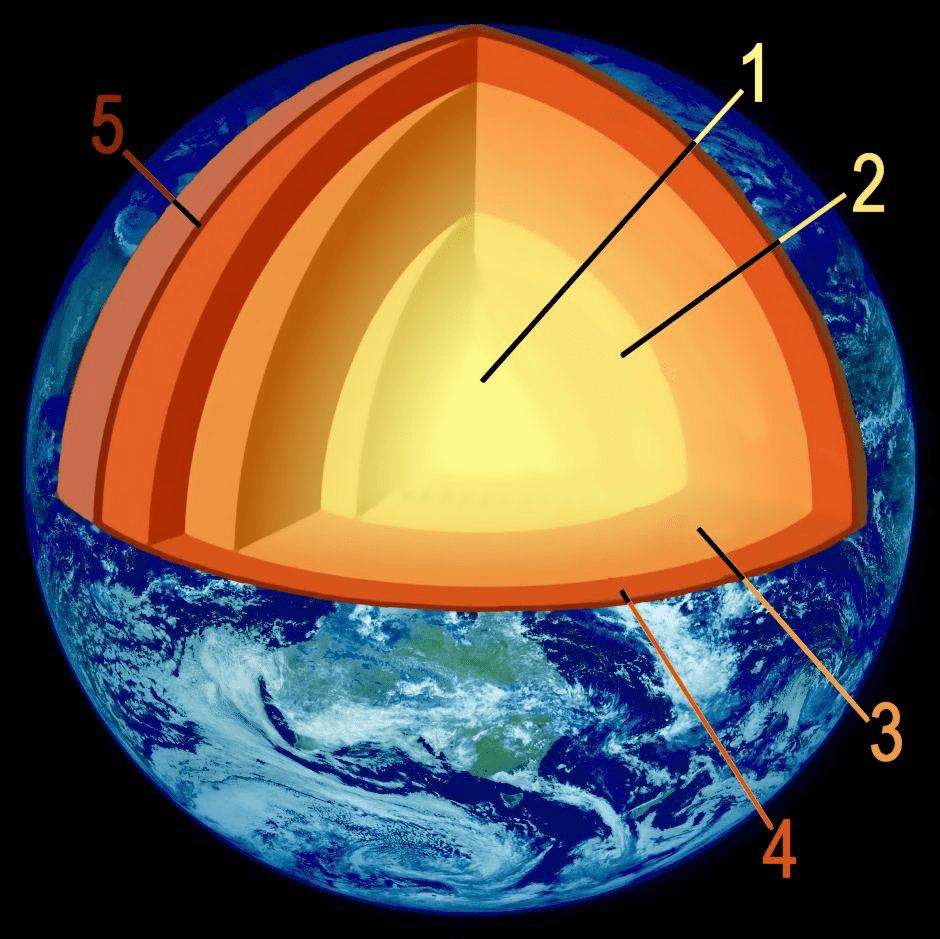
1. Inner Core
2. Outer Core
3. Mantle
4. Crust
5. Lithosphere
200
Name this boundary and name 3 landforms.
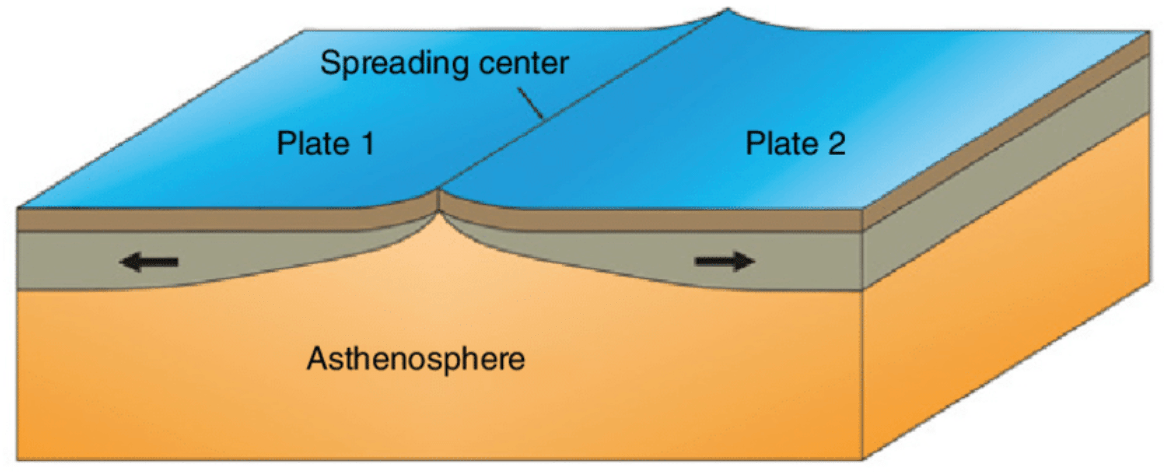
Divergent. Mid-Ocean Ridges, Volcanoes, and Hydrothermal Vents
200
List the 3 types of weathering
physical, chemical, biological/organic
200
Explain erosion and sedimentation on a sandy shore.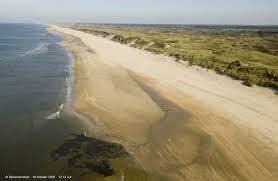
Erosion – low erosion levels
• Gentle slope
Sedimentation – rate of erosion less than rate of deposition/sedimentation
• Deposits small sand particles on shore
200
Explain the difference in tidal range between Spring and Neap Tides.
Spring tide has largest tidal range (highest highs and lowest lows)
Neap tide has smallest tidal range
300
Explain where the newest rock and oldest rock are found in the following picture: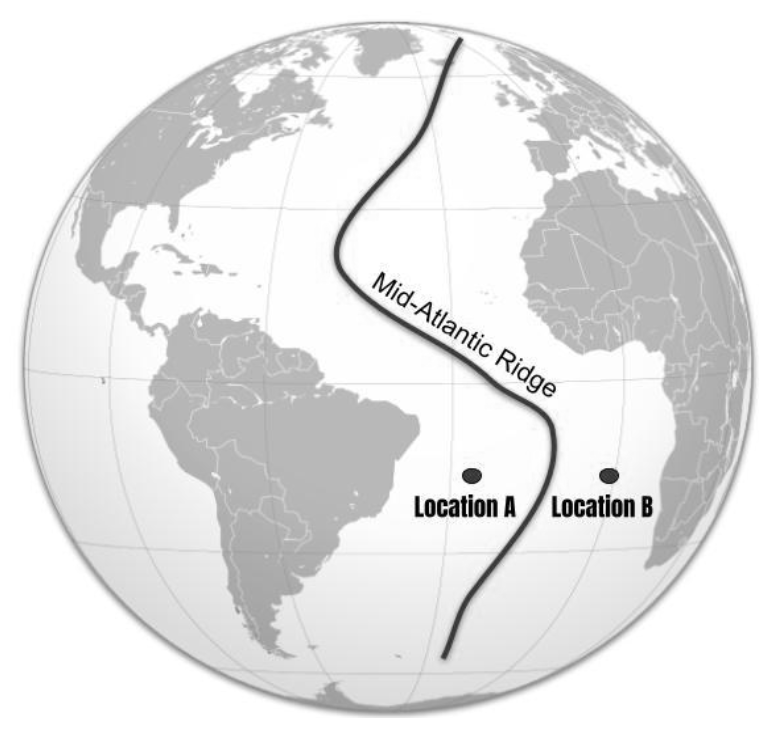
Newest rock is found in any location right along the ridge. This is where new seafloor is currently being created. The rock along the edges of the continent would be the OLDEST - approximately as old as when Pangaea began to split.
300
Name this boundary. What happens when the plates slide? What ocean feature is commonly found here.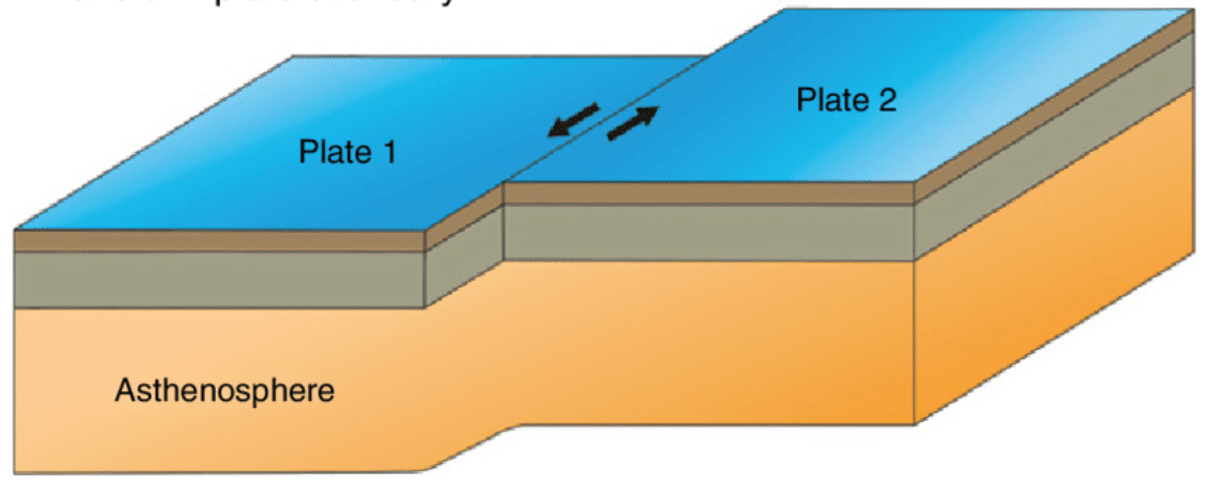
Transform. Seismic Activity. Abyssal Plains
300
List the 3 types of weathering for the following examples:
1. temperature change can cause cracks, water can enter cracks and freeze
2. rain dissolves ions/minerals
3. urchins can bore into rock
1. Physical weathering
2. Chemical weathering
3. Organic / Biological weathering
300
This shore is MOST resistant to erosion and sedimentation. Outline the role that erosion plays in creating this shore.
Rocky shores are made of granite or igneous rock which is resistant to weathering. Rocks exist in a gradient (large far from water, small near low water mark). That gradient is cased by waves wearing away the rocks.
300
In the North Atlantic Ocean, a very large downwelling occurs that is named the North Atlantic Deep Water.
State two physical factors of this water that make it more dense than surrounding waters, causing it to sink.
1 contains more salt (because it was carried from tropical region)
2 colder
400
Give 3 pieces of evidence to support the theory of plate tectonics
- The continents fit like puzzle pieces
- Matching fossils found on opposite continents across the ocean
- Similarities in mountain ranges of North America and Europe
- Evidence of previous glaciers (striations, till) in modern tropical regions
- Coal (formed under tropical conditions) found in modern polar regions
400
Name this process and list 4 common features along this process that occur or are formed.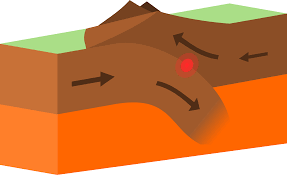
Subduction. Trenches, volcanoes, earthquakes and tsunamis
400
Sedimentation is described as the deposition of suspended particles. Describe how the speed of water flow and particle size can affect the removal, transport, and deposition of particles.
Particle size and water speed have the greatest impacts on the rates of sedimentation. In general, the faster the water is moving the larger the size of the particles it can carry. As water begins to slow, larger particles begin to fall out of suspension and deposit themselves. Larger pieces of rock or gravel may not be able to be carried very far or at all, even in swiftly moving water. The smallest particles, like those of silt, can stay suspended in the water for a very long time, allowing them to travel great distances. In fact, water must be very still for long periods of time before silt particles will deposit themselves.
400
List 4 steps of how deltas are formed.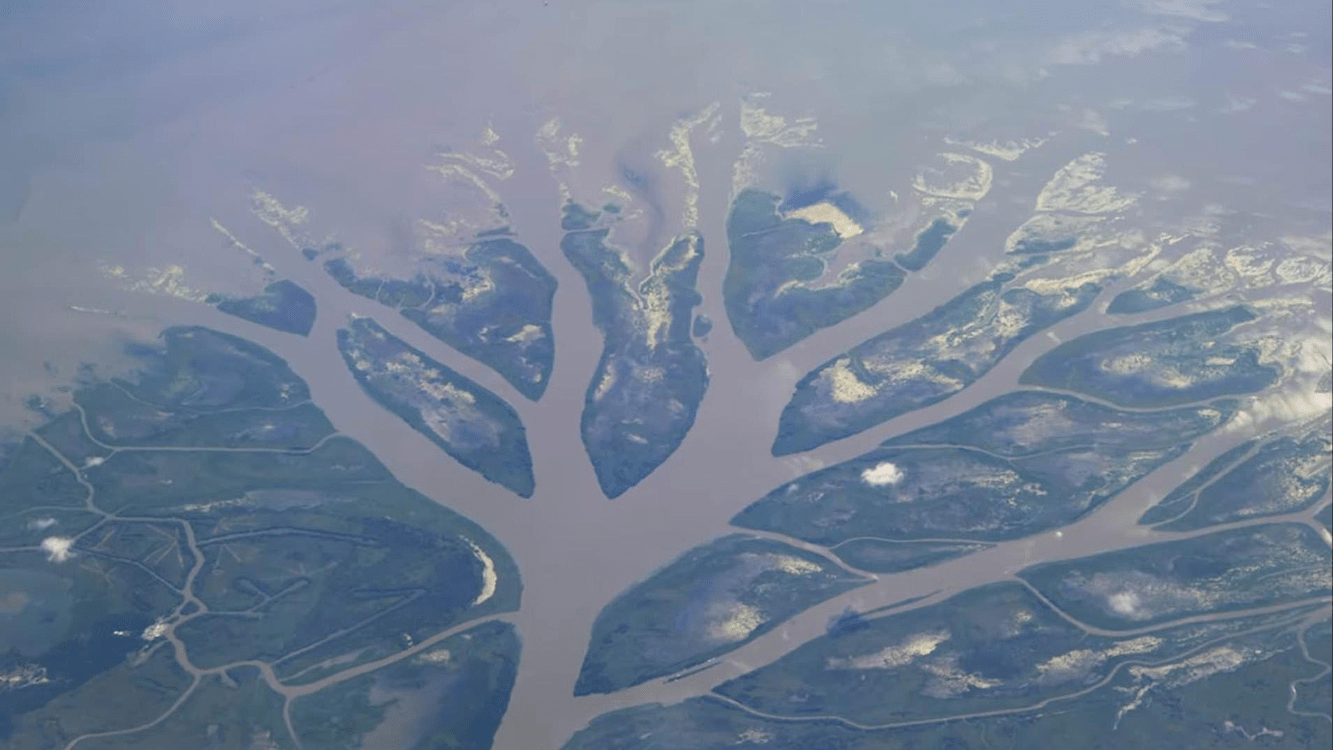
Rivers slow down (near sea/ocean), Deposit sediment, waves/tides do not remove sediment as fast as it is deposited, slow/no erosion, mouth of river gets wider, rivers branch
400
Identify three factors, not including moon phase, that can impact a local tide height.
shape of the coastline / wind patterns / air pressure / size and depth of a body of water
500
Outline the theory of plate tectonics.
-Earth’s crust/lithosphere is made of individual tectonic plates which lie on top of the mantle
-The plates may move independently by convection currents
-Where the plates collide are called plate boundaries
-Plate boundaries can be convergent, divergent or transform
500
Name this land feature. Which boundary would these form? EXPLAIN how these are formed.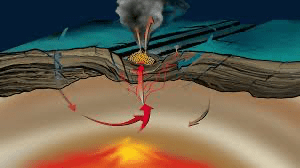
Hydrothermal vents. Divergent. Ocean water seeps through crack in the crust at the boundary. Water moves over a magma chamber, dissolves minerals from the rocks, turning it black. Temperatures reach over 100C which escapes through a fissure in the crust. As the hot water hits cold, the minerals form solids and create a chimney or vent.
500
List the 4 types of erosion and give 1 example of each.
Ice: Glacier
Wind: Sand from Sahara / wind from huricane
Water: sediment runoff from river into ocean
Gravity: rocks falling off a cliff - landslide
500
Define turbidity and explain how it exists in an estuary.
Level of transparency loss water has due to the presence of suspended particles in the water (the higher the turbidity, the harder it is to see through the water).
Fresh water meets salt water. The area where they're found is sheltered from weathering and waves. As the water flows from the fresh water into the salt water, it brings sedimentation where it stays suspended until the water is stilled.
500
Explain the movement of the ocean conveyor belt once it leaves the North Atlantic.
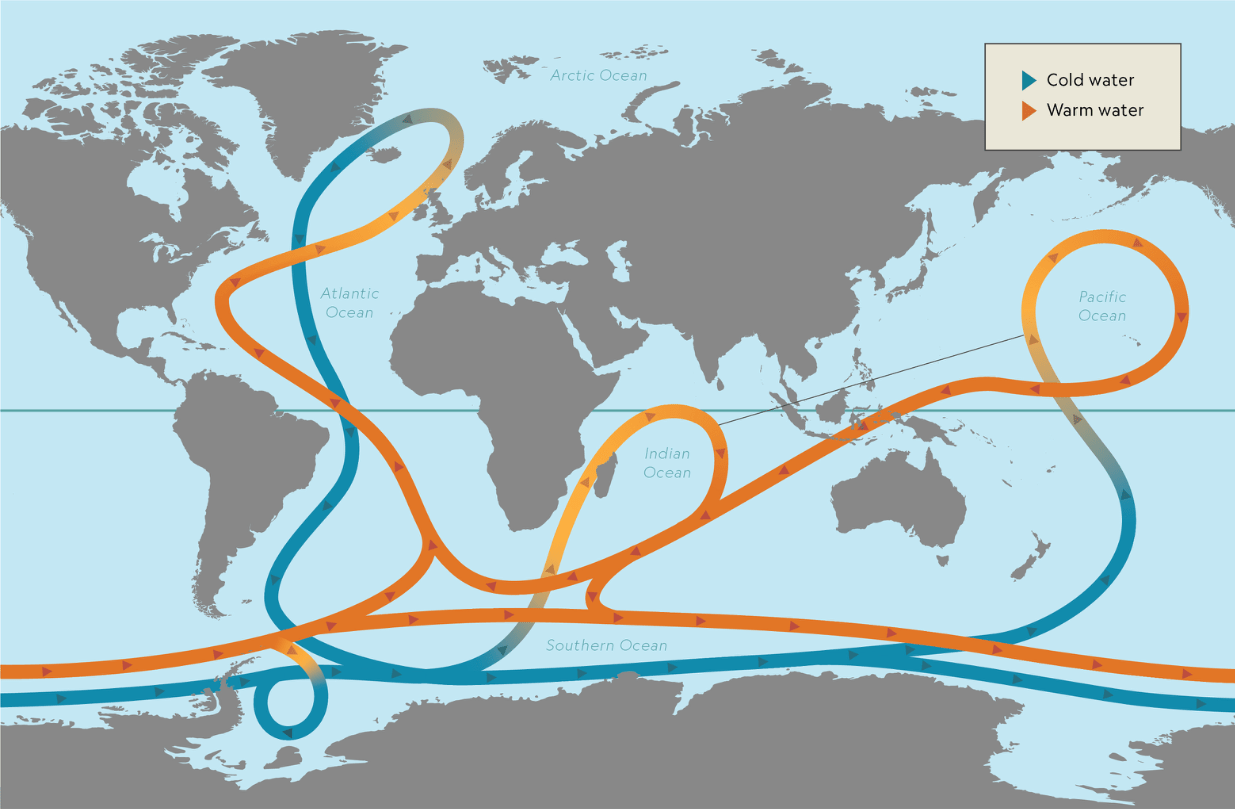
- The water sinks to the seafloor / travels along the seafloor
- It moves south through the Atlantic Ocean
- Travels towards southern ocean / around Africa into the Indian Ocean
- Eventually ir rises (upwelling)
- Circulates the entire planet