A
B
C
D
100
A city notices ice-cream sales and drownings rise and fall together, and a council member proposes limiting ice-cream sales to save lives.
Correlation ≠ causation (confounding)
Summer heat independently drives both ice-cream sales and swimming (hence drownings). Neither causes the other.
100
After a handful of winning trades, a novice is sure he has 'figured out the market' and increases his bets dramatically.
Dunning–Kruger effect
With little skill, you also lack the skill to see your own gaps, breeding overconfidence after a few lucky wins.
100
The One Rude Driver
'A driver with plates from city X cut me off this morning — drivers from X are all reckless.'
Hasty generalization
A single instance cannot characterise a whole population; the sample size is one.
100
A surgeon takes a reckless shortcut that happens to save the patient, and the decision is praised afterward as brilliant.
Outcome bias
Judging a decision by how it turned out rather than by the information and process at the time. A lucky result doesn't make a reckless call wise.
200
Two governments kept funding a famously money-losing supersonic jet, reasoning they had 'already invested too much to quit now.'
Sunk cost fallacy
Money already spent is gone whatever you choose next. Only future costs and benefits should drive the decision.
200
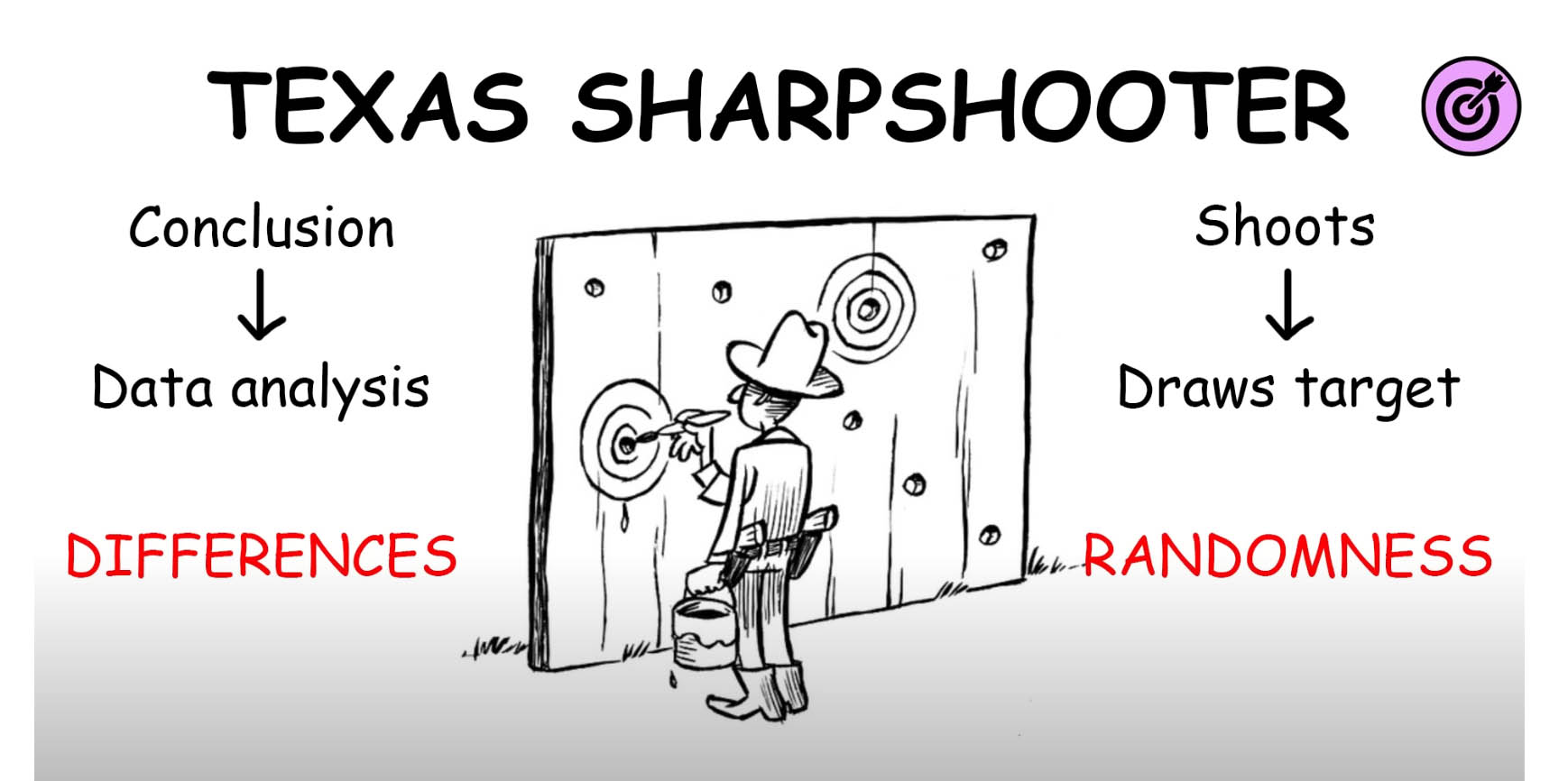
A small town discovers an unusually high number of cancer cases on one street and concludes a nearby plant must be the cause.
Texas sharpshooter fallacy
Drawing the 'target' around a random cluster after the fact. Some streets will have high counts by chance alone.
200
'My opponent suggested reviewing one small tax — clearly he wants to bankrupt every family in the country.'
Straw man
The opponent's modest position is distorted into an extreme one that's easy to attack.

200
A house first listed at $900k feels like a bargain when offered at $820k, even though comparable homes sell for $750k.
Anchoring
The list price sets a reference point that distorts perception of value, making an overpriced offer feel like a deal.
300
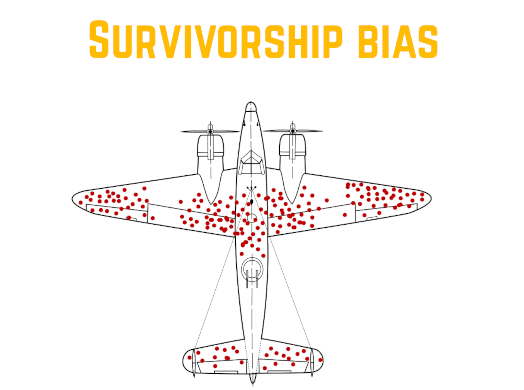
A bestselling claim: 'Most top CEOs wake at 5 a.m., so waking early is a cause of success.'
Survivorship bias + correlation ≠ causation
You only hear about the successful early risers; countless early-rising people who failed are invisible. Even if real, the correlation needn't be causal.
300
'Every morning the rooster crows and then the sun rises, therefore the rooster's crowing causes the sunrise.'
Post hoc ergo propter hoc
'After this, therefore because of this.' Temporal sequence is not causation — both events share the cause of Earth's rotation.
300
'If we allow staff one work-from-home day, soon nobody will come in at all and the whole company will collapse.'

Slippery slope
Asserts an inevitable chain of consequences without showing each link is likely.
300
'Wealthier regions vote for Party Y, therefore wealthier individuals must vote for Party Y.'
Ecological fallacy
What holds for a group average need not hold for individuals within it.
400
A breakout rookie wins an award, then plays noticeably worse the next season; commentators blame complacency and fame.
An exceptional rookie season is part skill, part luck. Extreme results naturally drift back toward the average next time — no special cause needed.
400
The Wonder-Vitamin Headline
A study finds people who take a certain expensive vitamin live longer, reported as proof that the vitamin extends life.
Correlation ≠ causation (healthy-user bias)
Vitamin takers differ systematically — wealthier, more health-conscious, better diets — and those factors drive longevity.
400
A founder boasts '1,000,000 sign-ups!' to investors, while only about 4,000 of them opened the app this month.
Vanity metric / denominator neglect
A big gross number hides the rate that matters. 1,000,000 sign-ups with 4,000 active users is a 0.4% engagement story.

400
1973 Berkeley graduate data showed men were admitted at a higher overall rate than women, taken as proof of gender bias against women.
Simpson's paradox
Women applied disproportionately to the most competitive departments with low admit rates for everyone. Within most individual departments, women were admitted at equal or higher rates.
500
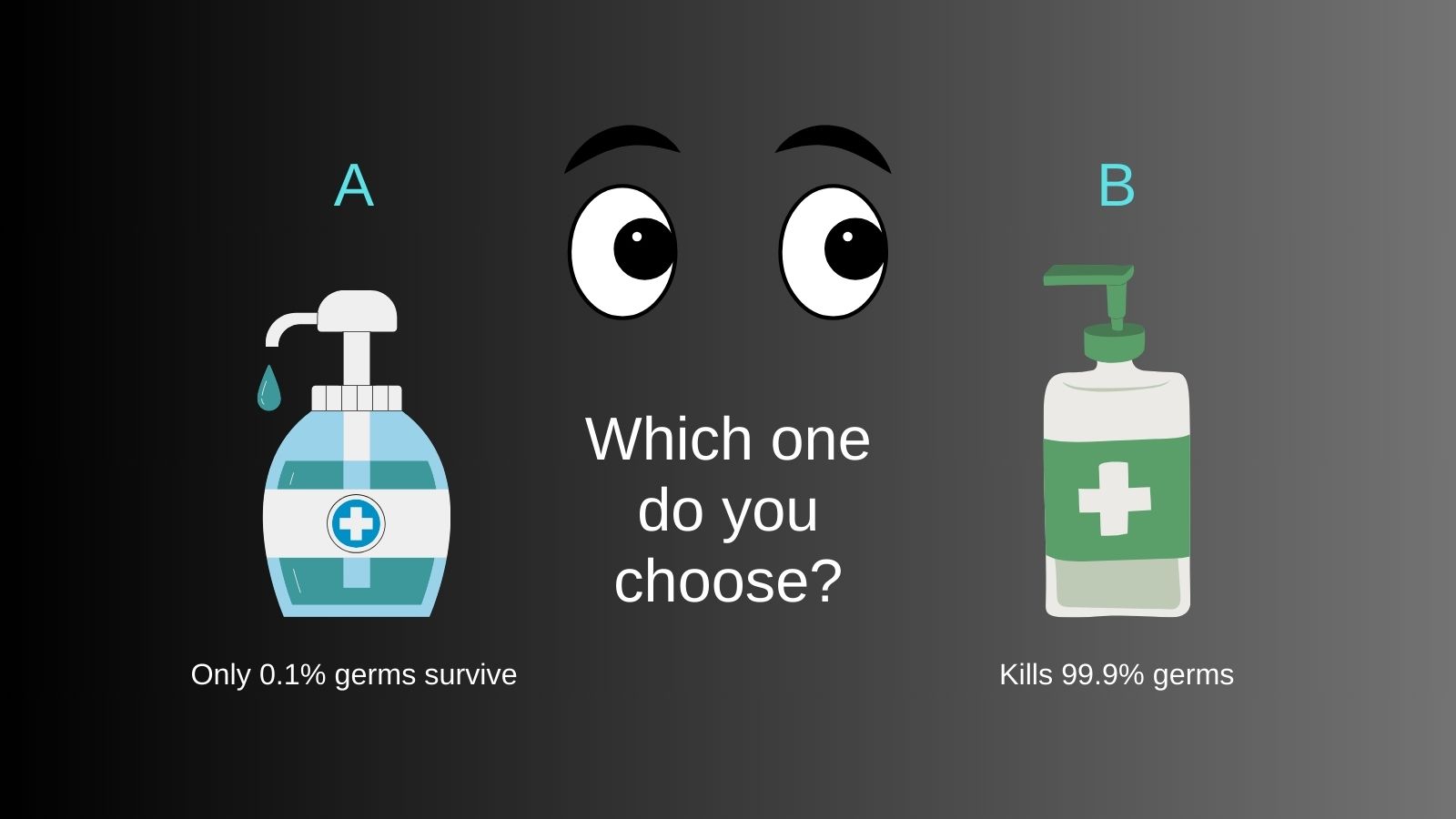
Shoppers rate beef labelled '75% lean' as higher quality and tastier than the identical product labelled '25% fat.'
Framing effect
The two labels describe identical beef, but the positive frame ('lean') feels better than the negative one ('fat').
500
A famous actor endorses a supplement, and sales soar as people assume it must therefore be effective.
Appeal to (irrelevant) authority
Fame and acting talent are not expertise in medicine or nutrition; the endorsement carries no evidential weight.
500
'Everyone I know is buying this crypto coin and it keeps going up, so it must be a smart investment.'
Bandwagon effect
Popularity and a rising price are not evidence of underlying value; crowds can be wrong together.

500
At Monte Carlo in 1913, black came up many times in a row; gamblers bet ever-larger sums on red, certain it was 'due.'
Gambler's fallacy
Each spin is independent; the wheel has no memory. After 26 blacks, red is exactly as likely as before, not 'overdue.'