Lumpy Lymph
Immunity pt. 1
Immunity pt. 2
Mystery Box
Miscellaneous
100
Go to "Lumpy Lymph" 500
:)
100
Which cells release their antibodies into the plasma so that the antibodies can attack the antigens to which they can bind?
Plasma B cells
100
What is acquired immunity provided by antibodies in the blood plasma?
Humoral immunity
100
What is white lymph that has absorbed fat and is eventually returned to the bloodstream?
Chile
100
How much of the leaked interstitial fluid eventually leads to the lymph vessels?
10%
200
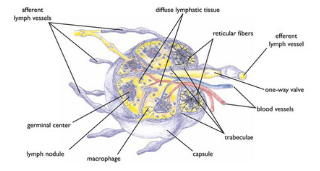
What are lymph nodules within lymph nodes that can rapidly produce lymphocytes if invaders are found in the lymph?
Germinal center
200
What are chemicals that promote fever by acting on the hypothalamus?
Pyrogen
200
What responds to antigens by releasing chemicals that promote inflammation and attracting macrophages?
Delayed hypersensitivity T cell
200
What is an immune response targeted at a specific pathogen or toxin after exposure?
Acquired immunity
200
Where do T cells mature?
Thymus
300
What do lymph nodes have that lymph nodules do not?
Capsule
300
What is the purpose of urine?
Washing out the urinary tract to the urethra
300
Where does active artificial immunity come from?
Vaccine
300
What is a virus?
A unit of either DNA or RNA that has its own protein coat
300
What is elaphantiasis?
A tropical disease in which the legs swell and become hug because tropical parasites get into the lymph vessels and block them up
400
What are the Peyer's patches?
Groups of lymphocytes in lymph nodules in the small intestine and vermiform appendix
400
What is the difference between the variable regions and constant region of an antibody?
Variable regions - tips of the antibodies at which it can bind to the antigen
Constant region - determines the class of the antibody
400
What are three functions of the spleen?
Stimulates a response from the diffuse lymphatic tissue or the lymph nodules
Cleans the blood of worn out erythrocytes
Acts as a reservoir (backup supply) of oxygen-rich blood
400
What are interferons?
Proteins secreted by cells in infected with a virus to stimulate nearby cells to strengthen themselves against viral infection
500
(1) Explain how your lymphatic system maintains fluid balance. (2)Why is it important that the lymph node gets 10% of the fluid that’s leaked from the blood?
(1) - Blood capillaries and lymph capillaries are found very close together. Fluid drains out of blood capillaries very easily. This gives cells O2 and nutrients and picks up waste. 90% of this clear fluid goes back into the blood capillaries. 10% goes into the lymph capillaries. The ability of lymph capillaries to remove or not remove fluid maintains the fluid balance in the body
(2) - Allows the lymph vessels to collect a "sample" of the fluid from the blood. If there are any pathogens, the lymph node can readily active macrophages and lymphocytes. If the lymph is bad, it can be filtered at the lymph node
500
List five ways in which antibodies fight infections.
Binding directly to the antigen
Bind the antigen together in groups
Activate the compliment
Stimulate phagocytosis
Stimulate inflammation
500
What are Effector T cells? Which two cells do they produce (as well as their function)?
Effector T cells - attach to the invading cell or infected cell and provide long-lasting immunity. Produces...
Cytotoxic T cell - punctures foreign or infected cells to destroy them
Helper T cells - stimulate B cells and cytotoxic T cells
500
On the lymph node diagram, label: macrophage, capsule, trabeculae, reticular fibers, germinal center, diffuse lymphatic tissue, afferent lymph vessels, efferent lymph vessels.