What is the Animal?
Habitats
animal characteristics
migrations
100
When born, along with up to a dozen siblings, it immediately swims away from its mother.
What is a Great White shark.
100
This habitat is BLAZING HOT (trust me)
what is a dessert habitat?
100
spiders have eight legs and chelicerae with fangs that inject ______.
what is venom?
100
___________ is the relatively long-distance movement of individual animals, usually on a seasonal basis.
What is Animal migration?
200
this animal uses its tongue to help it smell. It flicks its long, forked tongue to pick up chemical molecules from the air, ground, or water.
What is a Snake?
200
It rains a lot over here
What is a rainforest?
200
Jellyfish are animals of the phylum Cnidaria. They are a monophyletic clade, the Medusozoa. Most of them live in the oceans, in ____ water, where they eat small sea animals like plankton and little fish, and float in the sea. Only a few jellyfish live in fresh water.
What is Saltwater?
200
Different kinds of animals migrate in ______ ways.
What is different ways
300
These mammals spend most of their time in trees and are famous for their incredible acrobatic skills.
What is the Red Panda 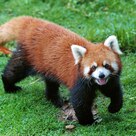
300
It is just water over here.
What is an ocean?
300
Mammals are the group of vertebrate animals which form the class of what?
what is a Mammalia?
300
__________ live in North, Central, and South America as well as Australia, some Pacific Islands, India, and Western Europe. Their markings include bright orange wings covered with black veins and rimmed with a black border and white dots. Females have thicker veins in their wings.
What is a Monarch butterflie?
400
This animal is famous throughout Australia and the world for their bright red color and for their spectacular annual migration to the sea.
What is the Christmas Island Red Crab?
400
We have a LOT of snow!
What is a polar habitat?
400
The Crustacea are a subphylum of arthropods with 50,000 described species. They are part of the phylum Arthropoda. Crustaceans include crabs, lobsters, crayfish, shrimp, krill and barnacles. They are relatives of insects. If the Arthropods are regarded as a superphylum, then the insects and crustaces would be phyla. (see List of animal phyla). The group has an extensive ______ record, reaching back to the Cambrian.
What is Fossil?
400
_________ migration is the movement of various species from one habitat to another during the year. Resource availability changes depending on seasonal fluctuations, which influence migration patterns. Some species such as Pacific salmon migrate to reproduce; every year, they swim upstream to mate and then return to the ocean. Temperature is a driving factor of migration that is dependent on the time of year. Many species, especially birds, migrate to warmer locations during the winter to escape poor environmental conditions.
What is Seasonal Migration?
500
A blob the size of a teacup slinks along the ocean floor in the shallow waters off of Australia.A slime-oozing creature with a boneless body. Many of them also sport brilliant colors and eye-catching patterns on their skin. In fact this sticky slug is often considered one of the most beautiful animals in the world.
What is a Nudibranch?
500
An alligator dozes on a log. A heron soars overhead and lands in the reeds a safe distance away. Sploop! A frog jumps into the water while insects buzz and chirp. This habitat is a busy place!
What is a fresh water habitat?
500
Most marsupial and eutherian mammals have a reproductive cycle known as the _____ cycle
What is eutherian?
500
_________ migration is where birds utilise circadian rhythm (CR) to regulate migration in both fall and spring. In circadian migration, clocks of both circadian (daily) and circannual (annual) patterns are used to determine the birds' orientation in both time and space as they migrate from one destination to the next. This type of migration is advantageous in birds that, during the winter, remain close to the equator, and also allows the monitoring of the auditory and spatial memory of the bird's brain to remember an optimal site of migration. These birds also have timing mechanisms that provide them with the distance to their destination.
What is Circadian migration?