A
B
C
D
E
100
A dark brown to black coat, white tail, forward caving horns, compact build animal
Black wildebeest
100
A reddish coat, elongated face, high shoulders and sharp angled horns
Red hartebeest
100
A faint or shadow stripes, often reduced leg stripping
Plain zebra
100
Narrow stripes, white belly, gridiron rump pattern, dewlap
Mountain zebra
100
A grey-brown coat, black and white face, backward cuving horns
- One of Africa's most aggressive antelope in defence
Roan antelope
200
One of Africa’s smallest antelope
Blue duiker
200
Kneels while grazing.
Warthog
200
Lives in rocky hills, alert and agile
Mountain reedbuck
200
Flagship species for Cape grassland conservation
Bontebok
200
Oily fur repels water.
Waterbuck
300
Indicator of intact Cape Floristic Region
Cape grysbok
300
Hides young in vegetation rather than guarding them.
Steekbok
300
Lives in monogamous pairs, Tiny antelope, elongated snout
Damara dik-dik
300
Stocky pig, dark coarse hair, facial warts
Bushpig
300
National symbol
Springbok
400
Walks on the tips of its hooves.
Klipspringer
400
Has splayed hooves for walking on mud
Sitatuga
400
Runs easily through waterlogged grasslands.
Lechwe
400
Famous for “pronking” behavior
Springbok
400
Emits a loud whistle alarm call.
Mountain reedbuck
500
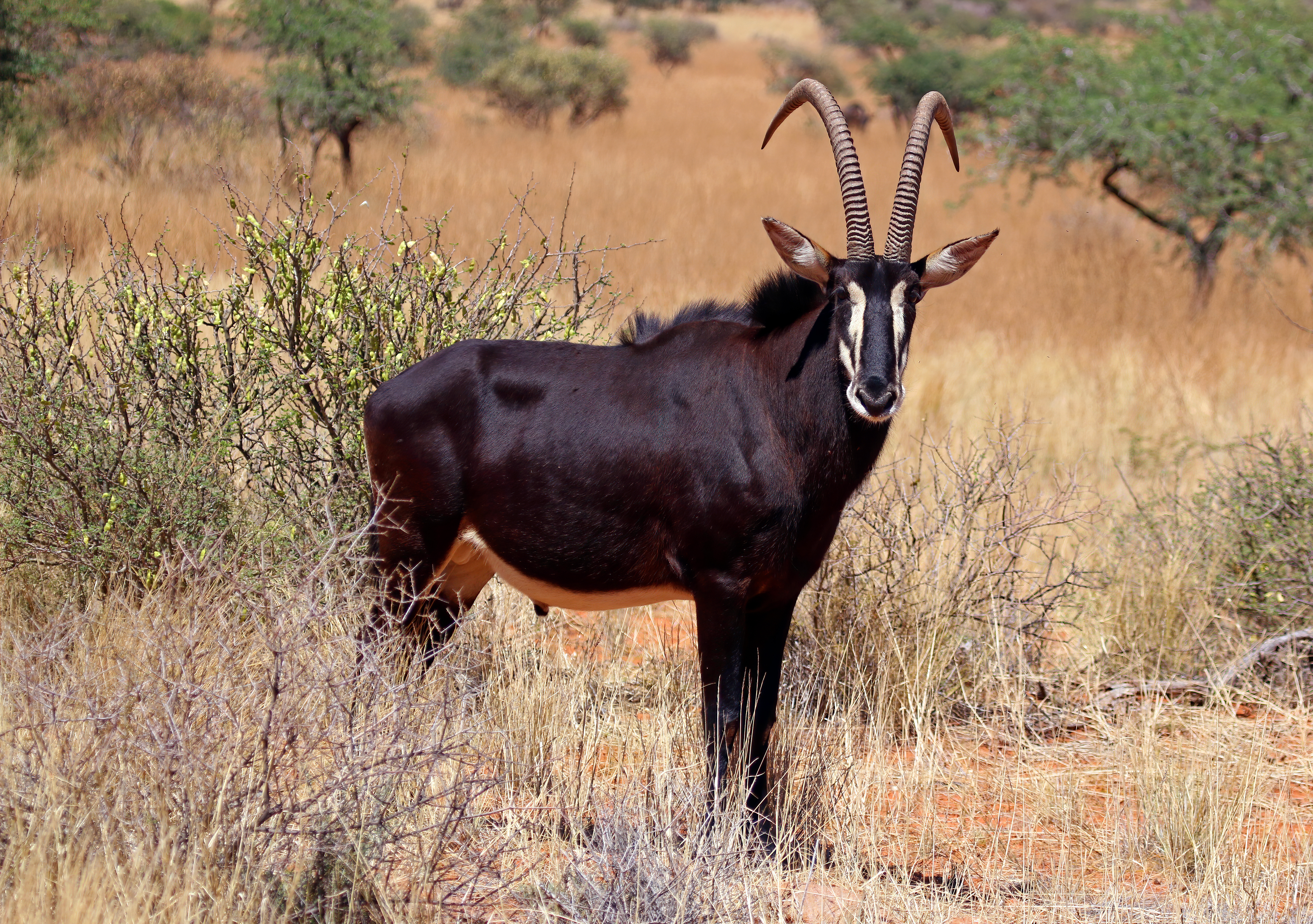
Sable antelope
500
Grey-brown coat, white stripes, long spiral horns (males).
Greater Kudu
500
Reddish-brown coat, slender body, lyre-shaped horns (males).
Impala
500
Shaggy brown coat, white rump ring, long horns.
Waterbuck
500
Similar to bontebok but lighter, wider white face blaze.
Blesbok