Unit 1
Unit 2
Unit 3
Unit 4
Randomizer Units 1-4
100
What bond is found in water molecules?
Polar Covalent Bond
100
What is the easiest substance to pass through the cell membrane?
Small and non-polar
100
True or False?
Enzymes affect the rate of biological reactions
True
100
Signals that bind to the same species of cells are called?
Autocrine
100
Describes the formation of a bond between monomers with the removal of a water molecule.
a. Hydrolysis
b. Dehydration
B. Dehydration
200
What is the main function of cellulose?
Is a carbohydrate that provides structural support to the plant cells
200
What are the two different types of transport, and which way do they move?
Passive Transport moves from high to low concentration, versus Active Transport, which moves from a low to a high concentration
200
Explain one of the laws of thermodynamics
First Law: Energy can neither be created nor destroyed, but it can be transferred
Second Law: As energy gets converted, the universe becomes more disordered
200
What are the two types of signaling?
Long Distance and Short Distance
200
Which of the following requires an input of energy for membrane transport?
a. Charged ion moving against the concentration gradient
b. Water moving into a hypertonic cell
c. A charged ion moving with a concentration gradient
d. Water moving out of a hypotonic cell
a. Charged ion moving against the concentration gradient
300
Explain the difference between dehydration and hydrolysis
Dehydration is when you build a polymer by removing H2O(water)
Hydrolysis is when you break apart a polymer by adding H2O(water)
300
Why is the inner membrane of the mitochondria highly folded?
To increase the surface area for oxidative phosphorylation
300
When an enzyme denatures, which structure isn't affected?
Primary
300
Which organelle is responsible for the endocrine signal?
Rough ER
300
Insulin is a protein hormone that is secreted in response to elevated blood glucose levels. When insulin binds to
its receptors on liver cells, the activated receptors stimulate phosphorylation cascades that cause the
translocation of glucose transporters to the plasma membrane.
Based on the information provided, which of the following best describes the role of insulin in this liver cell signal
transduction pathway?
a. It acts as a ligand.
b. It acts as a receptor.
c. It acts as a secondary messenger.
d. It acts as a protein kinase.
a. It acts as a ligand.
400
What are the main 4 macromolecules?
Nucleic Acid, Lipids, Carbohydrates, and Proteins
400
What is the difference between hypertonic, hypotonic, and isotonic solutions?
Isotonic Solutions: Equal parts of solvent and solute
Hypertonic Solutions: High solute, low solvent concentration
Hypotonic Solutions: Low solute, High solvent concentration
400
Explain how the Calvin Cycle depends on the Light-Dependent reaction to function
Without the Light-Dependent reaction, NADPH and ATP wouldn't be produced to power the Calvin Cycle, and the Calvin Cycle would not be able to function and create glucose.
400
Name all 3 steps in signal transduction and what occurs during each step
1. Reception- The signal molecule binds to the receptor
2. Transduction- To bring the message to its location for response and regulate the signal
3. Response- Carries out a specific action; ex- Gene expression
400
Oligomycin is a compound that can block the channel protein function of ATP synthase.
Predict the effects of using oligomycin on the proton gradient across the inner mitochondrial membrane and justify your prediction.
Predict: The proton gradient will increase (and may eventually plateau) or there will be an increase in proton concentration in the intermembrane space.
Justify: Protons will not be able to flow across the membrane, but the ETC(Electron Transport Chain) will still pump protons into the intermembrane space
500
Name at least 2 of the 4 levels of protein structures and their functions
*Bonus: Extra 100 points if you can name all 4 and their functions*
1st Level: Determined by the sequence of amino acids called peptide bonds
2nd Level: Folding of amino acid sequences into alpha-helices and beta-sheets; determines the shape
3rd Level: The overall 3D shape of the protein; results from various types of bonds; stabilizes proteins
4th Level: interactions between multiple polypeptide units
500
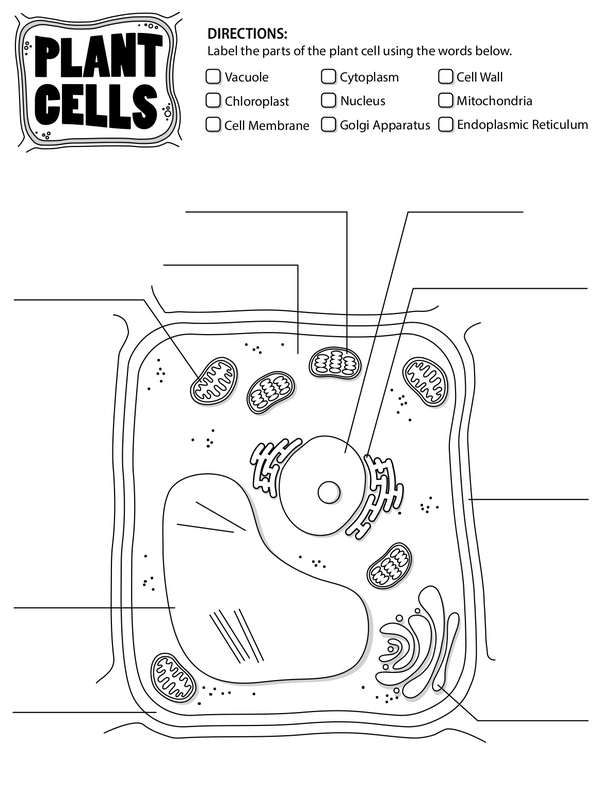
From this image, name the organelles in a plant cell
*Bonus*: Extra 100 points if you can name 2 organelles that are NOT in animal cells
Vacuole, Chloroplast, Cell Wall, Mitochondria, Endoplasmic Reticulum, Cell membrane, Nucleus, Cytoplasm, Golgi Body
*Bonus*: Chloroplast and Cell Wall
500
Name the order of Cellular Respiration
Glycolysis, Pyruvate oxidation, Krebs Cycle, Oxidative phosphorylation
500
What is apoptosis? Describe what occurs?
Apopotosis is programmed cell death. This is when a major error occurs in the cell, or the cell is infected, so to protect the organism, the cells go through the process to get rid of themselves.