DNA and RNA Structure
DNA Replication
Transcription and Translation
Regulation, Expression, and Specialization
Mutations and Biotechnology
100
This is the name of the bonds that hold the two strands of DNA together.
What are hydrogen bonds?
100
This is the name of the model for DNA replication where both parental strands are copied, and the resulting daughter molecules each have one parental and one new strand.
What is the semi-conservative model?
100
This is the full name of the RNA molecule that plays a key role in translation. 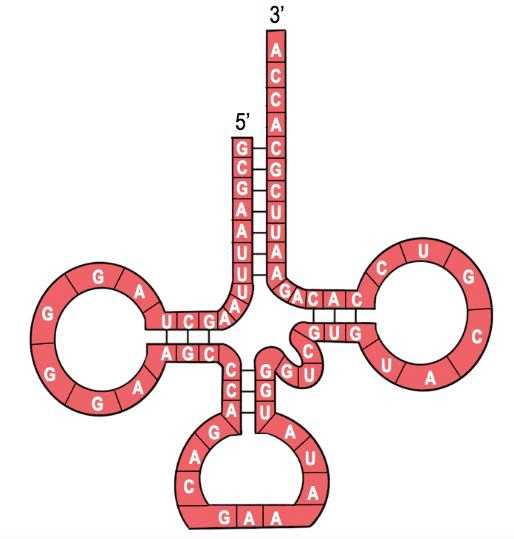
What is transfer RNA?
100
This is the name for a group of genes that can be turned on or off in prokaryotes only (Hint: think trp and lac).
What are operons?
100
This is the primary source of genetic variation.
What are mutations?
200
These two things compose the backbone of DNA.
What are sugar and phosphate?
200
All DNA polymerases synthesizes DNA in this direction.
What is 5' to 3'?
200
This is why translation of an mRNA strand can start before transcription of the mRNA strand is complete in prokaryotes but not in eukaryotes.
What is prokaryotes do not have a nuclear envelope to travel out of; therefore, there are no mRNA modifications that are needed to occur prior to translation?
200
This region acts as the "switch" for the entire operon
What is the operator?
200
This is the name of the procedure used to make multiple copies of DNA in a short amount of time.
What is PCR?
300
This is the percentage of cytosine in a DNA sample, if the thymine percentage is 10.
What is 40%?
300
After helicase 'unzips' the genes in DNA replication, these sections of copied DNA are created on the lagging strand.
What are Okazaki Fragments?
300
This is the reason why one gene can code for multiple proteins (Hint: where non-coding sequences of genes are removed and the remaining pieces are joined together)
What is alternative splicing?
300
The lac operon is usually off, but can be started, which means it is described as this type of operon.
What is inducible?
300
This mutation is a cause of Down Syndrome, because chromosomes do not separate properly during meiosis.
What is nondisjunction?
400
DOUBLE JEOPARDY
(Two part question!)
These are the pyrimidines of our DNA and RNA nucleotides, and their structure can be described as this.
What is Cytosine, Thymine, and Uracil, and single ring structure.
400
During which phase of the cell cycle does DNA replication occur?
The S-phase
400
These two modifications help prevent the degradation of mRNA as it moves from transcription to translation.
What is the 5' cap and the poly-A tail?
400
This is the result of a mutation in the regulatory gene for the trp operon (TrpR)?
What is the continuous transcription of the enzymes that generate tryptophan?
400
A point mutation has occurred to turn the last nucleotide in the codon ACG to a T (ACG --> ACT). This is the type of mutation that has occurred as a result.
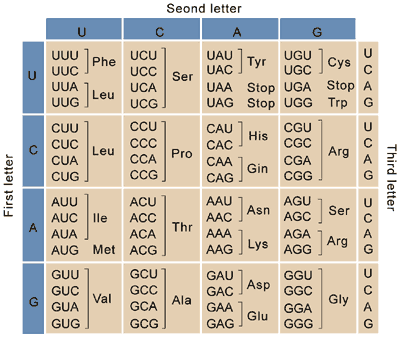
What is a nonsense mutation? (A type of point mutation)
500
This describes how the purines bond with the other base. Along with both of their structures.
What is double-ringed purine bonds with a single-ringed pyrimidine using hydrogen bonds?
500
This is the enzyme that is upstream of DNA polymerase III whose role is to relieve tension in the overwound DNA molecule.
Topoisomerase
500
DOUBLE JEOPARDY
In prokaryotic transcription, this enzyme can bind directly to the DNA, which is a difference from these types of organisms.
What is RNA polymerase and eukaryotic organisms?
500
This is the portion of the gene expression complex in eukaryotic cells that is specific to the gene it is regulating.
What is the activator, or what are specific transcription factors?
500
This is the charge and size of the DNA fragments that would be the furthest from where they are inserted into a well in a gel electrophoresis chamber.
What are the negatively charged smallest fragments?