Energy
Cellular Respiration
Photosyn.
Enzymes
Cell Signaling
Feedback Loops
Cell Cycle
Miscellaneous
100
This molecule is considered the energy currency of cells.
What is ATP?
100
This is where glycolysis takes place.
BONUS: explain why this is significant.
What is the cytoplasm?
BONUS: This implies that glycolysis likely evolved first because all cell types can perform glycolysis.
100
This is the chemical formula for Glucose
What is C6H12O6
100
This is the monomer of enzymes
What are amino acids?
100
This is the name of the cell signaling molecule
Ligand
100
This type of feedback has a target "setpoint"
What is negative feedback
100
This is the phase that cells spend most of their time in:
What is interphase
100
Fruit ripening is an example of this type of feedback
Positive
200
This is the molecule that actually creates ATP through a flow of protons down their concentration gradient.
What is ATP synthase
200
This is the location of the Krebs cycle (also known as the citric acid cycle)
What is the mitochondrial matrix
200
This is the location of the light dependent reactions of photosynthesis
What is the Thylakoid
200
HOW do enzymes speed up chemical reactions?
By lowering activation energy.
200
This is the term for long-distance cell signaling AND how the signal travels through the body
Endocrine - travels through the blood stream
200
Give is an example of a negative feedback loop:
What are body temperature, blood pressure, blood sugar levels, osmolarity, etc...
200
This is the stage that is responsible for DNA Replication
S-Phase
200
These organelles can duplicate outside of the cell cycle
what are mitochondria and chloroplasts
300
Ions like H+ cannot diffuse through the cell membrane because of this chemical property of this structural component.
What are the hydrophobic (or nonpolar) tails?
300
This molecule is consider the final electron acceptor during the final stage of cellular respiration and generates this byproduct.
What is Oxygen (When Oxygen accepts the electrons, it also binds with some of the H+ ions creating H2O as a biproduct).
300
This system provides the necessary energy to form a proton gradient during both photosynthesis and cellular respiration
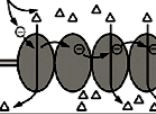
What is the electron transport chain?
300
Describe what it means for an enzyme to be at optimal temperature or pH
Optimal Temperature or pH refers to the environmental conditions where an enzyme is functioning at its highest rate of reaction.
300
This is the role of the transduction step
to pass the message along and amplify it
300
Justify how you can recognize a negative feedback loop
Any system that helps maintain homeostasis, returns the body to "normal" or "setpoint", usually can move in 2 different directions (increase or decrease based on the body's needs)
300
This is the role /importance of mitosis in Eukaryotes
What is growth and repair
300
What is an endotherm and how do they maintain their body temperature?
An animal that is dependent on or capable of the internal generation of heat (AKA warm blooded). And it generates heat as a biproduct of chemical reactions like cellular respiration.
400
Name the term for respiration NOT requiring oxygen AND the two biproducts that can be formed as a result.
What is Anerobic respiration (or fermentation) and what are alcohol and lactic acid.
400
Where does the energy come from to move H+ ions against their concentration gradient?
What is the movement of donated electrons from NADH and FADH2 down the ETC.
400
This is responsible for the energy used to make ATP during the light dependent reactions
What is a proton gradient OR What is a high concentration of H+ Ions moving through ATP synthase
400
Explain what does it mean for an enzyme to denature (Be as specific as possible and use as many details as you can). What happens to the rate of reaction?
When an enzyme denatures, it loses its shape. This means the substrate can no longer bind to the active site and little to no product will be formed because the rate of reaction slows down or stops entirely.
400
In the immune system, antigen presenting cells use this method of communication
What is direct contact or juxtracrine
400
Give an example of a positive feedback loop AND justify how you know it is a positive feedback loop.
What are: child birth, a clotting response, fruit ripening
All of these responses move forward in an irreversible direction, moving away from homeostasis. The response triggers an increase in the signal which continues triggering the response.
400
These are the stages of the cell cycle in order (including all phases of Mitosis):
Looking for 8 total
What is: G1, S, G2, Prophase, Metaphase, Anaphase, Telophase, cytokinesis
400
This molecule provides oxygen as a bi-product when split during the light reaction of photosynthesis
What is water (H2O) ?
500
This is the role of pigments in plants and HOW do they accomplish this.
What is absorbing light energy by exciting electrons that can be used in the ETC (i.e. moving them out to higher energy level orbitals).
OR - Using light energy to split a molecule of H2O into H+ ions, Oxygen, and free electrons.
500
Explain the process of cellular respiration including each step, location, and transition molecules starting with Glucose and ending with ATP.
Glucose is broken down in the cytoplasm during glycolysis into pyruvate and generates some ATP and NADH. These molecules then travel to the mitochondrial matrix. Along the way, pyruvate becomes Acetyl CoA. In the mitochondrial matrix, the krebs cycle generates ATP, FADH2, NADH, and the biproduct CO2. The ATP and electron carries go to the Inner Mitochondrial membrane. FADH2 and NADH are oxidized donating their electrons to the ETC and H+ ions. H+ ions are moved across the membrane against their concentration gradient using the energy from the ETC. The H+ ions then move down their concentration gradient through ATP synthase creating ATP. The remaining electrons are accepted by O2 and join with some H+ ions to generate the biproduct water.
500
Describe why plants gain mass when performing photosynthesis?
Plants are taking in more atoms (H2O and CO2) then they are releasing (O2) and storing them in Glucose molecules
500
Explain the relationship between substrate concentration and enzyme activity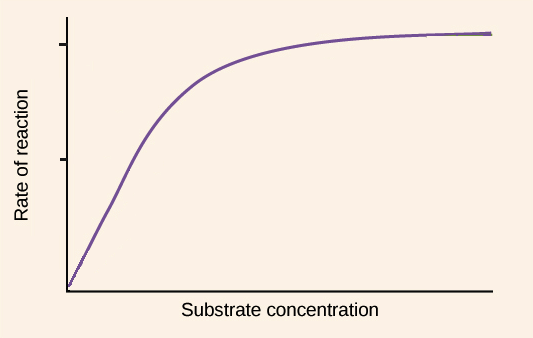
As substrate concentration increases, the rate of enzymatic activity increases until it reaches its saturation point. At this point the reaction remains at a constant rate because all enzymes are actively bound to substrate molecules.
500
This is the primary difference between steroid hormones and peptide hormones in signaling pathways.
Steroid hormones are hydrophobic/nonpolar and therefore target receptors INSIDE the cell while Peptide hormones are hydrophilic/polar and therefore require a cell surface receptor.
500
Ethylene is a plant hormone that causes the ripening of fruit. Scientists have hypothesized that rinsing fruit in a salicylic acid solution may damage ethylene receptors in the fruit. If these plants were exposed to ethylene gas, predict what results would you expect to see if the researcher’s hypothesis was supported?
Fruit should ripen at a slower rate because if the receptors are damaged, the ethylene won't be able to bind to the receptors to initiate the transduction.
500
ID the 3 checkpoints and their roles (what they check for)
G1 Checkpoint: ensures that the cell is growing properly and has enough resources.
G2 Checkpoint: ensures sure DNA replicated properly and cell is ready to divide
Spindle Checkpoint: ensures that the spindle fibers are attached correctly in metaphase so sister chromatids are divided properly
500
This molecule serves as electron acceptors during reduction reactions of the light dependent reactions of photosynthesis
What is NADP+