Speaking Anatomy
Keep it Stable
Inside a Muscle
Name That Bone
Muscle Detective
FINAL JEOPARDY
100
The skin is ______ to the skeletal muscles beneath it.
Superficial
100
During childbirth, contractions promote the release of a hormone that strengthens subsequent contractions. Is this positive or negative feedback?
Positive feedback
100
Which connective-tissue layer surrounds an entire skeletal muscle?
Epimysium
100
Identify the broad, flat projection of the scapula highlighted in the image. It forms the highest point of the shoulder and articulates with the clavicle.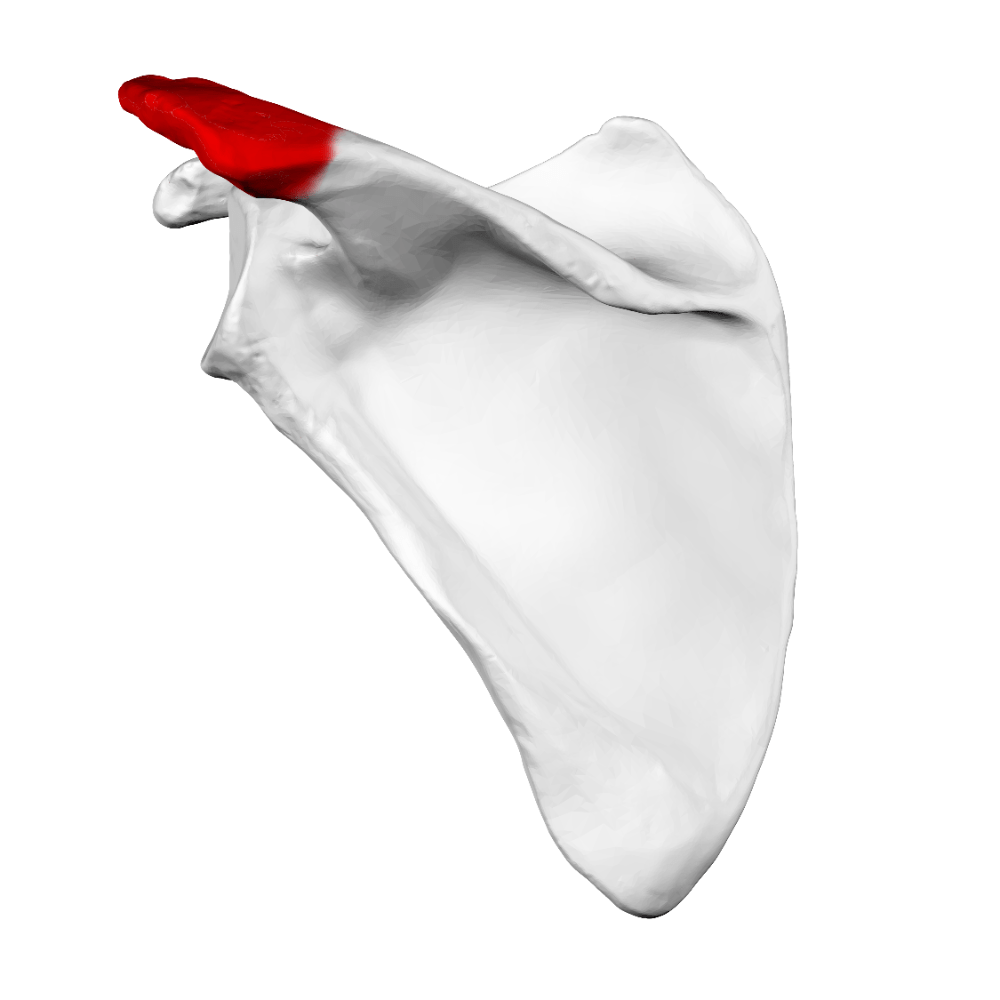
Acromion
100
Which muscle lies deep to the biceps brachii and is a strong elbow flexor regardless of forearm position?
Brachialis
200
A patient raises the shoulders toward the ears. Name this movement of the scapula.
Scapular elevation
200
Specialized cells detect that arterial pressure has changed and send information toward the brain. What component of the feedback loop do these cells represent?
The receptor
200
As the amount of force required by a task increases, which motor units are generally recruited first according to the size principle?
Smaller, lower-threshold motor units
200
Which end of the clavicle articulates with the sternum?
Sternal end
200
This shoulder muscle originates near the inferior angle of the scapula and helps extend, adduct, and medially rotate the humerus. Name it.
Teres major
300
Which anatomical plane divides the body into superior and inferior portions?
Transverse plane
300
Place these parts of a feedback loop in the correct order:
Effector; stimulus; response; control center; receptor
Stimulus → receptor → control center → effector → response
300
During relaxation, which ion is actively transported from the cytosol back into the sarcoplasmic reticulum?
Calcium
300
This rounded structure on the distal humerus articulates with the head of the radius. Name it.
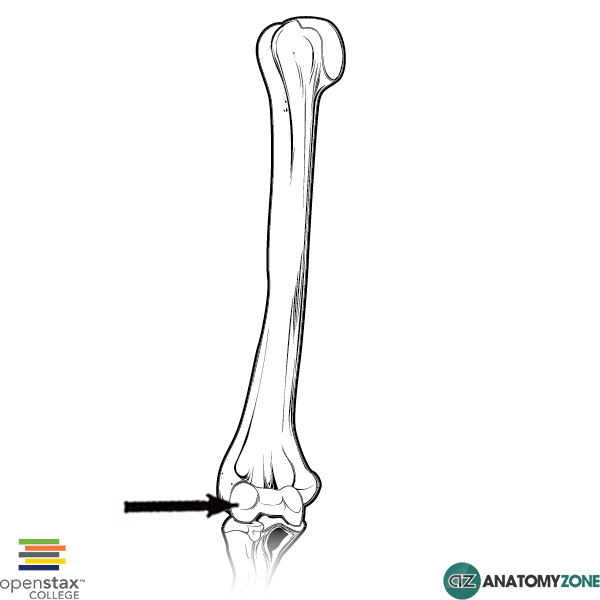
Capitulum
300
Three of the four rotator-cuff muscles laterally rotate or help laterally rotate the humerus. Which rotator-cuff muscle instead medially rotates the humerus?
Subscapularis
300
How can the nervous system increase muscle force without recruiting another motor unit?
Increase the firing frequency of active motor units, or rate coding
400
The prefix intra- appears in the term intracellular. What does intra- mean?
Within or inside
400
A thermostat detects that a room is too cold, and the furnace turns on. Which component of the feedback loop does the furnace represent?
The effector
400
A person holds a dumbbell motionless with the elbow bent. The elbow flexors are active, but muscle length and joint angle remain approximately constant. What type of contraction is occurring?
Isometric contraction
400
A student palpates the prominent bump on the medial side of the distal humerus. What landmark is being palpated?
Medial epicondyle
400
A muscle in the posterior forearm extends digits 2–5 and helps extend the wrist. Name it.
Extensor digitorum
500
Note the movement in the image. Identify both the anatomical plane and the axis about which the primary movement occurs.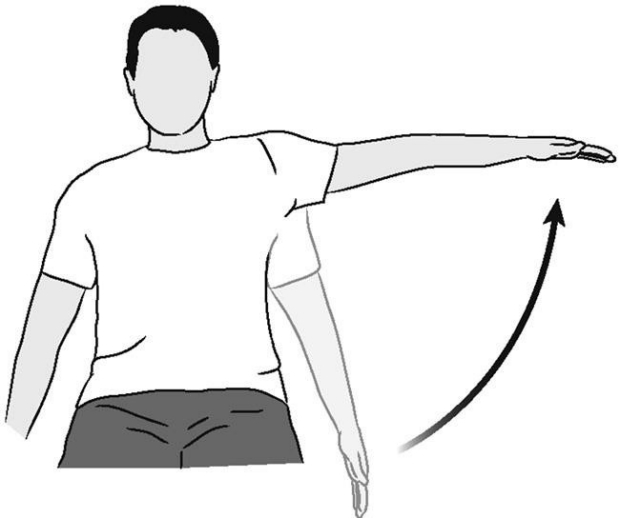
Frontal plane and anteroposterior axis
500
DAILY DOUBLE: A feedback response continually strengthens the original change. What additional event is generally required to prevent the loop from continuing indefinitely?
A terminating event
500
DAILY DOUBLE: A chemical prevents ATP from binding to myosin after a cross-bridge has formed. What specific step of the cross-bridge cycle would be prevented?
Myosin would be unable to detach from actin.
500
Identify the bone from these clues:
- It is a forearm bone.
- Its proximal end forms a large portion of the elbow joint.
- Its distal end is narrower than its proximal end.
Ulna
500
A muscle of the hand pulls the thumb toward the palm and toward the hand’s midline. Name the muscle.
Adductor pollicis
500
Arrange the following events in the correct physiological order:
- Calcium binds to troponin
- Acetylcholine is released
- Myosin binds to exposed sites on actin
- An action potential travels along the muscle fiber
- Calcium is released from the sarcoplasmic reticulum
2 → 4 → 5 → 1 → 3