Define/Patterns
Nervous vs. Endocrine
Hormone Secretion Control
What is that gland?
What is that hormone?
100
Letter b
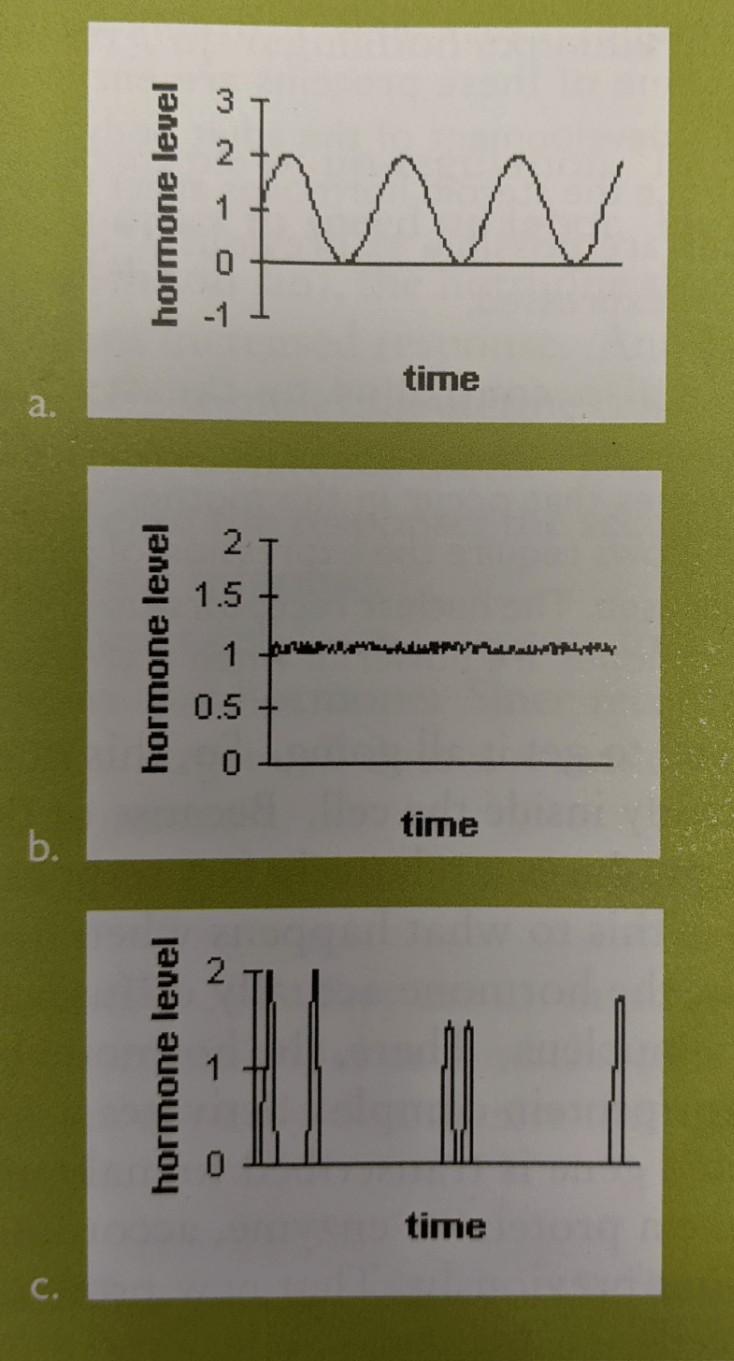
Constant secretion
100
Nervous system speed to respond
Fast
100
One gland releases a hormone that controls another hormone
Hormonal control
100
Parathyroid hormone
Parathyroid gland
100
Lowers blood calcium levels
Calcitonin
200
Letter c
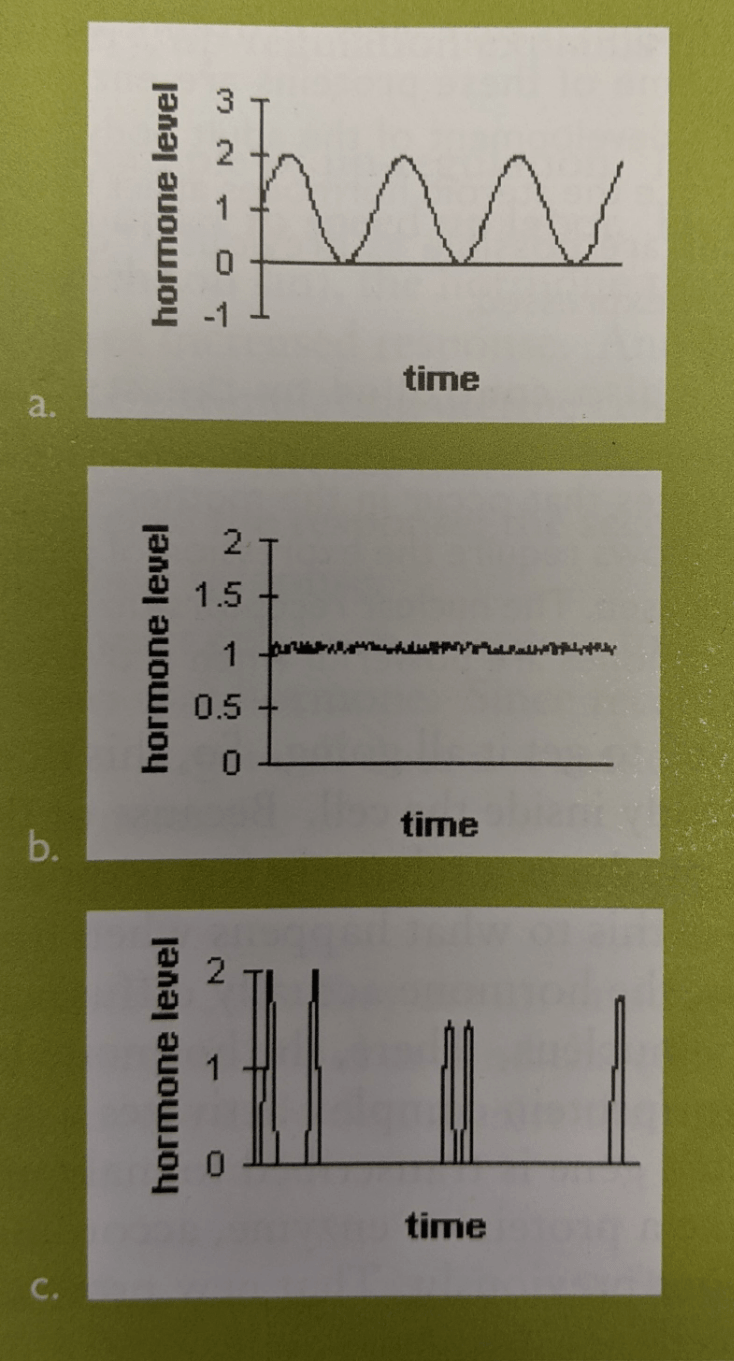
Acute secretion
200
Endocrine system duration of influence.
very long
200
Nervous system innervates the gland with neurons that stimulate the gland to secret the hormone.
Direct neural control
200
Epinephrine and Norepinephrine
Adrenal medulla
200
Develops immune function
Thymosin
300
Letter a.
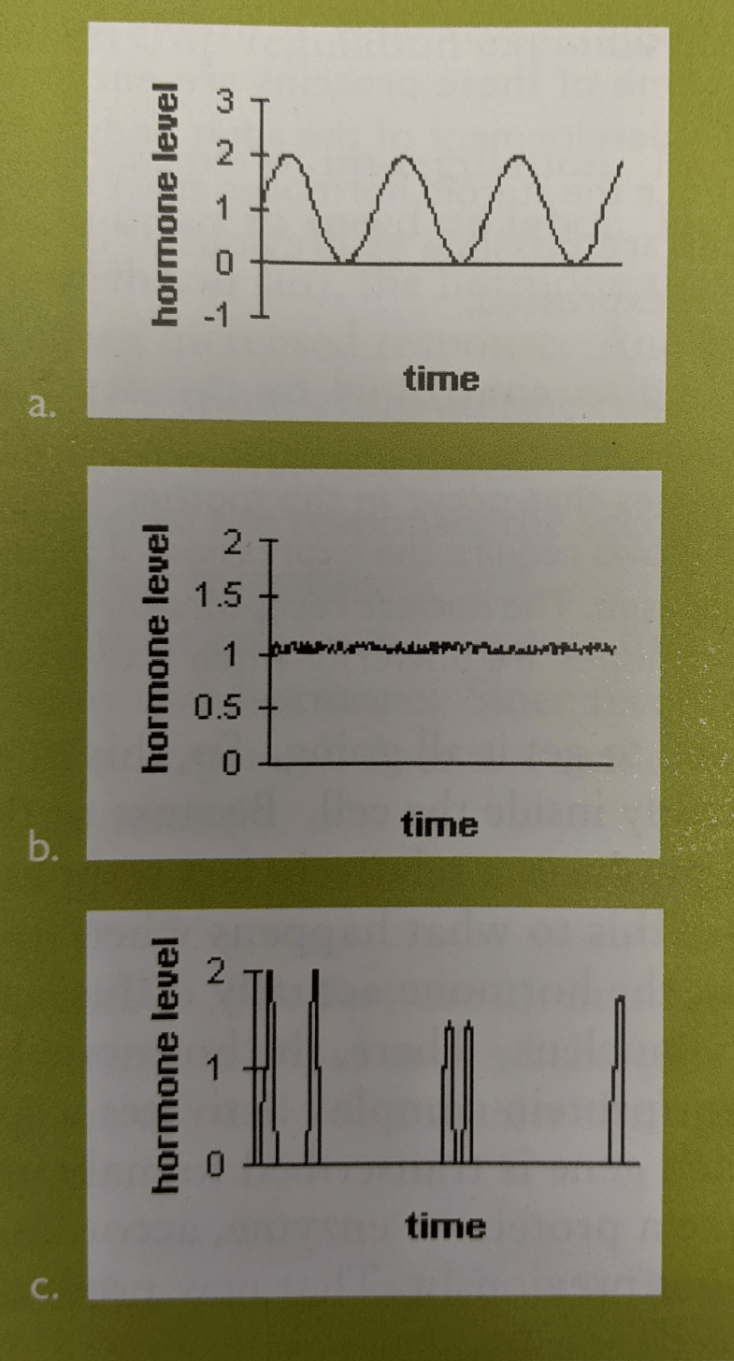
Cyclic secretion
300
Nervous system ability to be repaired.
Central NS no. Peripheral NS yes
300
The level of a chemical other than a hormone affects the endocrine glands.
Nonhormonal control
300
Insulin and glucagon
Pancreas
300
Increases blood glucose
Glucagon
400
Neurons of the hypothalamus that secrete neurohormones rather than neurotransmitters
Neurosecretory cells
400
Endocrine system effectors that it controls
Every cell in body
400
Example: The pancreas detects increased blood glucose levels to as the stimulus to secrete insulin.
Nonhormonal control
400
Calcitonin
Thyroid gland
400
Increases sympathetic response
Epinephrine and norepinephrine
500
Biologically active lipids that produce many effects in the body, including smooth muscle contraction, inflammation, and blood clotting
Prostaglandins
500
Nervous system strength of signal
Constant. (remember action potentials do not vary in strength)
500
Example: Anterior pituitary gland secretes Adrenocorticotropic hormone to cause release of cortisol from adrenal glands.
Hormonal control
500
Melatonin
Pineal gland
500
Increases blood calcium levels
Parathyroid hormone