3.1-3.2 Specialist & Species
3.3-3.5 Survivorship, K & Pop Growth
3.6 Age Structure
3.7 TFR
3.8-3.9 Human Pop & Demographics
100
Organisms that are typically larger, longer-lived, and take significantly longer to reach sexual maturity. These species have fewer offspring but dedicate a lot of energy to their offspring through parental care.
what is k-selected species
100
There is high survivorship in early and mid-age, with a rapid decrease in old age.
Type I
100
display the relative numbers of individuals in a population and their respective ages. Ecologists use this data, along with information about reproductive potential, to predict the future growth rates of a population
What is an age structure diagram
100
What is the the average number of children that a woman in a particular population will have
TFR (total fertility rate)
100
A method for determining the number of years it will take for some measure to double, given its annual percentage increase
What is the rule of 70.
200
typically smaller, shorter-lived organisms that reach sexual maturity quickly. These species have a lot of "energetically cheap" offspring; they are large in number but the parents do not invest energy into taking care of them. This is favorable in low-density conditions where there is little competition for resources.
what is r-selected species
200
This survivorship curve shows a constant death rate across all age groups.
Type II
200
Ages 0-14
Ages 15-44
Ages 45+
What is pre repoductive
What is reproductive
What is post-reproductive
200
What are the number of deaths of children under the age of one per 1,000 people in a population.
IMR (infant mortality rate)
200
a key economic indicator as it relates to the total value of foods and services provided.
What is GDP (Gross domestic product)
300
organisms that have very broad niches, meaning they are able to use a wide variety of resources
what is Generalist species
300
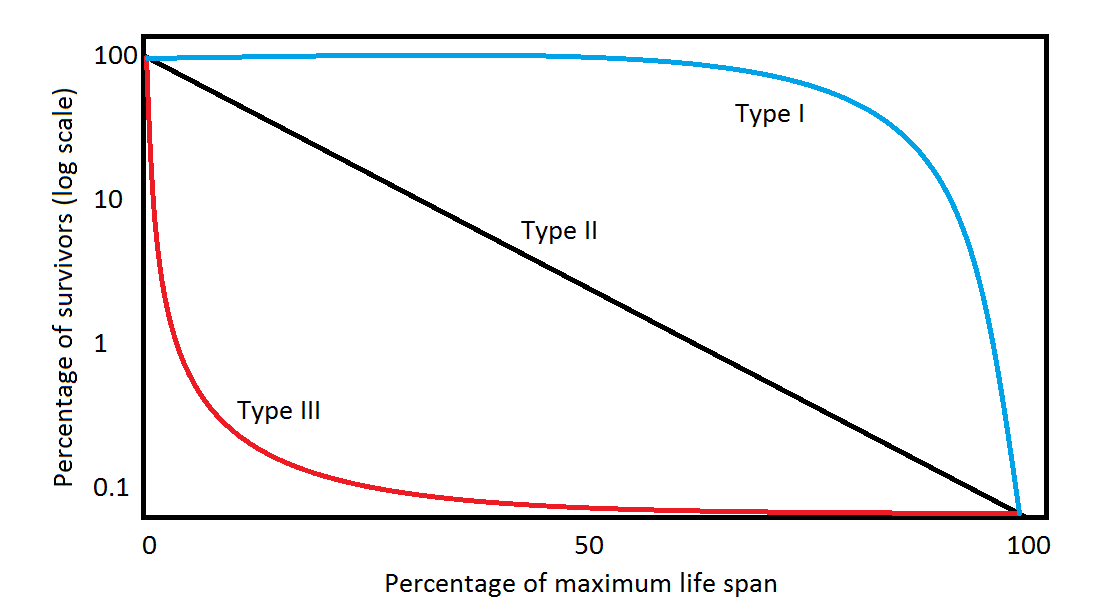 What type of survivorship curve would fish have?
Type III
300
Which country has the highest growth rate?
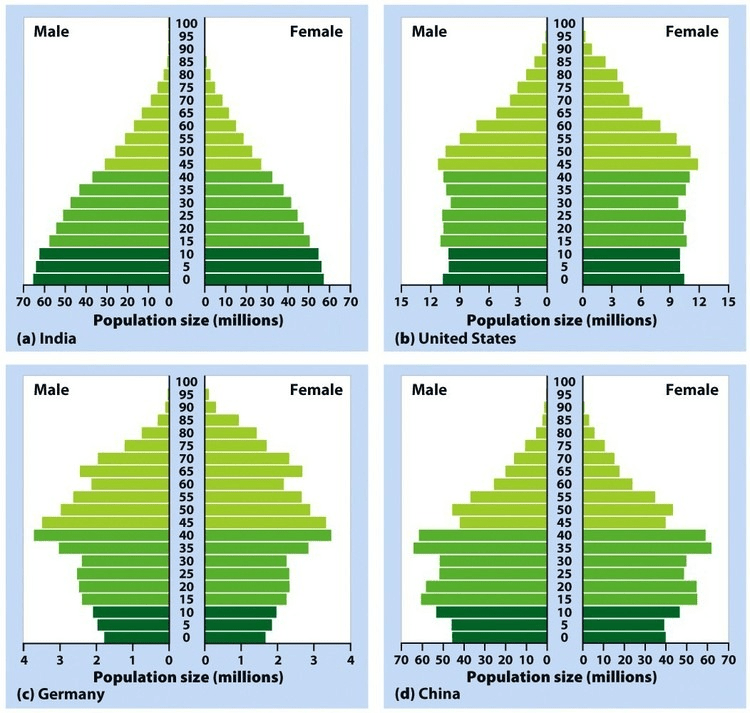
India
300
this is the equation for population change
What is (birth + immigration) - (death + emigration)?
300

The overall measure of the quality of life for people in a population
Standard of living
400
organisms that have very narrow niches, meaning they are able to use only specific resources.
what is specialist species
400
Explain why amphibians are generally classified under a Type III survivorship curve.
high mortality in early life stages due to minimal parental care
400
**TURKEY TRIPLE**
Which demographic transition stage is Afghanistan in based on this Age Structure Diagram?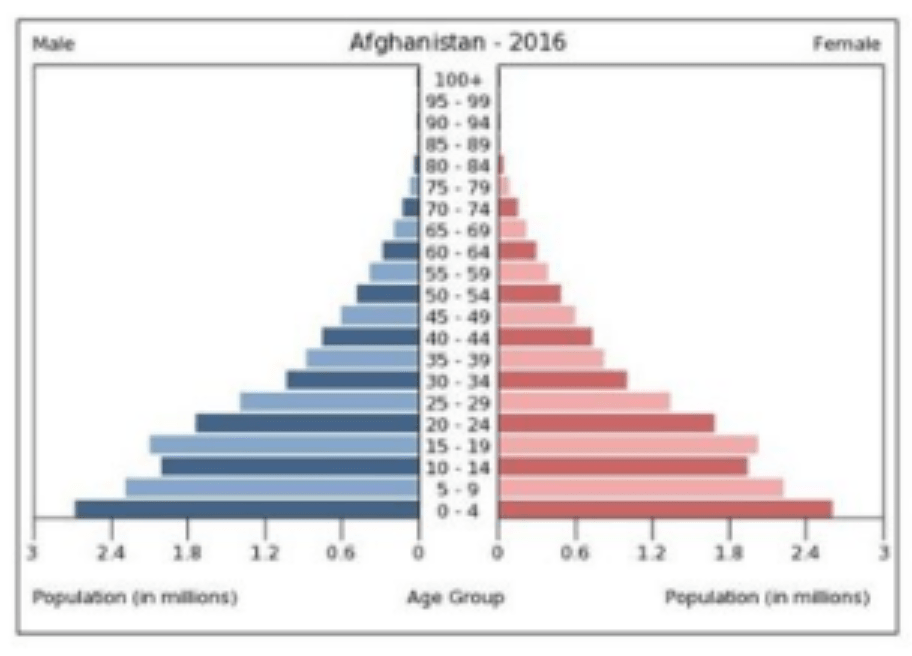
stage 2
400
Factors that typically leads to a decrease in TFR.
increased education for women, or access to family planning
400
The maximum reproductive capacity of an organism under ideal conditions
Biotic potential
500
Species that follow the logistic growth graph model
Species that follow the exponential growth graph model
What is
k-selected- logistic
r-selected-exponential
500
Which type of reproductive strategist is more likely to exhibit a Type III curve, and why?
r-selected, because they produce many offspring with low survival rates
500
An age structure diagram with in the shape of a column suggests that this is happening in the population.
Remaining Stable
500
This statistic is the Total Fertility Rate required to compensate for the amount of the population that dies each year. Globally, it is about 2.1.
Replacement Fertility Rate
500
The shift from high to low birth and death rates as a country industrializes.
demographic transition