Lotic or Lentic?
Wetlands
Here fishy fishy!
Lakes and Ponds
Water Quality
100
These type of ecosystem features flowing fresh water in one direction.
What are lotic ecosystems?
100
This wetland is known for it's grasses, especially cattails.
What is a marsh?
100
This specialized organ allows fish to sense barometric pressure and vibrations in the water.
What is a lateral line?
100
During this season, warm water accumulates at the top of the water, where cold water sinks to the bottom.
What is Summer?
100
When testing water quality, we conducted for tests: ammonia, nitrites, phosphorus, and _________.
What is pH?
200
This type of ecosystem has stagnant water.
What is lentic?
200
This wetland is known for having permanent water and trees throughout.
What is a swamp?
200
This specialized feature on a fish protects the gills.
What is an operculum?
200
During this season, warm water sinks to the bottom and cold water sits at the top.
What is winter?
200
This creature is typically the nymph or larval stages of insects. They are called __________.
Macroinvertebrates
300
Name the three sections in a lentic system.
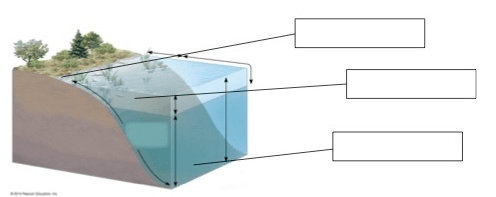
What are the littoral zone, the limnetic zone, and the profundal zone.
300
This wetland is known for being acidic and is typically where an old lake was.
What is a bog?
300
The emulation of systems, models, and elements in nature is called _________.
Biomimicry
300
The process of lake temperature shifting (where the warm and cold water are) is called _________.
Turnover
300
When testing water quality we want to make sure ammonia, phosphorus, and nitrties are: above 0.5 ppm or below 0.5 ppm?
Below 0.5 ppm
400
Name the three sections in a lotic system.
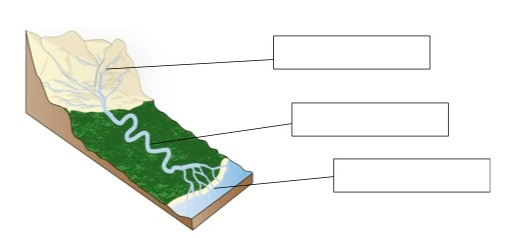
What is the source zone, the transition zone, and the floodplain.
400
This wetland is known for being basic and is typically in places where there is gentle slope.
What is a fen?
400
What are two of the four factors to consider when locating fish in a lake?
1. Lake Topography
2. Lake Structure
3. Barometric Pressure
4. Food Location
400
What is one of the three benefits of lakes?
1. Temperature regulation
2. Water for drinking, wildlife, and transportation
3. Support of life for people and animals
400
The natural process of lakes slowly building up sediments and phosphorus is called ___________.
Eutrophication
500
What is the difference between photic and aphotic zones in a lentic system?
Light reaches the photic zone (photosynthesis occurs), no light reaches the aphotic zone (no photosynthesis).
500
Blue Spotted Salamanders and other amphibians use this special type of wetland for breeding in spring.
What is a vernal pool?
500
Of the three fish families we discussed, which family has over 150 species in Minnesota. Agnatha, Chondrochythes, or Osteichythes.
What is Osteichythes?
500
What are two factors that make ponds different from lakes.
1. Ponds are too shallow for temperature changes
2. Ponds do not have wave activity
3. Ponds have silty or muddy bottoms.
500
Cultural Eutrophication speeds up the natural eutrophication process from centuries to _________.
What is decades?