Laws
Stars and Stuff
People
Shapes
Grab Bag
100
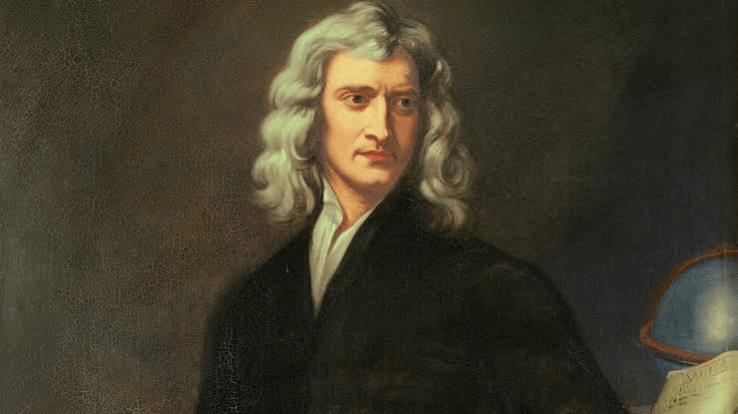
An object at rest will stay at rest unless compelled to change by action or an external force
Newton's first law of motion
100
88
How many constellations are in the night sky
100
Proposed that the earth was at the center of the universe
Ptolemy
100
Crescent Moon
What occurs when the moon is between the earth and sun?
100
Kepler's First Law
Planets have an elliptical orbit
200
List the following people in order by when they lived, with the earliest person first: Newton, Einstein, Brahe, Kepler, Ptolemy
Ptolemy, Brahe, Kepler, Newton, Einstein
200
Where do you have to be for stars to move in concentric circles?
At the north (or south) pole
200
Polish astronomer who proposed a sun-centered model of the solar 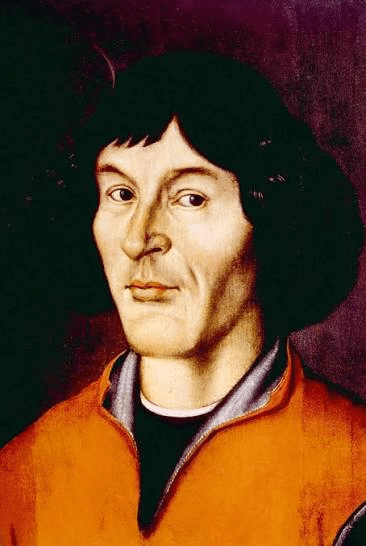 system
Nicholas Copernicus
200
Peacock means what in Latin
Pavo
200
Planets change speed throughout their orbits
Kepler's second law
300
List the following people in order of birth: Kepler, Newton, Ptolemy
Ptolemy, Kepler, Newton
300
What do astronomers study?
Stars
300
Who can be credited with establishing the four seasons?
Copernicus
300
5
How many planets can be seen with the naked eye?
300
Perigee or Perihelion
Closest approach of a planet to the sun while in orbit
400
Force equals Mass times Acceleration (F=MA)
Newton's second law
400
Kepler figured out that planets moved in this 'squashed circle' shape
Ellipse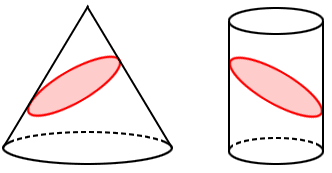
400
Who was Johannes Kepler's boss?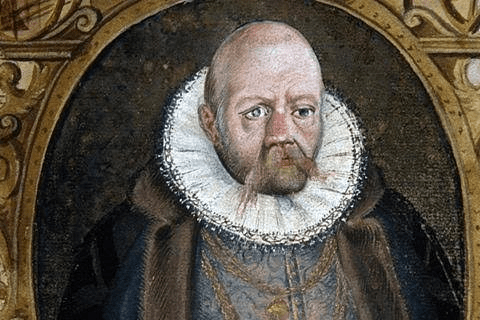
Tycho Brahe
400
The weird shape Ptolemy thought that planets and heavenly objects moved in as they went around the Earth
Epicycles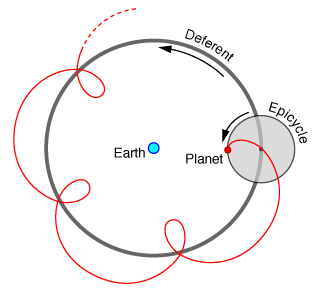
400
365.25 days
Orbital period of the Earth around the sun
500
Did Galileo's observations strongly support a sun-centered or earth-centered view of the universe?
Sun-centered
500
The point in its orbit at which a planet is farthest away from the sun (#1 in the picture)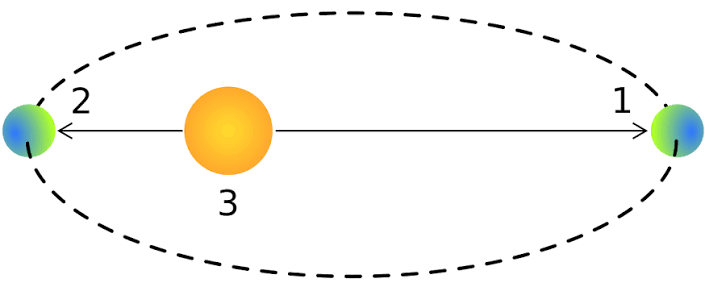
Apogee or Aphelion
500
Who worked toward a model of planetary motion that would fit data observed by his predecessors, including his boss, Brahe?
Johannes Kepler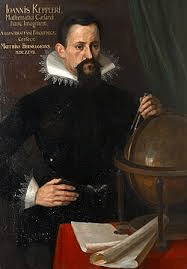
500
The shape planets follow as they revolve around sun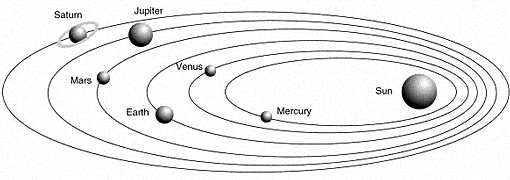
Ellipse
500
What did Galileo see orbiting Jupiter?
Moons
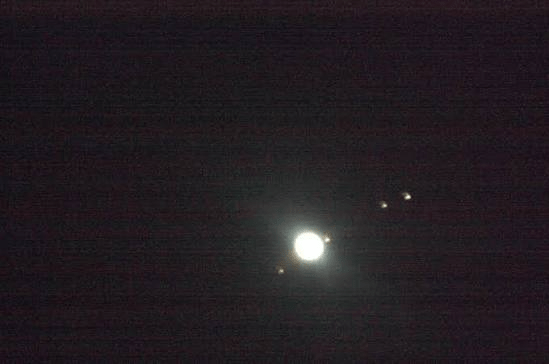
600
Who proposed the principle of equivalence in the 20th century--that acceleration and gravity were the same
Albert Einstein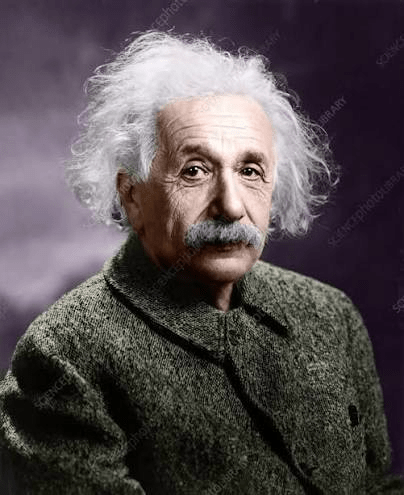
600
For every action there is an equal and opposite reaction
Newton's Third Law of motion
600
Improved the telescope and is often called the father of modern astronomy
Galileo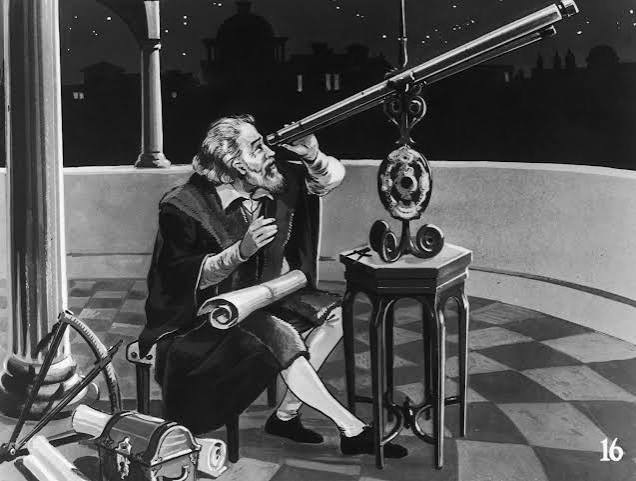
600
This guy said the planets moved around the sun but still thought they moved in perfect circles
Copernicus
600
This guy invented calculus and built a unified model of how the universe works
Newton