SAFETY & LAB MANAGEMENT
TOXICOLOGY & PEDIATRICS
ORGAN SYSTEMS
TRAUMA
TECHNIQUES AND TIME OF DEATH
100
This is defined as the component of the U.S. standard certificate of death that contains the necessary demographic information of the deceased such as the name, date of birth and death, social Security number and place of death
Decedent section
100
Common cause of death in premature infants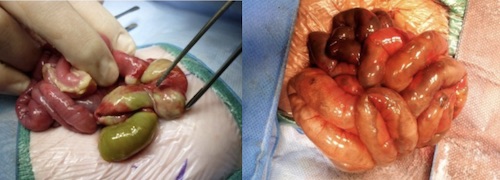
Necrotizing enterocolitis
100
This is the most common lethal injury associated with head trauma
Subdural hematoma
Common causes: Falls & secondary to tearing of the subdural bridging veins (especially in elderly & alcoholics)
Unlike epidural hematomas, not associated with skull fractures and middle meningeal artery rupture.
Unlike subarachnoid hematomas, not associated with rupture of aneurysm or arteriovenous malformation
100
This is a tear or disruptive stretching of tissue caused by the application of force by a blunt object. Often see intact bridging blood vessels and jagged, irregular edges.
Laceration
100
The disease or injury that sets in motion the physiologic train of events culminating in cerebral and cardiac electrical silence
Cause of death
200
This cleaning solution composition is ideal for disinfecting most components of the autopsy laboratory.
5.25% sodium hypochlorite (1:10 dilution bleach)
200
This body fluid is most frequently used specimen for postmortem chemical analysis. It is also the best indicator for hyperglycemia and electrolytes.
Vitreous fluid
200
In this syndrome, repeated, violent retching can cause lacerations and/or perforations of the lower esophagus at or near the gastroesophageal (GE) junction.
Mallory-Weiss syndrome
200
This type (distance) of GSW is characterized by the presence of powder tattooing / stippling around the wound of entrance.
Intermediate
200
This autopsy evisceration technique is best for pediatric autopsies and to limit the spread of infection
Rokitansky: IN SITU dissection combined with en bloc removal
300
How long must wet tissue for a hospital / non forensic autopsy must be retained for after the final report?
How long must blocks, slides, reports for a hospital / non forensic autopsy after the final report?
Wet tissue - 3 months
Blocks, slides, reports - 10 years
300
Body fluid of choice for testing abnormal metabolites in infants (suspected inborn errors of metabolism) and for chromosome analysis when a congenital disorder is suspected
Blood
300
List the average heart weights for male and female
M: 300
F: 250
300
This is the most common type of all collisions accounting for 80% of all vehicular crashes.
Frontal
Posterior atlantooccipital fracture/dislocation due to hyperflexion may be sole cause of death. Examine posterior aspect of neck.
300
Rigor mortis is first seen ___ hours after death
Rigor mortis is fully developed ___ hours after death
Rigor mortis is first seen 2-4 hours after death
Rigor mortis is fully developed 6-12 hours after death
400
How long must wet tissue for a forensic autopsy must be retained for after the final report?
How long must fluid and tissue for toxicology for a forensic autopsy must be retained for after the final report?
How long must blocks, slides, reports for a forensic autopsy after the final report?
Wet tissue - 1 year
Fluid and tissue for toxicology - 1 year
Blocks, slides, reports, photos - indefinitely
400
Hair/Fingernails are useful in suspected chronic ____ poisoning cases and may be useful in the determination of chronic drug abuse
arsenic
400
This heart dissection method is suitable primarily for normal hearts.
This heart dissection method is suitable for most cases of dilated cardiomyopathy, arrhythmogenic right ventricular cardiomyopathy and hypertrophic cardiomyopathy
Inflow/Outflow method; Short axis method
400
Wounds that are greater in depth than in length and are produced by produced by pointed instruments are known as ____
Wounds that are greater in length than in depth and produced by sharp-edged weapons or instruments are known as ____
Stab wounds; Incised wounds
400
Type of lividity that can be seen in carbon monoxide poisoning, hypothermia, cyanide poisoning, and long term refrigeration of bodies
Cherry red
500
According to CAP, the PAD (Preliminary Anatomic Diagnosis) should be completed in ___ days.
According to CAP, the FAD (Final Anatomic Diagnosis) should be completed in ___ days for routine autopsies and ___ days for complex autopsies.
PAD - 2 days
FAD - 30 days for routine; 90 days for complex
500
A block from this organ in a fetal autopsy is useful because it can show hemorrhage or
necrosis in conditions of shock
Adrenals
500
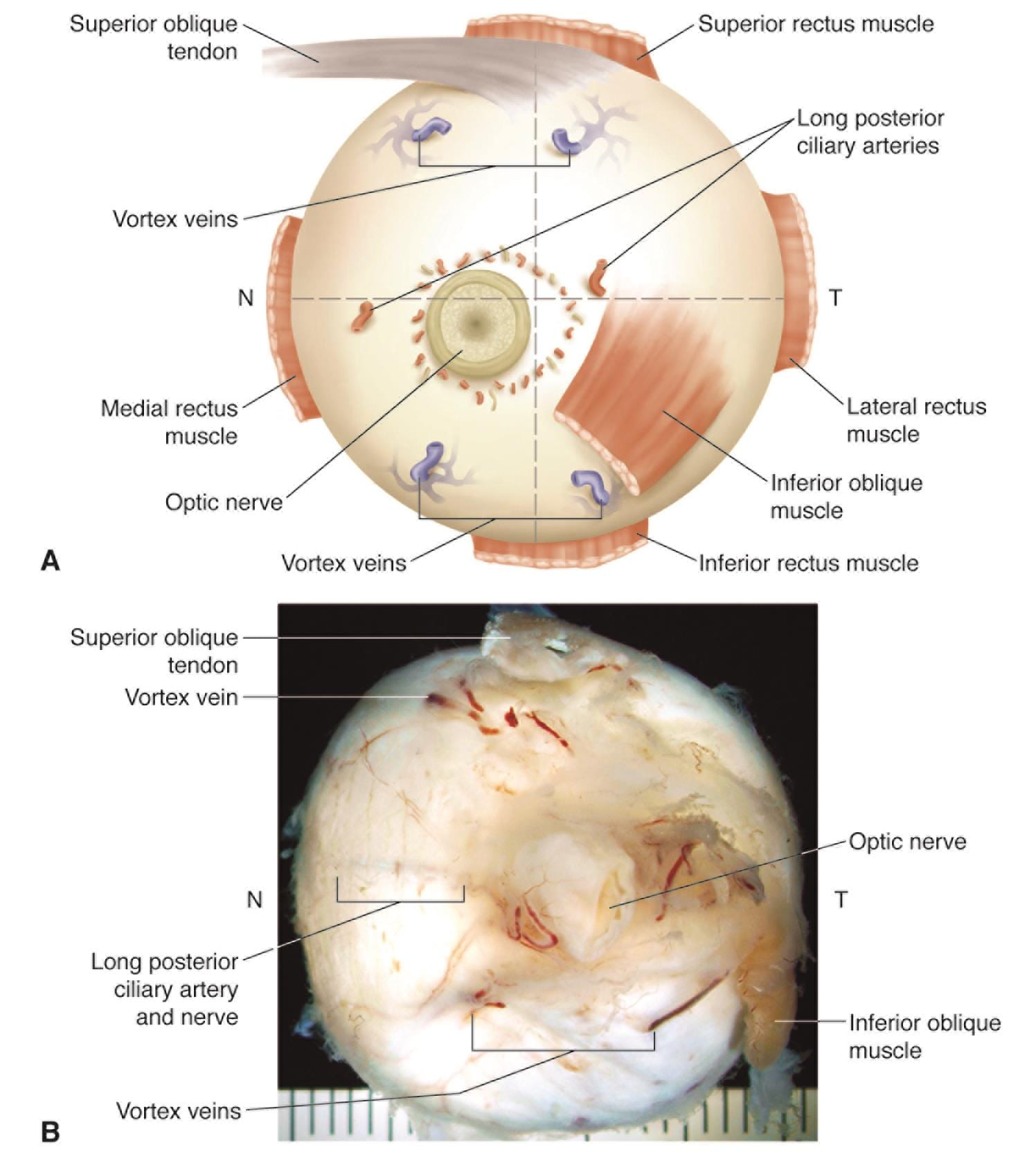
You are looking at the posterior surface of an enucleated eye. Orient the eye in terms of superior aspect vs the temporal/lateral aspect.
The superior aspect is characterized by the tendinous insertion of the ___, under the superior rectus muscle.
The temporal side is characterized by the muscular insertion of the ____, which is usually fleshy and extends inferiorly from the optic nerve
The superior aspect is characterized by the tendinous insertion of the superior oblique muscle, under the superior rectus muscle.
The temporal/lateral aspect is characterized by the muscular insertion of the inferior oblique muscle, under the lateral rectus muscle
The vortex veins are superior and inferior to the optic nerve (vertical plane)
The ciliary arteries are medial and lateral to the optic nerve (horizontal plane)
500
Contrast the presentation of hanging victims vs ligature strangulation victims
Hanging presents as: pale face with protruding and dried tongue. Creates a furrow to the skin of the neck that has an inverted V-shaped configuration
Strangulation presents as: congested face with numerous petechiae of the sclerae and conjunctivae. Mark usually encircles the neck in a horizontal plane.
500
Rigor mortis is accelerated by several factors. Name 3.
1) exercise or violent muscular exertion prior to death (ex- drowning, running away)
2) convulsions
4) electrocution
5) hot temperature
6) children
7) elderly