Terrestrial Planets
Amazing Earth
Space Rocks
Gas Giants
Stars & Galaxies
Space Travel
100
Which planet is nicknamed "the red planet"?
Mars
100
What causes season's on planet Earth?
The tilt.
100
What is a comet made up of?
Ice, rock, and dust.
100
What kind of planet is Jupiter?
Gaseous
100
What is the name of our galaxy?
Milky Way
100
What does ISS stand for?
International Space Station
200
True or False.
Mercury is the hottest planet in our solar system.
False. Venus is the hottest planet.
200
How long does it take the moon to revolved around the Earth?
28 days.
200
Which dwarf planet is located in the Asteroid Belt?
Ceres
200
Which gas gives Uranus and Neptune their blue hue?
Methane
200
Which star is brightest in our night sky?
Sirius, which means "glowing"
200
What does NASA stand for?
National Aeronautics and Space Administration
300
What would the sky look like on Mercury?
Black
300
What causes the ocean's tides?
The moon's gravity pulling on the ocean.
300
What happens when the Earth crosses the orbit of a comet.
A meteor shower or lots of shooting stars.
300
True or false.
The gas giants all have seasons.
True.
Their lengths are-- Jupiter: 3 years, Saturn: 7 years, Uranus: 20 years, Neptune: >40 years
300
What kind of star is our sun?
A main sequence star (a yellow star)
300
What is it called when astronauts get large upper bodies and skinny legs after a long stay in space?
Chicken-leg syndrome

400
Which planet is Venus' twin?
Earth
400
Name the phase of the moon shown below.
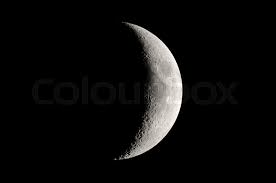
Waxing crescent.
400
Who discovered the presence of a belt of icy objects beyond Neptune?
Gerard Kuiper
400
Which planet is nicknamed the "sleepy planet"?
Uranus
400
What type of galaxy is pictured below?

Lenticular galaxy.
400
Which spacecraft is currently exploring the Kuiper Belt?
New Horizons
500
Which terrestrial planet has the longest day?
Venus.
A day on Venus is 5,832 hours long!
500
What protects Earth from cosmic rays and solar radiation?
The magnetosphere.
500
What is the darkest object in our solar system?
Proteus, one of Neptune's moons.
500
What is the name of Saturn's largest moon?
Titan
500
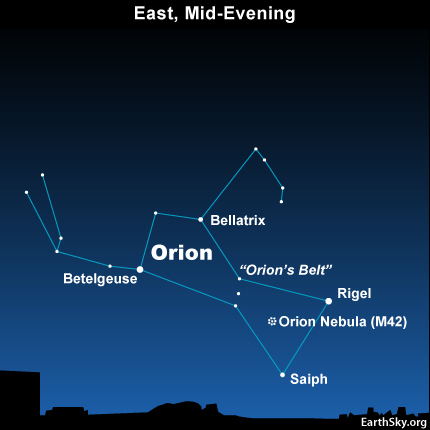
Which constellation contains Betelgeuse?
Orion. Betelgeuse is located in Orion's armpit.
500
Which spacecraft orbited Saturn for four years taking pictures of Saturn and her moons?
Cassini-Huygens