History of Astronomy
The Solar System & Planets
Earth-Sun-Moon Relationships
Seasons on Earth
Seasons on Other Planets
100
The ancient astronomer who proposed that Earth revolves around the Sun.
What is Copernicus?
100
The star at the center of our solar system.
What is the Sun?
100
The moon phase that occurs when the Moon is opposite Earth from the Sun.
What is a full moon?
100
The angle of Earth's axial tilt relative to its orbital plane.
What is approximately 23.5 degrees?
100
The main factor determining whether a planet experiences seasons.
What is the tilt?
200
The model that places Earth at the center of the universe.
What is the geocentric model?
200
The planet known for its prominent ring system.
What is Saturn?
200
The strongest gravitational pull responsible for Earth's ocean tides.
What is the Moon's gravity?
200
What are the four seasons we experience on Earth?
What is Winter, Spring, Summer, and Fall?
200
The planet that has similar to Earth becuase of a similar tilt.
What is Mars?
300
The astronomer who used a telescope to observe Jupiter's moons.
Who is Galileo Galilei?
300
The classification of planets composed mostly of rock and metal.
What are terrestrial planets?
300
The reason why the moon appears to change shape over the course of a month.
What is the position/angle of the Moon?
300
The event marking the longest night, shortest day of the year.
What is the Winter Solstice?
300
The planet that rotates on its side, causing extreme seasons.
What is Uranus?
400
The scientist who developed three laws describing planetary motion.
Who is Johannes Kepler?
400
The asteroid belt is located between these two planets.
What is Mars and Jupiter?
400
The moon phases that occur during SPRING tides.
What is new moon and full moon?
400
The season experienced by the Southern Hemisphere while the Northern Hemisphere is in Fall.
What is Spring?
400
The reason some planets experience longer seasons than Earth.
What is a longer orbit period?
500
List the astronomers from earliest to latest from the list: Newton, Galileo, Copernicus, Ptolemy, and Kepler.
What is Ptolemy, Copernicus, Galileo, Kepler, and Newton?
500
This is the planets listed from farthest from the sun to closest to the sun.
What is Neptune, Uranus, Saturn, Jupiter, Mars, Earth, Venus, and Mercury?
500
This diagram is an example of what kind of eclipse?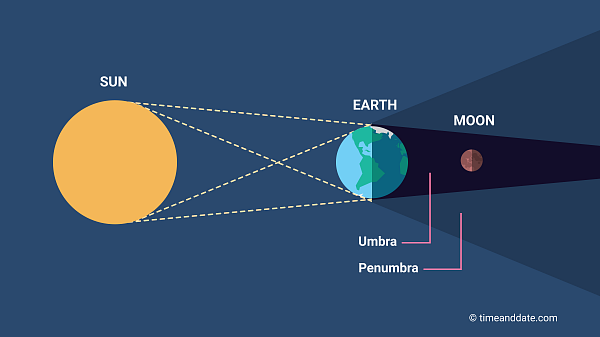
What is a lunar eclipse?
500
The reason when Earth is farthest from the Sun in July, but the Northern Hemisphere is hottest.
What is the Northern Hemisphere is tilted toward the Sun?
500
The planet where one season can last over 40 Earth years.
What is Neptune?