Composition & Layers
Atmosphere Processes
Air Quality & AQI
Urban Heat & Albedo
Greenhouse Effect & Climate
100
What two gases make up about 99% of dry air?
Nitrogen and oxygen
100
What evidence shows that air has mass and takes up space?
A balloon becomes larger and its mass increases when filled with air.
100
What AQI range and color is labeled "Good"? 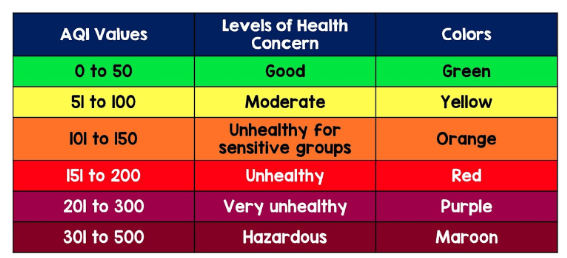
0–50, Green
100
What surface property describes how much incoming solar energy is reflected?
Albedo
100
Name two greenhouse gases.
Carbon dioxide and water vapor
200
Which atmospheric layer is closest to Earth where most weather occurs?
Troposphere
200
Define water vapor’s role in weather in one sentence.
Water vapor varies in the atmosphere and is involved in forming clouds and precipitation.
200
Which AQI category corresponds to an AQI value of 125? (Must include the Level of Concern and color.)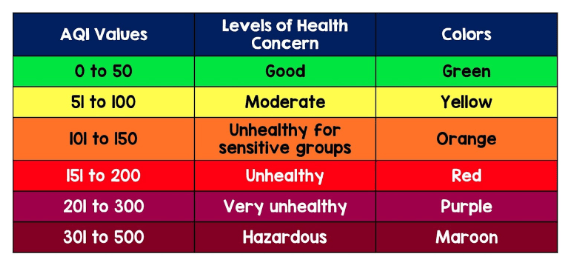
Unhealthy for Sensitive Groups — Orange
200
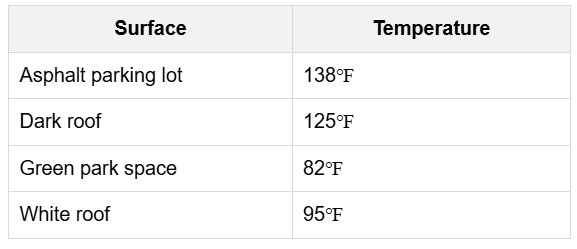 Which surface from the unit data was coolest: asphalt parking lot, dark roof, green park space, or white roof?
Green park space (82 °F)
200
How does the greenhouse effect help keep Earth habitable?
It traps some of the outgoing infrared energy from Earth, raising the planet’s average temperature so conditions support life.
300
Explain why air pressure generally decreases with increasing elevation.
Because there is less air (fewer air molecules) above as elevation increases, so the weight of the air column and pressure decrease.
300
Describe the greenhouse effect in one clear sentence.
Greenhouse gases absorb and re-emit energy leaving Earth’s surface, helping keep the planet warm.
300
Give one example each of a primary pollutant and a secondary pollutant.
Primary: vehicle exhaust
Secondary: ground-level ozone formed by photochemical reactions
300
Explain why dark surfaces like asphalt become hotter than green spaces, using albedo.
Dark surfaces have low albedo so they absorb most solar radiation and heat up more; vegetated areas reflect more and cool via evapotranspiration.
300
What role does carbon dioxide play in changing global temperature trends?
Carbon dioxide is a long-lived greenhouse gas; higher CO2 concentrations increase the atmosphere’s ability to trap heat, contributing to warming.
400
Name the layer where temperature increases with altitude because ozone absorbs UV radiation.
Stratosphere
400
Why does temperature generally decrease with altitude in the troposphere?
Rising air expands in lower pressure and cools; the surface is the main source of heat so temperature drops with height.
400
The AQI shows a value of 165. Which category is this and what general health advice applies? 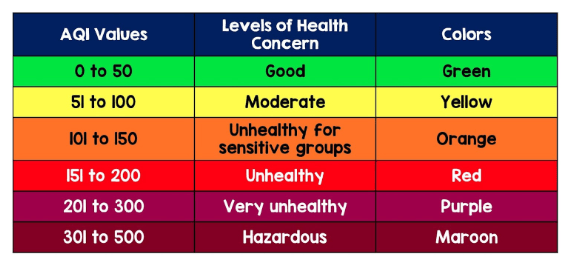
165 = Unhealthy — Red; everyone may begin to experience health effects; sensitive groups should avoid prolonged outdoor exertion.
400
Name two strategies a city can use to reduce urban heat island effects.
Plant more trees/expand green spaces; install reflective (white) roofs or cool pavement
400
Identify two mitigation or stewardship actions communities can take to maintain air quality and reduce climate impacts.
Promote public transit and renewable energy to reduce fossil fuel use; increase urban tree cover and enforce emissions regulations.
500
List the gases in order from most to least abundant (first three only).
Nitrogen, oxygen, argon
500
Explain how changes in atmospheric composition (increase in greenhouse gases) affect global temperatures.
Increasing greenhouse gases trap more outgoing infrared radiation, causing a net energy gain that raises average global temperatures and can alter weather patterns.
500
Explain what the AQI measures and name two factors or sources that can cause AQI to rise.
The AQI measures concentrations of key air pollutants and indicates potential health impacts. Causes include vehicle and industrial emissions, wildfire smoke, temperature inversions, and stagnant air.
500
Using the unit data, compare the asphalt parking lot (138 °F) and white roof (95 °F). Explain the temperature difference in terms of albedo and surface color. 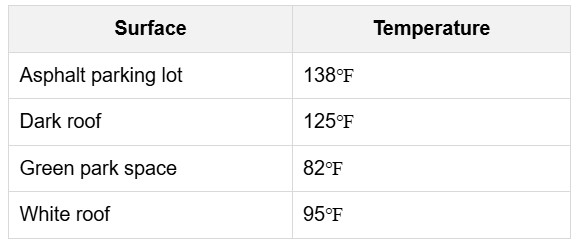
Asphalt is dark with low albedo so it absorbs most sunlight and reaches higher temperatures. A white roof has higher albedo, reflects more sunlight, and stays cooler.
500
Describe how changes in atmosphere structure or composition can both increase greenhouse effect and influence weather or storms.
More greenhouse gases increase trapped heat, raising sea and air temperatures; warmer conditions can intensify storms, change atmospheric circulation, and shift precipitation patterns.