History of Atomic Model
Atomic Structure
Isotopes
Ions
Random
100
This ancient Greek philosopher said atoms were indivisible and called them “atomos.”
Democritus
100
This particle carries a positive charge and defines the element.
Proton
100
Atoms of the same element with different numbers of neutrons are called this.
Isotopes
100
What is made when:
# protons > # electrons
Positive Ion Or Cation
100
Most of the atom is made of
Empty space
200
His model showed electrons orbiting the nucleus like planets around the sun.
Niels Bohr
200
This particle is neutral and found in the nucleus.
Neutron
200
For the following iso-ion, find number of neutrons
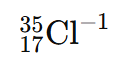
18
200
What is made when:
# protons < # electrons
Negative Ion or Anion
200
This model shows electrons in circular energy levels around the nucleus.
Bohr Model
300
This scientist proposed the first atomic theory with solid spheres called the “billiard-ball model.”
John Dalton
300
What is the mass of protons, neutrons, and electrons?
P = 1 amu
N= 1 amu
E= 0 amu
300
For the following iso-ion, find number of neutrons, protons, and electrons.
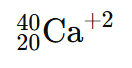
P=20
N= 20
E= 18
300
What is made when:
# protons = # electrons
Neutral atom
300
At the end of Mean Girls, what tragedy happens to Regina George?
Gets hit by a bus/Breaks her neck
400
He discovered the electron using a cathode-ray tube.
J. J. Thomson
400
This number tells you how many protons are in the nucleus.
Atomic number
400
Write the iso-ion symbol for the iso-ion that has:
P=26
N= 30
E= 23
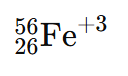
400
For the following ion, calculate number of electrons

18
400
The electrons in the outermost energy level
Valence electrons
500
This scientist’s gold-foil experiment revealed the nucleus.
Ernest Rutherford
500
In a neutral atom, these two particles are equal
Protons and electrons
500
Write the iso-ion symbol for the iso-ion that has:
P=15
N= 16
E= 18
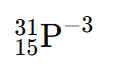
500
What subatomic particle does an atom gain or lose to create ions?
Electrons
500
This number tells you the average mass of all naturally occurring isotopes of an element
Atomic mass