Atomic Structure
Periodic Table
Ions & Isotopes
Electron Dot Diagrams
Vocab
100
Has a mass of 1 amu, found in the nucleus, and has a +1 charge
What is a proton
100
The atomic number tells you what about an element?
The number of protons (which is equal to the number of electrons, when its neutral)
100
An atom with more electrons than protons, causing it to have a negative net charge.
What is an anion?
100
The dots represent these on an Electron Dot Diagram.
What are valence electrons?
100
Protons, neutrons, & electrons
What is a subatomic particle?
200
In a neutral atom, there are an equal number of these subatomic particles
What are protons and electrons?
200
Elements in the same __________ have similar properties.
What are groups?
200
The net charge of an atom with 5 protons, 6 neutrons, and 6 electrons.
What is -1?
Remember to compare the amount of protons and electrons to find the net charge.
200
The periodic table feature that reveals how many dots to draw.
What is the group number?
200
A horizontal row on the Periodic Table
What is a period?
300
The amount of protons and neutrons
What is the mass number?
300
The periodic table is made up of three classes - but most of the periodic table are only 1 class.
What are metals?
300
If any neutral atom loses 1 electron, it will have this net charge.
What is +1?
300
The electron dot diagram for Bismuth (Bi).
300
An atom with an unequal amount of protons and electrons, resulting in a net charge.
What is an ion?
400
2 atoms each have 4 neutrons & 4 electrons, but one atom has 3 protons and the other has 4 protons - these are called ___________.
different elements
400
The element in period 6 and Group 15.
What is Bismuth (Bi).
400
Draw an isotope for this atom: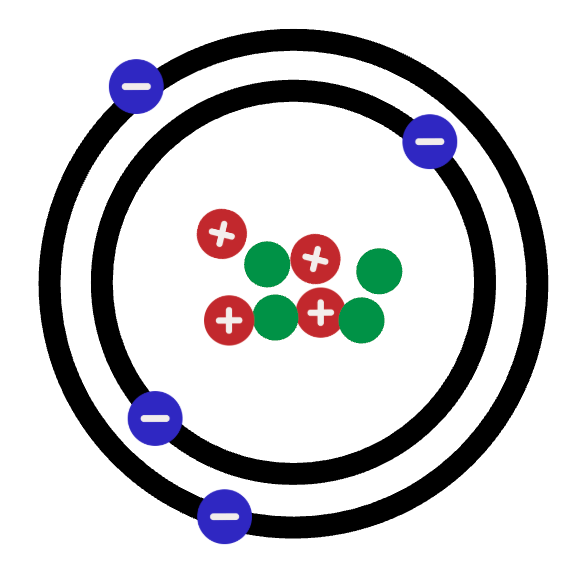
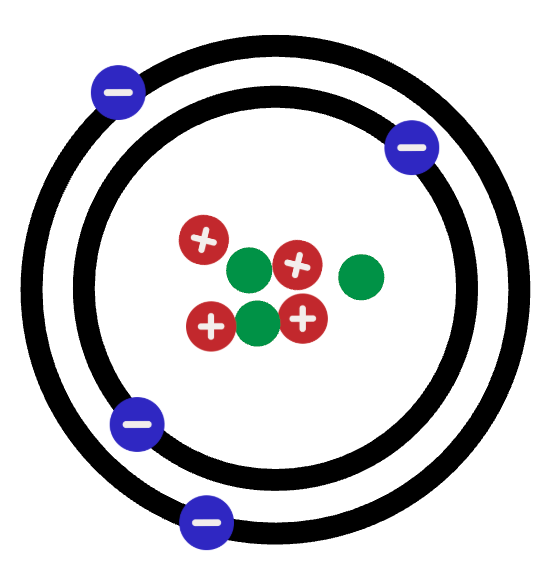 Or any atom with 4 protons, 4 electrons, and NOT 4 neutrons
400
 How many bonds can an atom of Sulfur (S) make?
What is 2 bonds?
Remember to subtract the group number from the number 8!
400
Atoms of the same element, but with a different mass number.
What are isotopes?
500
Draw a neutral atom (Bohr model) of Nitrogen (N). 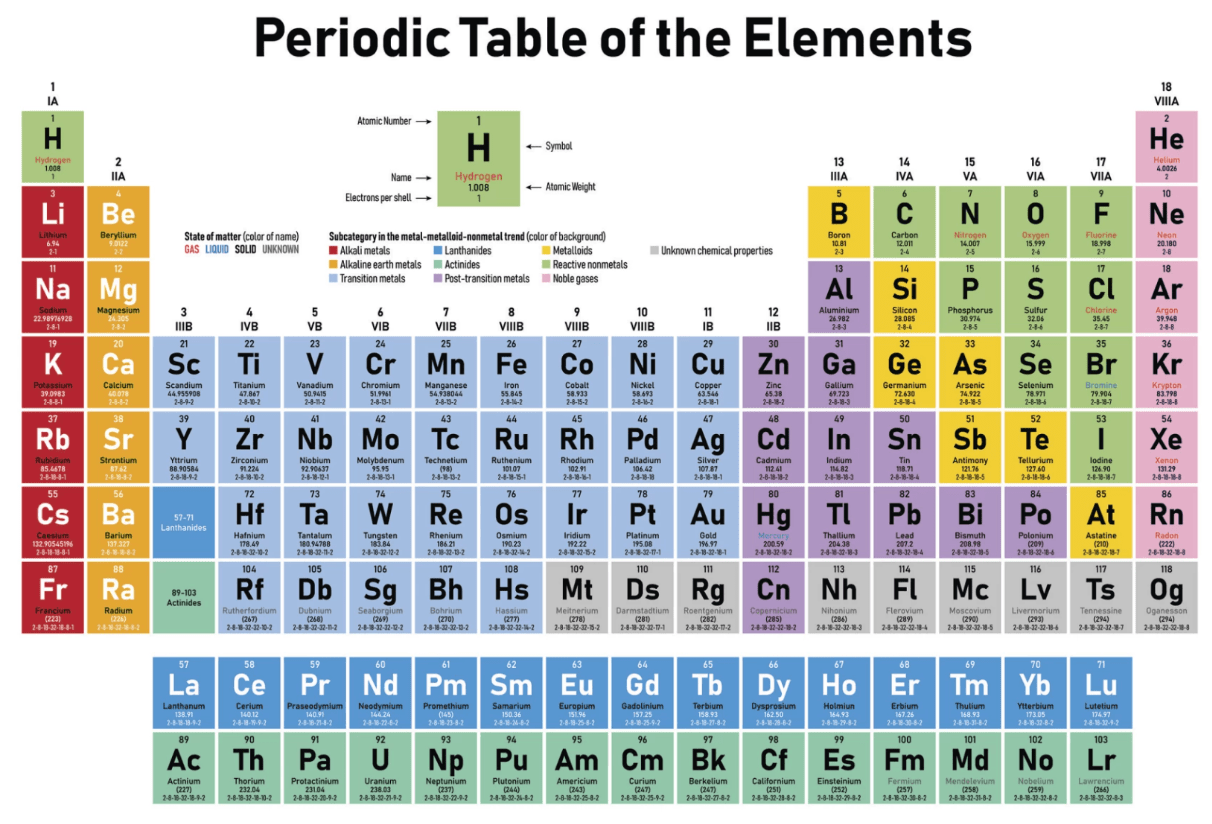
What is:
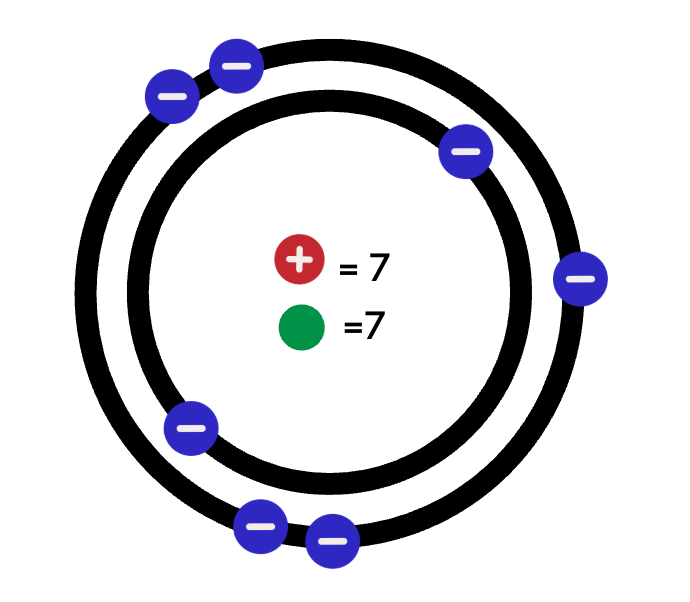
500
As you move from left to right ➡️, this trend exists on the periodic table.
What is:
- the atomic number increases
- metals ➡️ metalloids ➡️ nonmetals
500
Draw a cation for the atom shown: 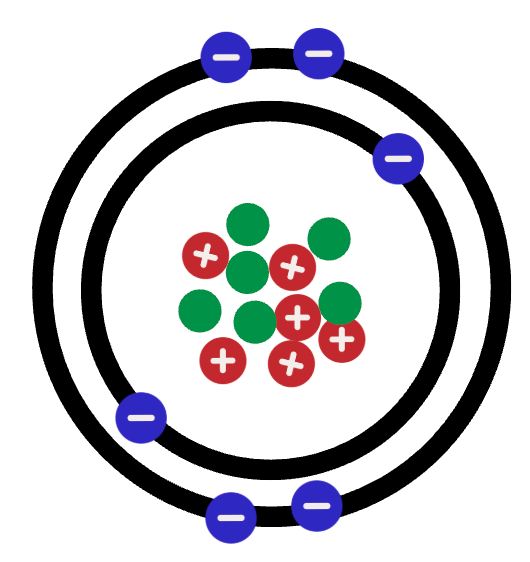
What is: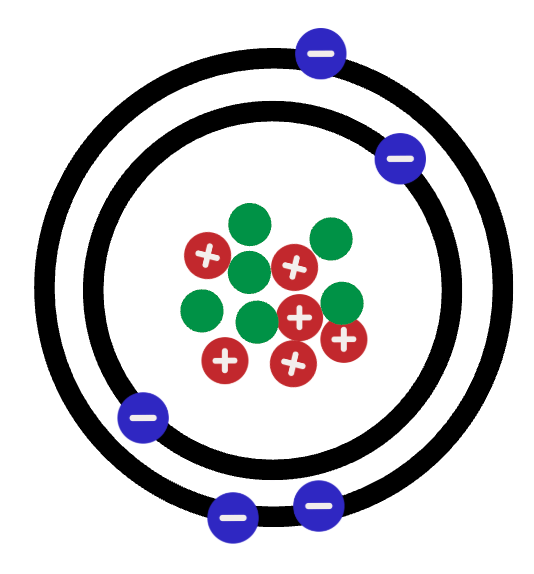 Or anything with 6 protons, 6 neutrons and LESS than 6 electrons
500
The reason that the dot structure for Helium looks like the image shown instead of having 8 dots.

Helium is in period 1, so it only has 1 orbital. The 1 orbital can only hold up to 2 electrons, not 8. (BONUS POINTS IF YOU NAME THE RULE HELIUM FOLLOWS)
500
States that atoms prefer to have a full valence orbital.
What is the octet rule?