Micro-evolution
Macro-evolution
Micro/Macro
Micro/Macro
Ecology
Biodiversity
100
Which of the following best explains how an individual's evolutionary fitness is measured?
By its hunting strategies
By its ability to survive and reproduce
By the ease of its survival
By its fighting abilities
2. By its ability to survive and reproduce (fitness is defined by the genetic contribution of an individual to the next generation)
100
What is the difference between macro and micro evolution?
Macroevolution—evolutionary processes above the species level- such as the origin of new groups of organism or new species, a lot longer, a series of microevolution events
Microevolution—evolutionary change within a population (e.g., below species level), selection works on this level, shorter period of time than macroevolution
100
True or false: A phenotype is how a trait is expressed
True
100
A population of birds live on an island where seeds are their primary food source. Birds with smaller beaks can eat small seeds more easily and birds with larger beaks can eat large seeds more easily. A fungus destroys the plants that make large seeds, leaving only the small seeds as food. Which type of natural selection will most likely occur?
Stabilizing Selection
Directional Selection
Artificial Selection
Disruptive selection
Directional Selection!
100
What is social monogamy? How does it differ from monogamy? How is it similar?
When a species appears to be monogamous, but in reality they are not.
It is similar in the sense that the male and female spend time together, but different since they do not exclusively mate with each other
100

Gram +, purple because gram stain does stick to gram + but NOT to gram -
200
True or False: Natural selection produces favorable mutations.
FALSE Natural selection only selects for favorable mutations from genetic variation. These mutations occur randomly throughout the genome. Natural selection cannot actually produce these mutations.
Natural selection “selects” favorable mutations from existing variation..
200
Due to hunting, the population of Northern elephant seals was reduced to 20 individuals at the end of the 19th century. Since then, their population has rebounded to over 30,000. What is the most likely long-term effect of hunting on the elephant seal population?
a) The population contains high allelic diversity
b) Individuals are genetically similar to each other
c) The population has allele frequencies similar to those in the original population
d) The population is more likely to survive disease
b) Individuals are genetically similar to each other
200
If there is a species of duck that is known for gliding down from trees into nearby ponds, and there are also squirrels that are known for gliding down to the ground using their skin, would these be homologous traits? Explain.
No, since they are not traits shared through common ancestry, they are homoplasies.
200
A population of white, black, and tan mice live in a laboratory. A scientist separates two rats at random out of the population and starts a new rat colony. The two rats he picks are both tan. The new colony, after the two tan rats reproduce, is entirely tan. What is this an example of?
Founder Effect
Natural Selection
Population bottleneck
- Mutation
Founder Effect! Genetic composition of new population differs from old population and there is no change in the original population
200
What are the levels of ecology, from the smallest level to largest level?
Individual, Population, Community, Ecosystem
200

What cell morphology is shown?
Filament/Filamentous bacteria
300
Fossil evidence shows that structures considered vestigial in living organisms
a. are not found in ancient organisms.
b. have always been vestigial.
c. were useful to their ancestors.
d. do not fill gaps in the fossil record
Genetic drift
Disruptive selection
Bottleneck
Founder effect
c. were useful to their ancestors.
300
A population of rabbits lives in a forest in the Southeastern United States. A large group of rabbits is cut off from the population when a six-lane highway is built through the forest. Over many generations, the large group of rabbits begins to develop darker fur in response to the dominant foliage on one side of the highway. When rabbits from the two populations are brought together, they no longer reproduce with each other. What kind of speciation does this represent?
Geographic speciation can be broadly divided into two categories: allopatric or sympatric. Sympatric speciations occur when species diverge while living in the same geographic habitat. Allopatric speciation occurs when two populations of a species become separated (in this case by a highway), and over time become separate species.
300
Let's say you are walking through the forest and start to notice what you think are two different kinds of beetles: one that is constantly in the sun on tree bark, and one that is constantly in the shade on tree bark. After collecting both and looking them up, you realize that they are the same species! What type of distribution of ‘morphs’ would this have, and what type of graph would it show? Try to draw the graph.
Disruptive Selection!

300
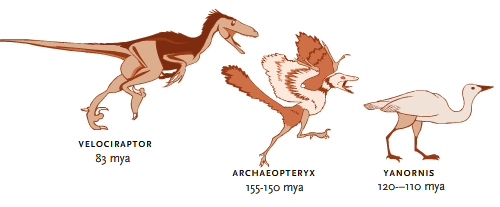
What is a transitional fossil? Provide an example
A transitional fossil may be defined as a fossil which exhibits traits common to both ancestral and derived groups. This is especially important when groups are sharply differentiated. They can show how a species might adapt to survive their new conditions
Example: Archaeopteryx is one of the most famous transitional fossils and gives evidence for the evolution of birds from theropod dinosaurs.
300
What are the three main types of mating systems? How are they different?
Monogamy: 1 male, 1 female
Polygamy: 1 male, more than 1 female OR 1 female, more than 1 male
Polygynandry (promiscuity): multiple males and females
300

What cell morphology is shown?
Bacilli/Bacillus
400
What mechanism of evolution occurs when allele frequencies change over generations due to random chance? (hint: happens most frequently in small populations)
Gene flow
Natural selection
Genetic drift
Mutation
C. Genetic drift! Because it is the evolutionary mechanism that produces random changes in allele frequencies, mutation is not a mechanism of evolution that is occurring over several generations
400

Based on the phylogenetic tree above, which species are most closely related?
Species I and II have the most recent convergence and share the most recent common ancestor.
400
Draw stabilizing selection, provide an example, and explain what is happening in terms of variance and the mean.
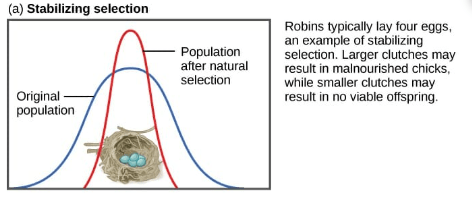 Favors the intermediate forms by selecting out the two extremes, fitness is highest for middle forms, mean value stays the same but variation around the mean decreases. Both stabilizing and directional selection tend to decrease overall species diversity
400

Which of the taxa above are considered sister taxa?
B and C, E and F, G and H
400
Draw a clumped distribution and provide a definition and example
Clumped distribution of resources which then determines the dispersion patterns of the organisms that rely on them (most common type)
Ex: starfish (near their food source) or also humans (in cities)
400
List the components of gram - bacteria and how this affects gram staining
Outer membrane, P.G. layer, inner membrane
Gram stain will not stick (does not stain/no color change)
500
What are the two types of genetic drift? What are the effects of genetic drift?
Bottleneck: Sharp drop in population size, Rare alleles are often lost
Founder effect:New populations are started by a small number of individuals, Few individuals become isolated from larger population, Allele frequencies of those separated differ significantly from original population
Genetic drift causes allele frequencies in the population to randomly change (due to sampling error), causing genetic variation to be lost and can even cause harmful alleles to increase in frequency.
500

A common ancestor for both species C and E could be at position number:
4
500
A taxon is paraphyletic if it
includes the most recent common ancestor of all members of the group and all of its descendants.
includes the most recent common ancestor of all members of the group and some, but not all, of its descendants.
does not include the most recent common ancestor of all members of the group.
excludes the most recent common ancestor of all members of the group.
includes the most recent common ancestor of all members of the group and some, but not all, of its descendants.
500
A phylogeny based on evolutionary theory will
explain variations among fossils from rock strata.
explain similarities and differences among modern living groups.
reflect patterns of shared and unique sections of DNA among groups of animals.
All of the choices are correct
All of the choices are correct
500
What is character displacement? Provide an example or draw the graphs relevant to this concept

500
Which trait is a shared derived trait of eukaryota?
Unicellular
Most have mitochondria
Nucleus is not membrane-bound
Asexual reproduction only
2. Most have mitochondria
600
Draw out population bottleneck and provide an example

Greater Prairie Chickens in Illinois. Farming resulted in loss of habitat and drastic decrease in # of them (less available habitat). Leads to a loss of genetic variation, decreased fitness compared to other locations.
600
What is the difference between a shared derived character and a uniquely derived character? Which is useful for reconstructing phylogenies?
Shared derived character: derived character shared among two or more members of a group
Uniquely derived character: derived character unique to one member of a group
Only shared derived character states are useful to infer evolutionary relationships under cladistic philosophy
600

According to the cladogram above, do ferns have seeds?
No
600
List the 5 conditions/assumptions of HW
No mutation (initial set of alleles present does not change)
Random mating - to avoid effects of sexual selection (no preference for a specific genotype in a mate)
No natural selection - (does not favor any particular phenotype)
No migration- to avoid effects of gene flow (no exchange of genes in population)
Large population size- to avoid random sampling errors and probability of genetic drift
600
What is a limiting resource? What would a limiting resource be in a tundra? In a desert? In a tropical forest?
Resource that determines how much you can grow and reproduce. You can only support as much as the lowest limiting resource (often nitrogen or phosphorus for plants)
Desert: Water!!
Tundra: Nutrient availability
Trop forest: Sunlight (due to canopy of trees
600
List some diseases that are caused by bacteria
strep, UTI, lyme, gonorrhea
700
Draw out the founder effect and provide a real world example

An example is a group of wolves moving to an island from a larger pack over an ice bridge, and then the ice bridge melts. Since the wolves are in smaller numbers, genetic drift can act more easily.
The original population remains unchanged, while the new population has a different allele frequency, ratio, or number compared to the original one. The founder population becomes smaller for a period of time, but eventually returns to the original size.
700
How are the taxa in the phylogenetic trees below described (order: Taxon A, B, C)?

Monophyletic, paraphyletic, polyphyletic
700
Hardy Weinberg is the __________ model of evolution and shows the expected genotype frequencies when (evolution/no evolution) is occurring.
Null model
No evolution
700
There are two types of data you can run your statistical analysis on. If I am collecting numerical data on blood pressure, what type of test am I going to use? If I am collecting categorical data on flower color, what type of analysis am I going to use?
I would be running a t-test on the numerical data.
I would run a chi-squared test on the categorical data
700
Explain the concept of niche partitioning and give an example.
Organisms occupy different niches to avoid competition; gazelles vs. giraffes that would compete (predator/prey and same resources in the same environment), but they are partitioned in order to avoid -/- interaction of competition.
700
Define and provide an example of an autotroph and a heterotroph
autotroph: feeds itself, fix their own carbon/food for energy through photosynthesis or chemosynthesis
Ex: plants, some bacteria, algae
heterotroph: feeds on other organisms for energy and protein, eat their carbon
Ex: Animals, most bacteria, fungi
800
What is the result of disruptive selection? (hint: think about what this mode of selection is "selecting" for)
disruptive selection favors the two extremes by selecting out the intermediate forms (fitness will be highest at the two extremes and lowest for the intermediate). Will favor the survival of the extremes (bimodal)
800
Match the following data sets to the corresponding t-test (two-sample or paired), and explain:


Paired: "Before" and "after" is the give away on this one
Two sample: we see two different variables of "high protein" and "low protein"
800
After running my statistical analysis above, I find that my P value is greater than 0.05. What decision do I make? What does this decision tell me about my data?
When the P-value is greater than 0.05, I fail to reject the null hypothesis. My results are likely due to chance alone or not having enough evidence to reject based on my experimental design (error in testing).
800
In a Hardy-Weinberg population with two alleles, A and a, that are in equilibrium, the frequency of allele a is 0.2. What is the frequency of individuals with Aa genotype?
p + q = 1
p + 0.2 = 1
p = 0.8
Aa = 2pq = 2(0.8)(0.2) = 0.32
800
List out the resources/necessities for life and why they are needed
Sunlight (energy)
Carbon (building block for life)
Potassium (membrane potentials, chlorophyll)
Oxygen (cellular respiration, breathing)
Phosphorous (phospholipids, DNA/RNA, bones and teeth)
Nitrogen (used for amino acids/protein and nucleotides)
Sulfur (disulfide bonds, protein structure)
Hydrogen
Water
800
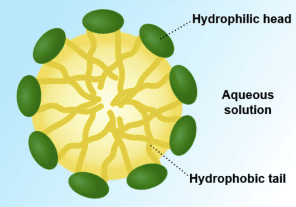
What is a micelle and what is it composed of?
spontaneously forming bubble composed of phospholipid
900
Define Homology and Homoplasy and provide an example of each.
Homoplasy: Similar in structure but are not inherited from a common ancestor (Morphological structure that is seen in multiple species, but did not evolve from the same ancestor - ex: Bird and bat wings)
Homology:structure/feature shared by 2+ species inherited from a common ancestor (ex: forelimbs of human, dog, bird, etc)
900
State which statistical test is most appropriate for the following studies:
1. Researchers conducted a clinical trial to see if a drug, clozapine, would decrease symptoms of schizophrenia. One group of schizophrenic patients were given a drug and another group was given a placebo. After one year, these patients' percent decrease in symptoms was measured.
2. A researcher was interested in the relationship between forearm length and height. He measured the forearm lengths and heights of a sample of 16 women.
1. Chi Square - categorical variables (symptoms not measured numerically, rather categorically as increase vs decrease in symptoms of schizophrenia)
2. Regression - how numeric variable 2 affects numeric variable 1/how much the spread in y can be explained by x, in this case the relationship between forearm length and height is being analyzed in 16 women.
900
A hypothetical population of 10,000 humans has 6840 individuals with blood type AA, 2860 individuals with blood type AB and 300 individuals with blood type BB. Is this hypothetical population evolving
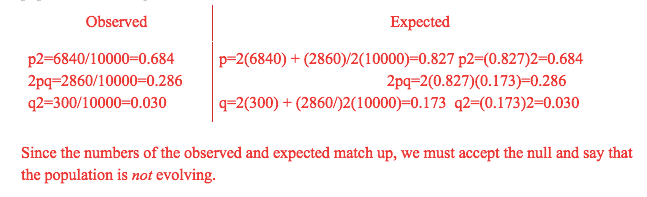
900
What do the terms in the equation p2+2pq+q2=1stand for? What does this equation represent?
p2: Homozygous dominant genotype
2pq: Heterozygous genotype
q2: Homozygous recessive genotype
This equation makes up 100% of the genotypes in a Hardy Weinberg population. (It does NOT fit a population that is evolving)
900

Two species of barnacles, Balanus and Chthamalus, can both survive on the lower rocks just above the low tide line on the coast, but only Balanus actually does so, with Chthamalus adopting a higher zone. What is this an example of and why? (2 concepts in one)
niche partitioning due to competitive exclusion
900
Fill in the biodiversity phylogenetic tree at the yellow marks and the pink marks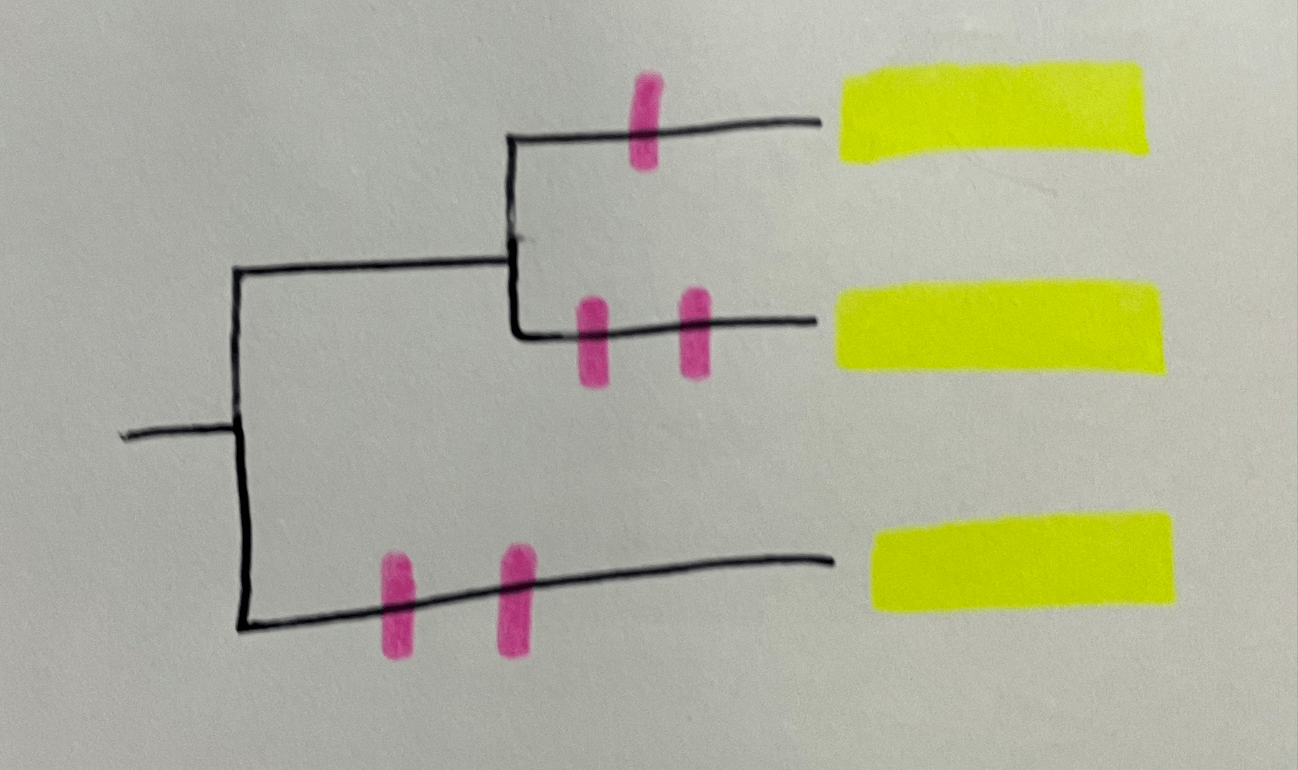
Yellow (top to bottom): Archaea, Eukarya, Bacteria
Pink: Ether bonds, Nucleus and true sexual reproduction, Ester bonds and peptidoglycan
1000
Rabbit’s ears can be either short or floppy, where short ears are dominant over floppy ears. There are 653 individuals in the population. 104 rabbits have floppy ears and 549 have short ears. Find the frequency of the dominant and recessive alleles
(p^2 + 2pq) + (q^2) = 1
(549) + (104) = 653
(divide by 653 to make equation equal to 1)
.84 + .16 = 1
q^2 = .16
q = 0.4 (recessive)
p + q = 1
p + 0.4 = 1
p = 0.6 (dominant)
1000
What is the difference between a p-value and an a-value?
The α-value is the significance level that quantifies how rare an event must be to reject the null hypothesis.
A p-value is the probability that the result is as or more extreme than the observed sample value if the null hypothesis is true.
1000
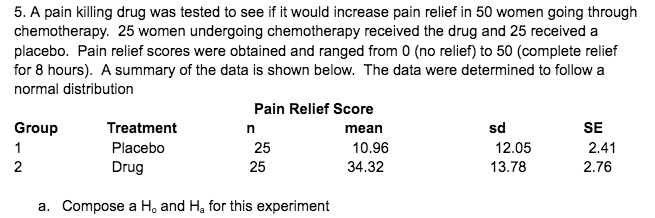
Ho: There is no increase in average pain relief scores between women undergoing chemotherapy who are receiving the drug and those who are receiving a placebo.
Ha: There is an increase in average pain relief scores between women undergoing chemotherapy who are receiving the drug and those who are receiving a placebo.
1000
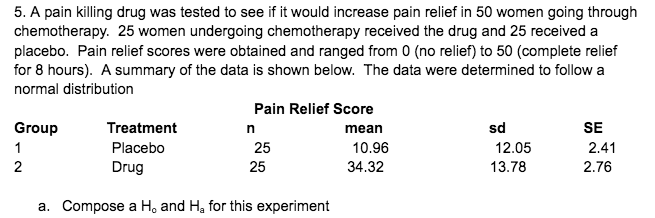
Conduct a t-test for 2 independent samples, obtain a p-value and interpret your finding. Use a simple calculation for degrees of freedom. Use the space below to show your work.
Your t-statistic is 6.38
Df = 25 + 25 – 2 = 48
t-critical = 2.01
t-stat > t-crit, p<0.05, null hypothesis is rejected
There is sufficient evidence to state that there is an increase in average pain relief scores in women undergoing chemotherapy that are receiving the drug and women undergoing chemotherapy receiving the placebo.
1000
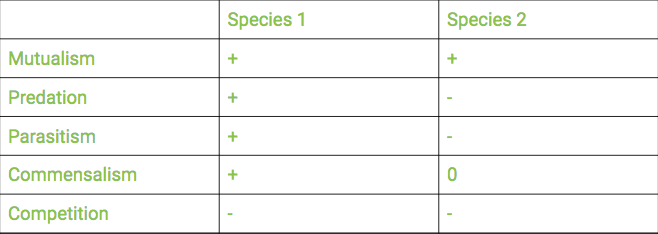
Fill out this table based on species interactions
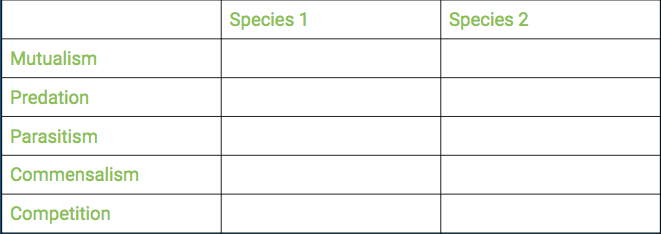
1000
Draw cilia and flagella and explain what they are
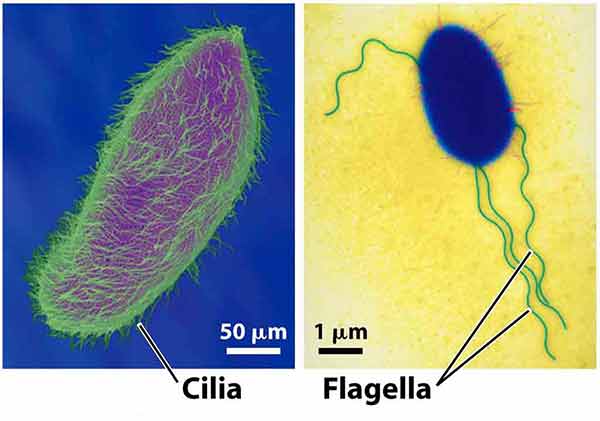
Cilia: short microscopic hairlike vibrating structure found in large numbers on the surface of certain cells providing propulsion.
Flagella: slender threadlike structure, especially a microscopic appendage that enables many protozoa, bacteria, spermatozoa, etc. to swim.