Ch.9-12
Ch.14&15
Ch.18
Ch.19
Ch.20
100
What is the term for age-related vision; "reading glasses"?
Presbyopia
100
What action potential is this?
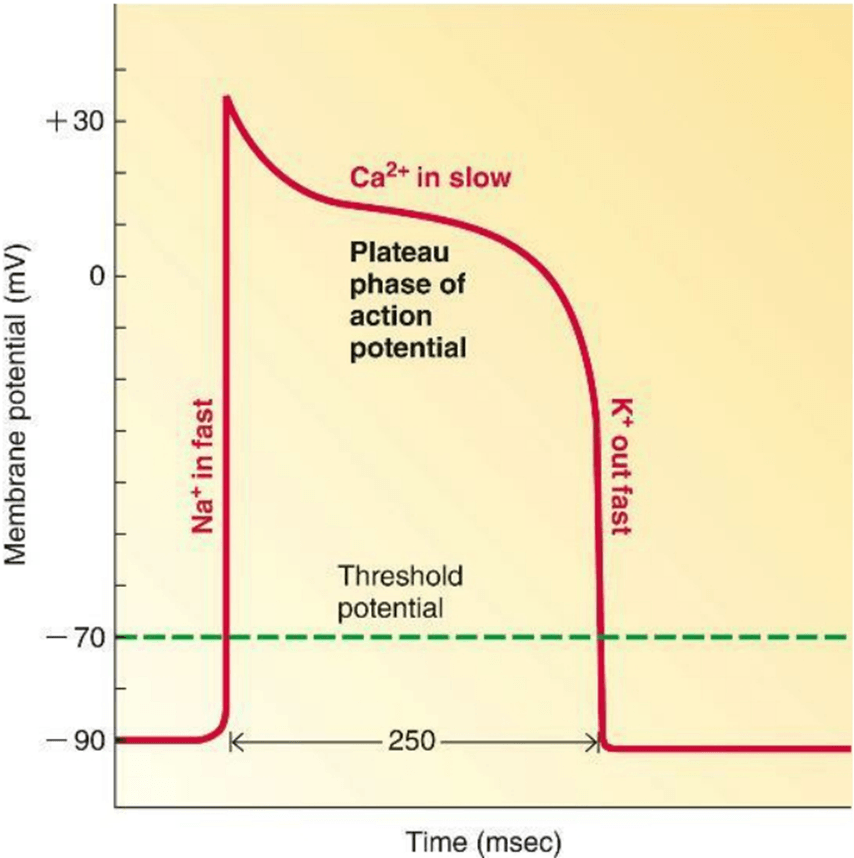
A cardiac contractile cell action potential
100
What happens when you hyperventilate vs re-breathe air from a paper bag?
Hyperventilating = expelling more CO2 = pH becomes more basic
Re-breathing air = building-up of CO2 = pH becomes more acidic
100
The kidney's ultimate function is to _____ the ______, and the by-product is ______.
The kidney's ultimate function is to filter the blood, and the by-product is urine.
100
Which has the strongest osmotic power and which has the weakest?
Na+ , MgCl2 , NaCl
Strongest = MgCl2
Weakest = Na
200
Which type of muscle fiber has large stores of glycogen, few mitochondria & appear white? What kind of fatigue resistance does it have?
Fast-glycolytic muscle fibers
low resistance
200
What is the equation for flow?
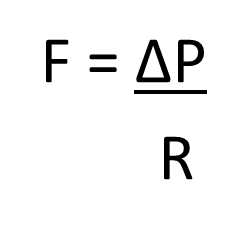
200
Tuberculosis is what kind of lung disease?
It is a restrictive lung disease = decrease in lung compliance, trouble getting air in
200
What is transport maximum (Tm)?
AKA Renal threshold - it is when the amount of specific substance exceeds the number of it's lumbrical carriers (all carriers are fully staturated), causing the excess of the substance to be excreted in the urine.
200
What is the control center for the thirst response pathway?
The thirst center in the Hypothalamus
300
Where do autonomic parasympathetic nerve fibers originate? what is the length of their pre- & post-ganglionic fibers and what do they release?
Originate = cranial and sacral areas of CNS
Preganglionic fibers = long
Postganglionic fibers = very short
both release ACh
300
Name 3 things that affect stroke volume
any these:
venous return
contractility
sympathetic activity
preload
afterload
300
Name 2 things that increase the rate of O2 unloading
any two of these is good:
Increased temperature
Increased blood PCO2 & pH
Concentration of BPG
300
What is the role of tubular secretion?
transfer substances like wastes, drugs, undesirable substances (ex. urea) & excess K+ from peritubular capillaries to the tubules via epithelial transport
300
All body fluid osmolality is equal (usually) at 300mOsm, what happens when there is a rise in ECF osmolality? Where does the water move?
A rise means an increase in concentration of solutes in the ECF = so, water moves out of the cell
400
In the motor cortex, what are the premotor and primary motor areas responsible for?
Premotor cortex - creates the "motor plan" (what the response will be & the areas involved)
Primary motor cortex - executes the "motor plan" & relays the signals to the specific motor neurons needed for the response
400
The sinoatrial node beats at ~70bpm, what happens if there's a problem with it and it fails to fire?
The atrioventricular node (AV) takes over at a slower rate of ~50bpm
400
Compare and contrast where Oxyhemoglobin and Deoxyhemoglobin are formed and which way the equation shifts
Oxyhemoglobin (HBO2) - formed in pulmonary capillaries where PO2 is high due to incoming atmospheric air, so it favors loading. Shifts to the right
Deoxyhemoglobin - formed at the systemic capillaries where PO2 is low, so it favors the release of O2 from Hb. shifts to the left
400
Explain the RAAS step-by-step.
When there is a decrease in ECF, NaCl, arterial BP > kidney releases renin > activates the angiotensin from liver & turns it into angiotensin I > passes through lungs and is converted into angiotensin II by ACE > stimulates secretion of aldosterone from adrenal cortex > makes distal tubule & collecting ducts more permeable to Na+ > increased Na+ reabsorption > promotes salt retention > increases water retention > increases blood volume = increases BP, ECF, NaCl
400
Hypothalamic osmoreceptors sense ECF solute concentration, if BP is low, how does it regulate with ADH?
It increases release of ADH > increase salt retention > increase water retention > increases blood volume = increases BP & urine is more concentrated
500
Explain muscle fatigue
inability of a muscle to maintain force of contraction after a prolonged activity
defense mechanism that protects muscle from reaching point at which it can no longer produce ATP
lactic acid build up
500
What step of the cardiac cycle is yellow, what is happening?
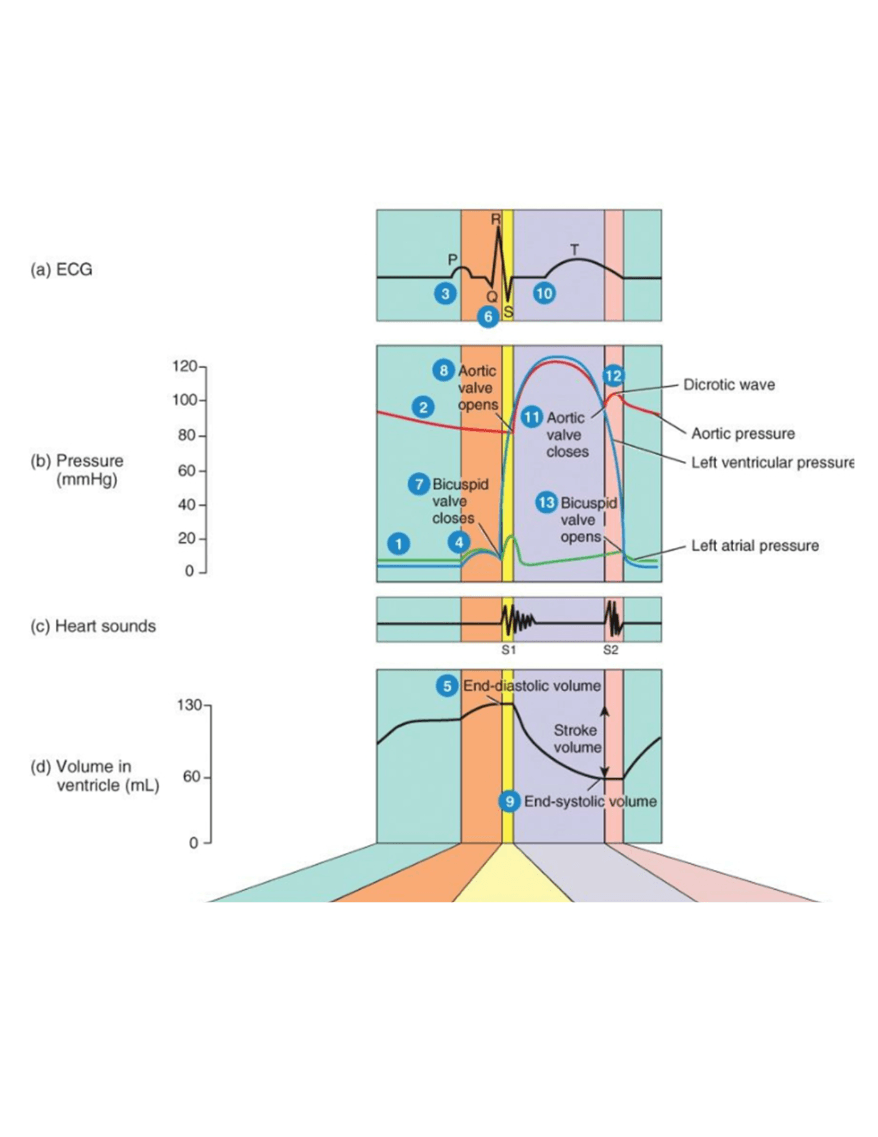
Step 3 - Isovolumetric ventricular contraction
atrial contraction and ventricular filling are complete & max volume of blood is in the ventricle
ventricular pressure sharply increases, signaling onset of ventricular systole (QRS complex)
both SL and AV valves are closed, so no blood volume of blood can enter or leave
500
Explain the step by step control of respiration when arterial PCO2 increases (a feedback loop)
Increase in CO2 > increase in H+ > perceived by peripheral chemoreceptors (in aorta & carotid sinus) & central chemoreceptors (in medulla) > sends signal to medulla oblongata respiratory group > sends action potentials to the inspiratory and expiratory muscles to contract more frequently (hyperventilation) = decrease in arterial blood PCO2, increase in pH, increase in PO2
500
Explain the countercurrent mechanism in the Loop of Henle
When fluid flows in opposite directions in 2 closely adjacent tubes
Descending limb highly permeable to water but impermeable to Na+, only water leaves
Ascending limb impermeable to water but permeable to Na+, only Na+ leaves
this establishes a vertical osmotic gradient in the interstitial fluid
Fluid is isotonic when entering descending limb, hypertonic at the tip of the loop, and hypotonic when exiting the ascending limb
500
Differentiate btw respiratory acidosis and respiratory alkalosis in terms of pH level and compensatory mechanism
Respiratory acidosis = increased Pco2 so pH is below 7.35 (hypoventilation). compensated by renal system increasing excretion of H+ & increasing reabsorption of HCO3-
Respiratory alkalosis = decreased Pco2 so pH is above 7.45 (hyperventilation). compensated by renal system decreasing excretion of H+ and decreasing reabsorption of HCO3-