Ecosystems
Cells
Food Tests/Enzymes
DNA/Inheritance
Random
100
What term describes a living thing that gets its energy by eating other organisms?
A consumer
100
What is a cell?
The basic unit of a living thing
100
What is starch?
Complex carbohydrate
100
True or False: Ear lobe shape is genetically inherited
True
100
Which part of your body contains more bacteria than there are people on Earth?
Your gut (intestines)
200
What do we call a feature that helps an organism survive?
An adaptation.
200
What do we call organisms made of one cell?
Unicellular organisms.
200
What mineral deficiency leads to scurvy?
Vitamin C
200
What do we call the instructions for traits found in cells?
Genes.
200
True or False: Some species of jellyfish are biologically immortal and can technically live forever.
True (e.g., Turritopsis dohrnii).
300
In this food web, who is the predator for the frog
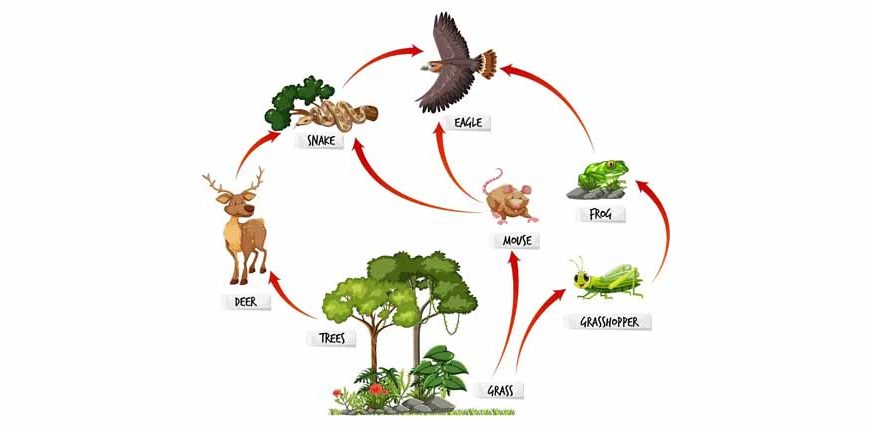
Eagle
300
What do we call a group of similar cells working together?
A tissue
300
Where do an enzyme and substrate join?
Active site
300
Where in the cell is DNA found?
Nucleus
300
What is the only type of cell in the human body that doesn’t contain a nucleus?
A. Eye cells
B. Red Blood Cells
C. Hair cells
B. Red blood cells.
400
What role do producers play in a food chain?
They make their own food and provide energy for other organisms.
400
Where in a plant will you find chloroplasts?
In the leaves
400
What food test is used to test for Glucose?
Benedict solution
400
What are the 4 bases in DNA?
A, T, C & G
400
Which animal can survive being frozen solid and then thawed back to life?
A. Elephant
B. Rat
C. Wood Frog
C. Wood frog.
500
What is aerobic respiration?
Energy made when there is enough oxygen
500
What organelle creates proteins in a cell?
Ribosomes
500
What is the labelled part of the digestive system?

Esophagus
500
What do we call the process where organisms with helpful traits survive and reproduce?
Natural selection.
500
What organ in your body contains the largest number of different types of neurons, even more than your brain?
The retina (in the eye).