S & M System
Digestive System
Random
Nervous System
Circulatory System
100
DOUBLE JEOPARDY
Give 2 bones on your arms.
What are the phalanges, humerus, radius, and/or
ulna?
100
This connects the mouth and stomach.
What is the esophagus?
100
DOUBLE JEOPARDY
This bone connects your arm to your chest and is commonly called the collarbone.
What is clavicle?
100
This organ controls your thoughts and body actions.
What is the brain?
100
These disc shaped cells transport oxygen from the lungs to the other parts of the body.
What are red blood cells?
200
The leg bone which is connected to the hip.
What is the femur?
200
This organ absorbs most of the nutrients from digested food.
What is small intestine?
200
This is the place where two bones meet.
What is joint?
200
DOUBLE JEOPARDY
Electrical messages
What is impulse?
200
These blood cells are a vital part of the body's immune system.
What are white blood cells?
300
Three types of muscles
What are skeletal, smooth & cardiac muscles?
300
DOUBLE JEOPARDY
The millions of tiny finger-shaped structures cover the inner surface of the small intestine and provide a large surface area through which digested food is absorbed.
What are the villi?
300
This type of muscle is found in your heart.
What is cardiac muscle?
300
Tiny cells that send signals to the brain. They are also known as nerve cells.
What is neurons?
300
Hollow organ approximately, the size of your clenched fist. It pumps blood throughout our body
What is the heart?
400
Give one example of axial and appendicular bone
Answer may vary.
400
Unlike chemical digestion, this process does NOT involve enzymes but still helps increase surface area for digestion.
What is mechanical digestion?
400
These vessels carry blood away from the heart to the rest of the body, and it carry oxygenated blood
What are ateries?
400
The parts of the nervous system.
What are brain, spinal cord, and nerves
400
DOUBLE JEOPARDY
The three types of blood vessels.
What are arteries, veins, and capillaries?
500
The _____ skeleton is the central part of the skeleton used to protect vital organs such as the brain, heart, and lungs.
What is the axial skeleton?
500
DOUBLE JEOPARDY
Difference between the small intestine and the large intestine
What are
Small intestine = “Food factory” (break down + absorb nutrients)
Large intestine = “Water recycler & trash compactor” (remove water + form feces) ?
500
Four parts of blood
What are red blood cells, white blood cells, plasma, platelets?
500
Explain how the nervous system works.
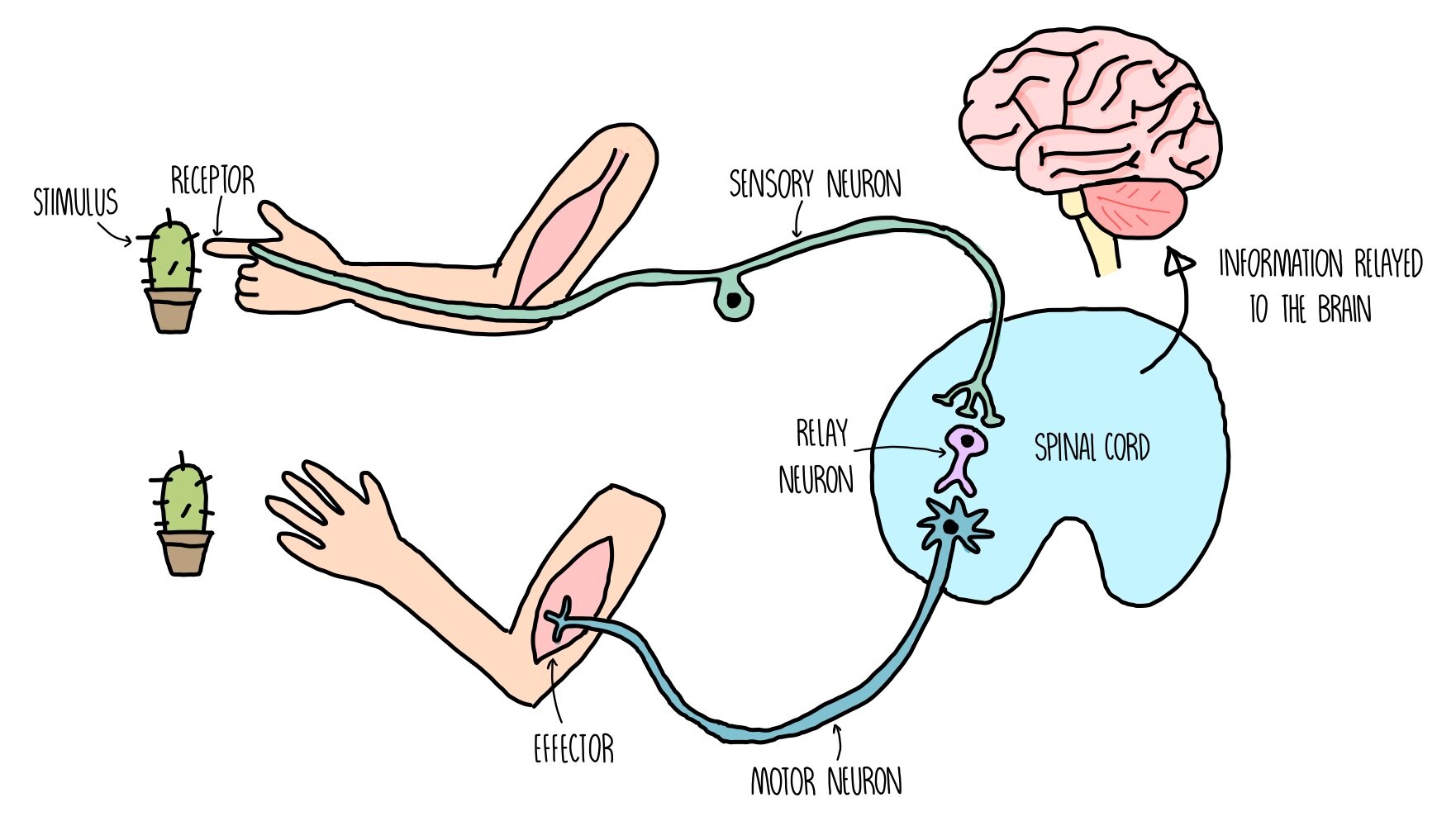
500
Parts of the heart that push blood to the lungs and to the body
Right side of heart → Lungs
(Pulmonary circulation — blood goes to pick up oxygen.)Left side of heart → Body
(Systemic circulation — oxygenated blood goes to tissues.)