Development & Surface Anatomy
Cranial Nerves
Spinal Cord
Internal Structures
Cerebellum
100
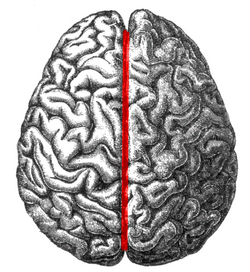 This major sulcus separates the left and right cerebral hemispheres.
What is the Longitudinal Fissure?
100
This cranial nerve is sensory in nature and its major function is involved in vision.
What is the optic nerve (cranial nerve II)?
100
Also surrounding the brain, this protective layer is the the thickest and toughest, and is also the outermost layer of protective sheath.
What is the dura?
100
This is a group of structures that work together to coordinate behaviors involving the modulation of movement, decision making, emotions, motivations & habits, and reward & addiction.
What is the Basal Ganglia?
100
From the latin meaning "worm", this region of the cerebellum is located along its midsagittal plane.
What is the vermis?
200
Posterior to the frontal lobe and central sulcus, this lobe is considered the "sensory cortex", as it integrates sensory information received from the body.
What is the Parietal Lobe?
200
This cranial nerve is mixed sensory and motor and one of its functions is to control the muscles of facial expression.
What is the Facial Nerve (cranial nerve VII).
200
This butterfly, or "H"-Shaped region within the spinal cord contains the cell bodies of neurons and has anterior and posterior horns.
What is the gray matter?
200
This structure acts as our body's information relay station and contains nuclei itself.
What is the thalamus?
200
This fissure separates the anterior lobe from the posterior lobe.
What is the primary fissure?
300
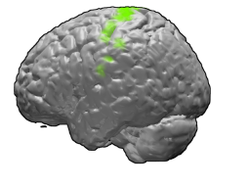 It is the region in green, the most posterior part of the frontal lobe, and is home to the most important signal for the production of skilled movements.
What is the primary motor cortex (M1)?
300
This cranial nerve is sensory and involved in hearing and your sense of balance.
What is the vestibulocochlear (auditory) nerve (cranial nerve VIII)?
300
Peripheral nerve fibers supply regions of the skin, forming this.
What is a dermatome?
300
This structure acts as a "Smart Control" center, helping to keep your body in an internal state of balance.
What is the hypothalamus?
300
The cerebellum uses this type of control for fast movements.
What is a feedforward system?
400
This lobe is located the most laterally, and has functions involved in processes including hearing, facial recognition, emotional association, and language retention.
What is the temporal lobe?
400
This nerve is sensory and motor and is involved in the autonomic functions of the gut.
What is the vagus nerve (cranial nerve X)?
400
This section of spinal cord is large and circular, with bulbous and short anterior and posterior horns.
What is the lumbar spinal cord?
400
This structure is principally involved in the storage and consolidation of long term memory, containing circuitry that allows for constant "system backups".
What is the hippocampus?
400
This deep cerebellar nucleus is the most medially located and receives inputs from afferents that carry vestibular, auditory, and somatosensory signals, among other things.
What is the fastigial nucleus?
500
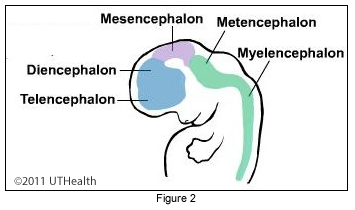 During development, the diencephalon and telencephalon are formed from this neural tube segment.
What is the prosencephalon, or forebrain?
500
This cranial nerve is sensory and motor, having a role in sensation from the posterior tongue and pharynx (throat), and taste from the posterior tongue.
What is the glossopharyngeal nerve (Cranial Nerve IX)?
500
These white matter ascending tracts occupy the dorsal column and carry information related to tactile, two point discrimination of pressure, vibration, position, and conscious proprioception.
What are the gracile and cuneate fascicluli?
500
This structure contains inhibitory neurons. When inhibited itself, it disinhibits downstream structures in both the internal and external pathways of the basal ganglia.
What is the globus pallidus?
500
These cells have cell bodies located in the ganglionic layer and project tree-branch-like dendrites out to the molecular layer, where they intersect with parallel fibers that generate their spikes.
What are purkinje cells?