Topic 11
Topic 11
Topic 11
100
Many colonies in the Pacific islands began demanding independence…
A: Soon after being colonized by European powers
B: When Japan seized control of the islands during WW2
C: After the defeat of Japan in WW2
D: During WW1
C: After the defeat of Japan in WW2
100
Read the excerpt from an 1893 book<describing the settlement of Australia and New Zealand: "It is not necessary here to follow the complicated history of New Zealand in later years, which unfortunately comprises [includes] several bloody wars with the Maoris. The present prosperous condition of this great colony is well known, but it has not been effected without the rapid diminution [decrease in number] of the natives, who have met with the fate of most aborigines in contact with Europeans, especially when the former were naturally bold and warlike." —Notes on Captain Cook’s Journal Which statement is BEST supported by the excerpt?
A:The Maori suffered a swift loss of population and decline in power in the brutal conflicts during colonization
B:The Maori population slowly declined after Britain colonized New Zealand as the once proud people assimilated with the Europeans
C:The British had little trouble conquering and colonizing the peaceful peoples of New Zealand
D: The British genocidal attempt to wipe out the Maori ethnic group was successful
A:The Maori suffered a swift loss of population and decline in power in the brutal conflicts during colonization
100
Study the diagram comparing government in the United States with government in Australia and New Zealand: Which statements answer the questions shown in the diagram? 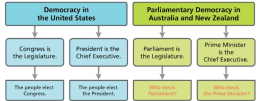
A: The prime minister appoints the members of parliament. The people elect the Prime Minister
B: The people elect the members of Parliament. Parliament chooses the Prime Minister
C: The people elect the members of Parliament the British monarch appoints the Prime Minister
D: The people elect the members of Parliament. The people elect the Prime Minister
B: The people elect the members of Parliament. Parliament chooses the Prime Minister
200
Study the photograph: Why is the activity shown in this photograph vital to the economies of many islands in Micronesia?
A:Many islands have limited fertile land or mineral resources and must depend on the ocean
B: Many Islanders cling to traditional ways of life and refuse to use modern technology
C:Seafood is so plentiful in the Pacific Ocean and Commercial fishing has little environmental impact.
D: The tourism industry is the main source of income for many people on these islands.
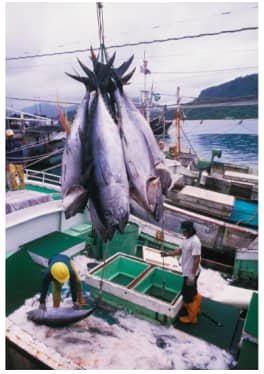
A:Many islands have limited fertile land or mineral resources and must depend on the ocean
200
Read the passage from the apology to the Aborigines issued in 2008 by the Australian government: "The nation is demanding of its political leadership to take us forward. Decency, human decency, universal human decency, demands that the nation now steps forward to right a historical wrong. That is what we are doing in this place today. But should there still be doubts as to why we must now act. Let the parliament reflect for a moment on the following facts: that, between 1910 and 1970, between 10 and 30 per cent of Indigenous children were forcibly taken from their mothers and fathers. That, as a result, up to 50,000 children were forcibly taken from their families. That this was the product of the deliberate, calculated policies of the state as reflected in the explicit powers given to them under statute. That this policy was taken to such extremes by some in administrative authority that the forced extractions of children of so called ‘mixed lineage’ were seen as part of a broader policy of dealing with ‘the problem of the Aboriginal population’." —Prime Minister Kevin Rudd What Australian policy is being described?
A:The conversion of Aborigines by European missionaries
B: The displacement of indigenous peoples by European settlers
C: The conquest of Australia by the first European colonist
D: The forced assimilation of Aborigines
D: The forced assimilation of Aborigines
200
Many Pacific Island nations have few natural resources which lead to weak economies that cannot spend much on public education. This ultimately results in low literacy rates and consequentially low productivity rates in these small economies. All of these factors contribute to…
A: A relatively low standard of living in these nations
B: constant civil conflicts and government changes in these nations
C:an over-reliance on foreign imports to meet consumer demands
D: The continued colonialism of these regions into the 21st century
A: A relatively low standard of living in these nations
300
Study the graphic: After analyzing the graphic, infer and choose the statement that BEST explains why rising sea levels are a serious problem for human populations in smaller Pacific islands? (At the bottom)
A: Some tiny islands atolls. like Tuvalu, are at risk of disappearing completely into the rising Pacific
B: It will completely destroy the tourism industry as tourist will not want to visit islands with server coastal erosion
C: Rising sea levels are causing some species of marine life to go extinct which an essential part of local diets
D: The higher saltwater levels threaten freshwater supplies harm agriculture which is essential to local economies in the region 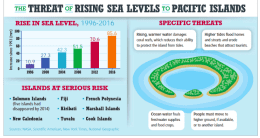
A: Some tiny islands atolls. like Tuvalu, are at risk of disappearing completely into the rising Pacific
300
Which of the following is MOST LIKELY the way that colonialism affected the people of the Pacific Islands?
A: Pacific Islanders easily assimilated into European culture and were treated as equals
B: Pacific Islanders had fewer natural resources available to them and could never compete economically with Europeans
C: Pacific Islanders who were colonized were able to enjoy a higher standard of living than uncolonized
D: Pacific Islanders were forced to adapt to European culture and not treated fairly or equally with their colonizers
D: Pacific Islanders were forced to adapt to European culture and not treated fairly or equally with their colonizers
300
Which of the following natural disasters occur frequently in Australia?
A: floods and mulslides caused by heavy rains due to its tropical climate
B: earthquakes caused by its location on the boundary between two tectonic plates
C: eruptions and ash clouds due to its location close to active volcanoes
D: wildfires in grassy areas during the hot, dry summer seasons
D: wildfires in grassy areas during the hot, dry summer seasons
400
How were early New Guineans different from Australia’s first people?
A: They were divided into hundreds of distinct ethnic groups
B: They were among the first people to discover farming
C They lived by hunting, fishing, and gathering
D: They migrated to the Pacific region from another part of the world
B: They were among the first people to discover farming
400
Which of the following is the BEST example of how many Pacific islands have adapted to a mix of different ethnic groups?
A:They use many modern technologies such as computers
B:They have developed the national pidgin language
C:They practice traditional forms of art, dance, and music
D: They have populations where immigrants make up the majority
B:They have developed the national pidgin language
400
Why do very few people live in the interior of Australia?
A: The interior region is reserved for the Aborigines
B: The interior has few natural resources that are useful to people
C: Its extremely dry climate makes farming difficult
D: The dangers posed by volcanic eruptions make it unsuitable for settlement
C: Its extremely dry climate makes farming difficult
500
Why is coral bleaching a major cause for concern in the Pacific?
A:The Pacific coral reefs are the major tourism attraction in the region
B:Many sea creatures may go extinct if coral reefs are destroyed
C:Many Pacific island economies depend on coral farming
D:Coral reefs help moderate water and air temperatures
B:Many sea creatures may go extinct if coral reefs are destroyed
500
The long-distance navigational skills of the Polynesians eventually led to the…
A: Settlement of New Zealand and Hawaii
B:Settlement of Samoa and Tonga
C: Development of Aborigine culture
D:development of farming in New Guinea
A: Settlement of New Zealand and Hawaii
500
New Zealand was first settled by people who traveled by sea from:
A: Papua New Guinea
B: Micronesia
C: Polynesian islands
D: Australia
C: Polynesian islands