Symptoms
Risk Factors
Cardiac Rhythms
Interventions
EKG
100
Prolonged experience of this dysrhythmia may cause symptoms of heart failure, such as shortness of breath, pedal edema, fatigue, and chest pain due to the atrium not beating efficiently with the ventricle.
What is atrial fibrillation?
100
This modifiable risk factor for cardiac disease can be controlled with diet, exercise, and medications such as insulin and/or SGL2 inhibitors.
What is diabetes?
100
This arrhythmia results in no electrical communication between the atria and ventricles due to a complete failure of conduction, and no association between P waves and QRS complex.
What is Complete (Third Degree) heart block?
100
This cardiac arrhythmia requires immediate Magnesum sulfate intravenous infusion.
What is Torsades de Pointes?
100
Placement of this lead is at the 4th intercostal space (ICS), on the right sternal border.
What is V1?
200
This rhythm may lead one to feel unusually tired and/or lightheaded, and may possibly even lead to syncope.
What is bradycardia?
200
When a patient has frequent PVCs, the provider may suggest that they first cut out this ingredient from their diet prior to initiating any medical therapies.
What is caffeine?
200
What is Second Degree Heart Block Type 2?
200
This dysrhythmia can be treated with a number of medications including Amiodarone, Diltiazem, Digoxin, Tikosyn, Metoprolol, Sotalol, and Propafenone, in addition to blood thinners.
What is atrial fibrillation?
200
Placement of this lead is midway between V2 and V4
What is V3?
300
This dysrhythmia will lead to syncope and likely even death if not treated immediately.
What is ventricular fibrillation?
300
This modifiable risk factor has been shown to contribute to conditions such as cardiac disease, hypertension, and lung cancer.
What is smoking?
300

What is atrial flutter?
300
This is a non-pharmacological treatment for sinus bradycardia.
What is a pacemaker implantation?
300
Placement of this lead is anywhere between the right shoulder and right elbow.
What is the RA (Right Arm)?
400
This "extra beat" may cause one to feel a temporary flutter sensation in the chest, which doesn't last long, but may recur.
What is a Premature Ventricular Contraction (PVC)?
400
Patients at risk for this lethal cardiac dysrhythmia which is caused by a weakened heart muscle (Ejection Fraction of less than 30%) often receive an implanted ICD to prevent sudden cardiac death as a result of the dysrhythmia.
What is ventricular fibrillation (V. Fib)?
400
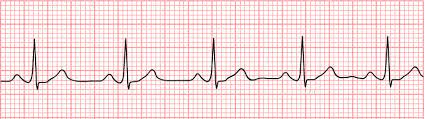
What is Normal Sinus Rhythm?
400
This is a non-pharmacological treatment for Supraventricular Tachycardia (SVT).
What is Vagal maneuvers?
400
This lead is placed at the 5th ICS, mid-axillary line (same level as V4).
What is V6?
500
This condition may cause chest pain or pressure, left arm pain, shortness of breath, unusual fatigue, and requires prompt treatment to preserve cardiac function and patient life.
What is an ST-elevated Myocardial Infarction (STEMI)
500
Noncompliance with the medication Metoprolol might lead to recurrence of arrhythmias related to increased heart ______.
What is rate?
500
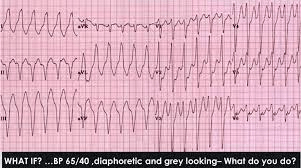
What is Ventricular Tachycardia?
500
Tikosyn is a high-risk medication intervention that requires close monitoring during medication loading due to the risk of this EKG abnormality.
What is a prolonged QT/QT-C?
500
Placement of this lead is anywhere below the left torso and above the left ankle.
What is the LL (Left Leg)?