Anatomy
Anatomy II
Physiology
Physiology II
EKG
EKG patho
Renal
Renal II
CPB applications
Lung and brain anatomy
More respiration
Acids, bases, and gases
More gases
Misc
100
What is the name of the normally fluid-filled sacs that cushion and lubricate the lungs within the thorax?
Pleura/ Pleural sacs
100
The highest lost of pressure and the loss of pulsatility occurs in which vessels?
Arterioles
100
What organ does most of cardiac output perfuse?
Kidneys
100
_________ ________: When impaired valvular coaptation creates retrograde flow
_________ ________: When impaired orifice area reduces ejection
Valvular regurgitation/ insufficiency
Valvular stenosis
100
Ventricular depolarization usually occurs during what part of the EKG sequence?
QRS complex
100
Chaotic electrical activity in the ventricles is referred to as:
Ventricular fibrillation
100
What are the two types of nephrons, and which is more common?
Cortical (85%) and juxtamedullary (15%)
100
What releases renin?
Juxtaglomerular cells (as a part of the juxtaglomerular apparatus)
100
Does blood viscosity increase, decrease, of stay the same with hypothermia?
Increase (think thick like syrup)
100
What blood vessels supply blood to the lungs, feeding them oxygen?
Bronchial arteries
100
What is the name of the normal "breath"?
Tidal volume
100
What is the fastest buffering system, and the slowest system?
Fastest: chemical buffer
Slowest: Renal mechanism
100
True or false: O2 and CO2 compete for the same binding site on hemoglobin
False-- different sites and not direct competitors
100
What position are patients normally laying for cardiac surgery?
Supine
200
What is the name of the irregular muscle columns across the ventricles of the heart
Trabeculae carneae
200
What are the (typically fat-filled) grooved between each atria and ventricle called?
Sulcus (singular), sulci (plural)
200
Which type of vessel does blood move the slowest through?
Capillaries, as they have the greatest surface area
200
Which type of infarction occurs when there is transmural ischemia after no perfusion to the myocardium?
STEMI
200
What ion event is responsible for rapid depolarization of the contractile cells?
Sodium channels opening and sodium rushing in
200
Normal electrical rhythm is referred to as __________ and is at a rate of ________.
Sinus rhythm
60-100 bpm
200
What are the specialized epithelial cells in the distal convoluted tubule that measures NaCl concentration, providing feedback to the renal system?
Macula Densa
200
What part of the RAAS drives thirst?
Angiotensin II
200
What is the order for classifying hypothermia?
Normothermia
Mild hypothermia
Moderate hypothermia
Deep hypothermia
Profound hypothermia
200
What is the purpose of the Circle of Willis?
Maintain even and bilateral circulation to each side of the brain
200
What is the name of the air that does not participate in gas exchange (ie. is in the airway)
Dead space
200
What is the Bohr effect?
Increased CO2 and therefore decreased pH cause hemoglodin to release oxygen more readily
200
Where is PCO2 normally "monitored" in the body?
Central chemoreceptors in the medulla oblongata
200
What are branches off of the LAD and Cx?
Diagonals arise off of the LAD
Obtuse marginals arise off of the Cx
300
From inner to outer, what are the three layers of the heart?
Endocardium (inner)
Myocardium (middle, muscular)
Epicardium (outer)
300
What is the piece of anatomy that keeps the IVC and SVC communicating even in the case of a blockage?
Azygous vein/ azygous venous system
300
What is the formula for cardiac output, and what is a typical adult cardiac output?
CO = SV x HR
4-6 LPM at rest
300
What is normal left ventricular diastolic pressure?
~10 mmHg (more accurately, 6 to 12 mmHg)
300
Resting membrane potential of pacemaker cells is _______
Resting membrane potential of contractile cells is _______
-60 mV
-90 mV
300
What is shown on the EKG in response to ischemia/ infarction?
ST segment elevation
(also perhaps inverted T waves)
300
What are the following parts of the nephron?
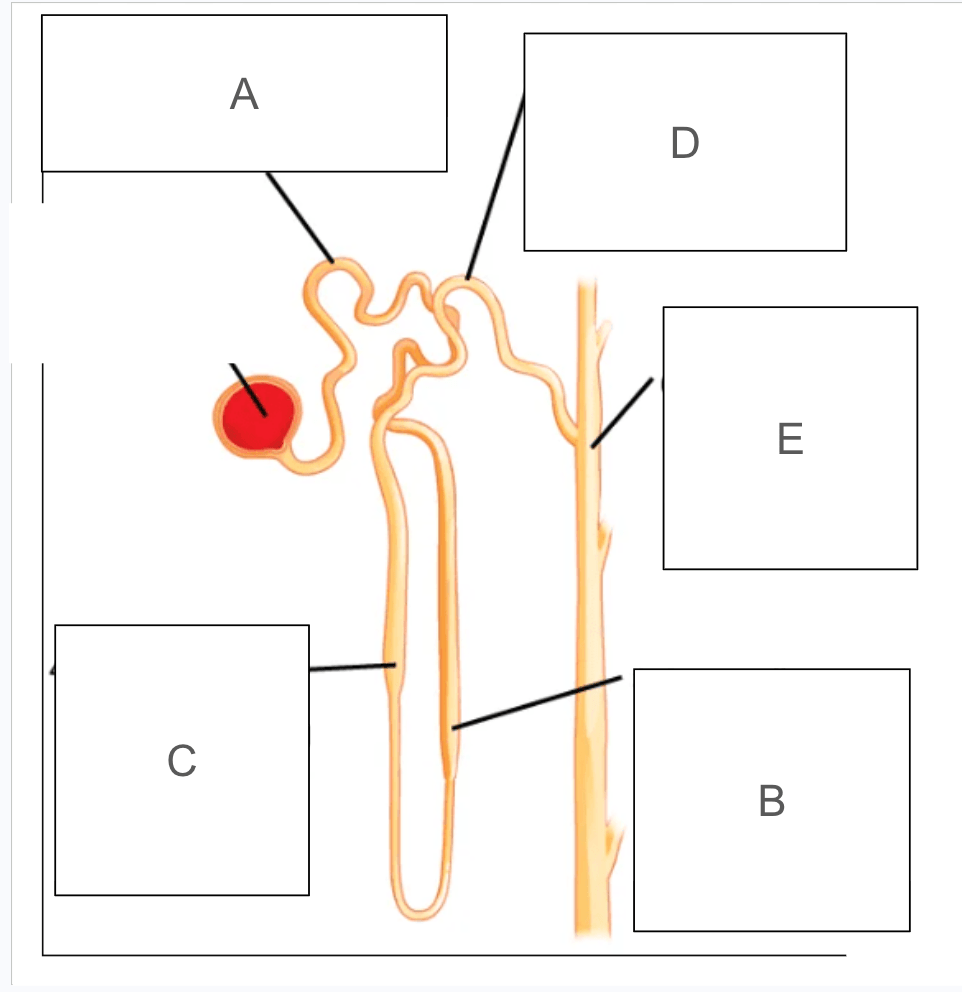
A: Proximal convoluted tubule
B: Descending loop of Henle
C: Ascending loop of Henle
D: Distal tubule
E: Collecting duct
300
What does the 60/40/20 rule of body fluid compartments suggest?
60% of body weight is total body water
40% of body weight is intracellular fluid
20% of body weight is extracellular flujid
300
What factor does a colloid such as albumin influence?
capillary oncotic pressure
AKA colloid osmotic pressure
300
Bronchi branch into ______ which eventually branch into ______ which is where gas exchange occurs.
Bronchioles, alveoli
300
What is the name of the volume that remains in the lungs after a forced exhale?
Residual volume
300
What acid-base disorder would be seen with obstructive lung disease?
Respiratory acidosis
300
What is the driving factor for ventilation?
PaCO2
300
What are two examples of connective tissue disorders?
Marfan syndrome
Ehlers-Danlos syndrome (EDS)
Loeys-Dietz syndrome
400
From inner to outer, what are the three layers of the pericardium?
Visceral (inner, against the heart)
Parietal
Fibrous (anchoring to surrounding anatomy)
400
What are the three leaflets of the tricuspid valve?
Anterior, posterior, septal
400
What are three factors that influence cardiac contractility?
Factors that raise contractility:
Sympathetic nervous system stimulation (exercise, stress, pain)
Catecholamines (epi, norepi, dopamine)
Increased calcium
Factors that reduce contractility:
Myocardial ischemia
Low calcium or oxygen
pH status (Acidosis)
Sepsis
Drugs (e.g. volatile anesthetics)
400
Calculate the ejection fraction:
CO: 5 LPM
CI: 2.6 LPM
HR: 71 BPM
EDV: 120 mL
ESV: 50 mL
Coronary perfusion: 250 mL/min
EF = (SV / EDV) * 100
58%
400
What is the order by which an electrical current moves through the conduction pathway?
SA node, AV node, Bundle of His, left and right bundle branches, Purkinje fibers
400
Arrhythmias that have electrical signals repeatedly going in a loop are ___________
Arrhythmias that are spontaneous depolarizations without inciting event are _______________
re-entrant
automatic
400
What is the end goal of renin release?
Maintain glomerular filtration rate by keeping the blood pressure normal (and renal perfusion normal)
400
What does the blood parameter BUN measure, and what would AKI/ CKD do to the value
Blood urea nitrogen, the urea in the blood (should be filtered) so AKI/ CKD increases the blood value
400
What is a crystalloid solution that contains a buffer, and what is one that does not contain a buffer?
Does not: 0.9% Normal saline
Does: Plasma-lyte, Normosol, LR
400
What is the typical MAP range that cerebral autoregulation is maintained?
70 to 150 mmHg
400
What is V/Q, and what does it describe?
V= ventilation of the lungs
Q= perfusion of the lungs
400
What are three chemical buffers?
Bicarbonate (weak)
Phosphate
Proteins (strong)
400
What is the relationship between hemoglobin and nitric oxide, and what does this mean for vascular tone?
Hemoglobin scavenges NO, which means that there is eventual vasoconstriction and increased vascular tone
400
What is the term that describes "stretchability" of blood vessels, as well as the heart?
Compliance
500
Which valves (names) are anchored by chordae tendinae and papillary muscles?
Tricuspid and mitral (AV valves)
500
Inner to outer, what are the main three layers of blood vessels?
Tunica intima (inner)
tunica media
Tunica adventitia (outer)
500
Coronary drainage is through which three pathways
a. 80%:
b. 15%:
c. 5%:
80% Coronary sinus
15% anterior cardiac veins
5% thebesian veins
500
Systemic hypertension increases _____________ which eventually can result in _________ congestive heart-failure.
Afterload, left-sided
500
What is the threshold potential of pacemaker cells, and what event occurs when this threshold potential is reached?
-40 mV, calcium gated channels open to allow for an influx of calcium and complete depolarization
500
An extra heartbeat occurring in the lower chambers are called _____ and three or more of these qualifies as: ______
Premature ventricular contraction
Ventricular tachycardia
500
Approximately how much filtrate is produced within the nephrons, and what percentage of it is reabsorbed?
180 L/day, 99%
500
How is glucose handled in the nephron?
Filtered freely
Almost completely reabsorbed in the proximal tubule
500
What does the Q10 principle state?
The degree to which metabolism changes for every 10 degree (celsius) change in temperature
500
What is the primary physiologic regulator of CBF/ autoregulation?
pcCO2
500
What is Dalton's Law?
The total pressure exerted by a mixture of gases is the sum of the pressures exerted independently by each gas
500
What three ways is carbon dioxide transported, and which is the primary way?
bicarbonate ion in plasma (70%)
bound to hemoglobin (20%)
dissolved in plasma (10%)
500
What is the Haldane effect?
Deoxygenated hemoglobin carries more CO2 and H+ than oxygenated hemoglobin
500
The sodium-potassium pump uses ATP to maintain the concentration gradient in which way?
More sodium outside the cell
More potassium inside the cell
600
From proximal to distal, what are the three head vessels?
Brachiocephalic/ innominate artery
Left common carotid artery
Left subclavian artery
600
What two vessels come together to form the SVC, draining the head, neck, and arms?
Right and left brachiocephalic veins
600
Aerobic metabolism creates how many ATP per glucose molecule?
Anaerobic metabolism creates how many ATP per glucose molecule and creates which byproduct via glycolysis?
36
2; lactate
600
What is ischemic preconditioning?
a protective process where brief, repeated episodes of temporary blood flow restriction make tissues more resistant to a later, severe lack of oxygen. It reduces cell damage, lowers the risk of tissue death,
600
What is the conduction pathway that carries depolarization from the right atrium to the left atrium?
Bachmann's Bundle
600
What are the following two arrhythmias?
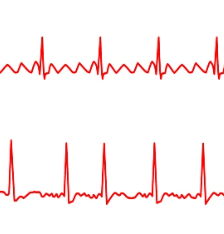
Atrial flutter
Atrial fibrillation
600
What are the following players of the RAAS system?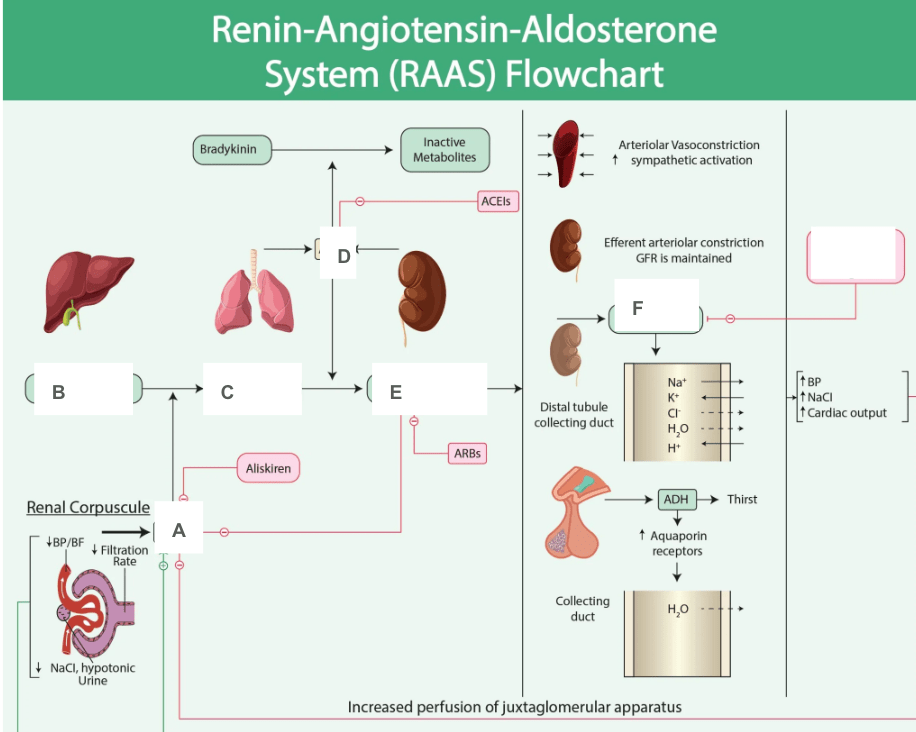
A: Renin
B: Angiotensinogen
C: Angiotensin I
D: Angiotensin converting enzyme
E: Angiotensin II
F: Aldosterone
600
What are the three major stimuli for renin release?
Decreased renal perfusion pressure
Decreased NaCl in the macula densa
SNS activation
600
The blood management system that analyzes gases at actual temperature is:
The blood management system that analyzes gases at 37 C is:
pH-stat
alpha-stat
600
What is the role of surfactant in the lungs?
Reduces surface tension in the alveoli, preventing them from collapsing during exhalation
600
Which of the following is most soluble in solution, and which is least soluble in solution?
Oxygen
Nitrogen
Carbom dioxide
Most soluble is CO2
Least soluble is nitrogen
600
What condition is described below?
pH 7.52
PCO2 40 mmHg
HCO3 34 mmhg600
What does p50 mean, and what is the normal pressure value?
The partial pressure of oxygen at which hemoglobin is 50% saturated with oxygen-- usually 27 mmHg
600
What fatal condition may result as a result of calcium overload and ATP depletion?
Stone heart syndrome
700
What are the four types of tissue in the body, and how do they appear in the heart?
Epithelial (endothelium)
Connective (valves and chordae)
Nervous (conduction pathway)
Muscle (myocardium
700
Please label A-C
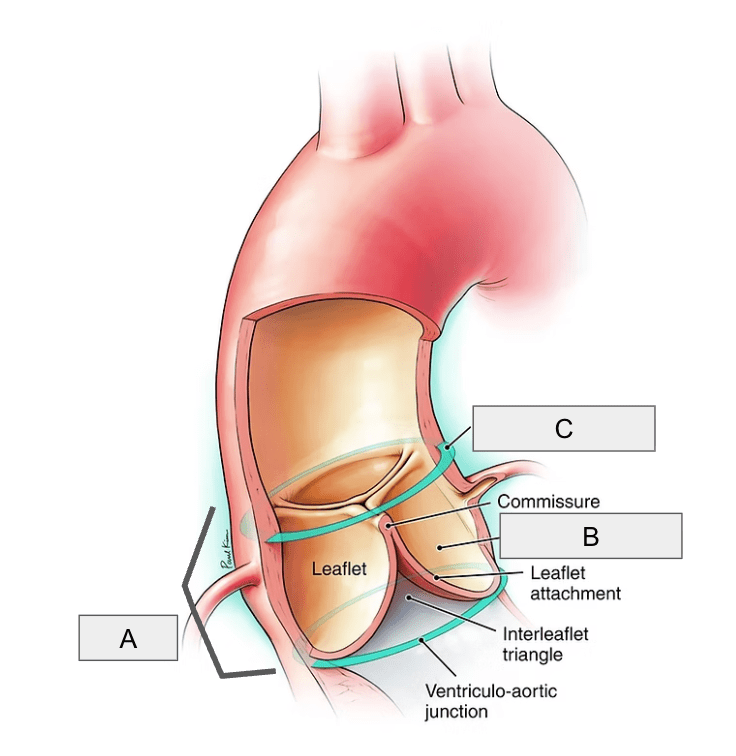
A- aortic root
B- sinus of valsaalva
C- sinotubular junction
700
What is normal oxygen saturation of blood flowing through the pulmonary veins, and or the pulmonary arteries?
Pulmonary veins: 95-100%
Pulmonary arteries: 70-75%
700
Myocardial stunning is a type of _________ ________ when function is impaired to prior ischemic cardiac tissue
reperfusio injury
700
What is the intrinsic pacing speed of the SA node, the AV node, and the Purkinje fibers?
SA node: 60-100 bpm
AV node: 40-60 bpm
Purkinje fibers: 20-40 bpm
700
The most common type of supraventricular tachycardia is __________________ which means that there is a repeated electrical circuit at the AV node
AV nodal reentrant tachycardia (AVNRT)
700
Where does filtration in the nephron occur?
What is the vessel leading blood to this, and taking blood away from?
Glomerulus (in the renal corpuscle)
Afferent arteriole (to)
Efferent arteriole (from)
700
What are the four Starling forces?
Capillary hydrostatic pressure
Capillary oncotic pressure
Interstitial hydrostatic pressure
Interstitial oncotic pressure
700
What is the approximate "safe" circulatory arrest time at 18 C?
~45 minutes
700
What blood vessels supply the brain/ Circle of Willis?
Left and right internal carotid arteries
Right and left vertebral arteries
700
What is Henry's Law?
A gas dissolves in solution proportionally to its partial pressure and its solubility
700
What is the equation that relates CO2 and HCO3? (three segments)
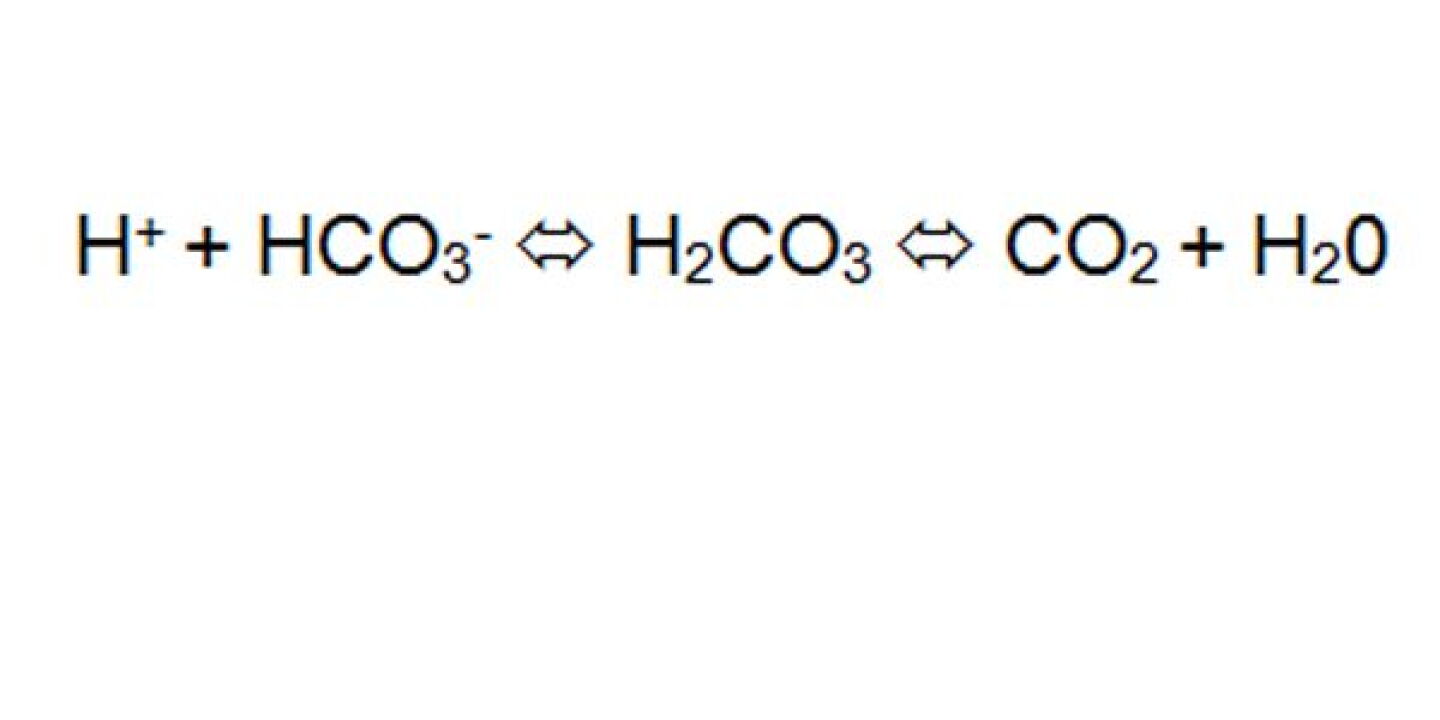
700
What is atmospheric pressure in mmHg, and what is the approximate composition?
760 mmHg
Nitrogen (597 mmHg)
Oxygen (159 mmHg)
Carbon dioxide (0.3 mmHg)
700
What are ANP and BNP, where and when are they released, and what effect do they have?
Atrial natriuretic peptide and B-type (brain natriuretic peptide
Released by the atria (ANP) and ventricles (BNP) in response to stretch
Results in sodium excretion and diuresis by the kidneys, thereby less blood volume
800
Which veins mirror the LAD, PDA, and RCA?
LAD: Great cardiac vein
PDA: Middle cardiac vein
RCA: Small cardiac vein
800
Label A through K
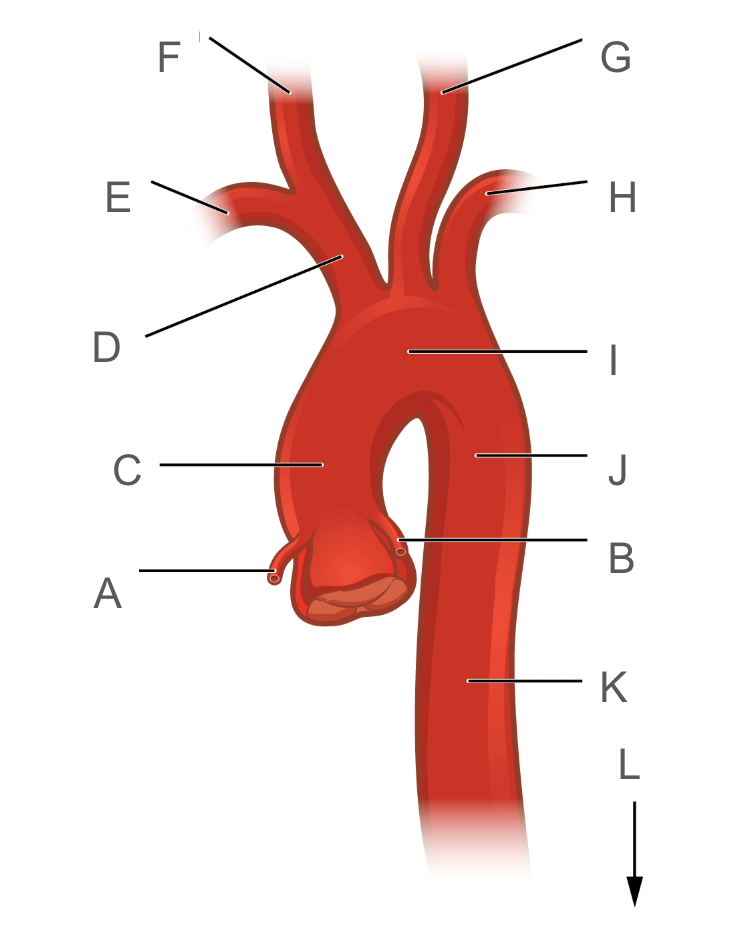
A- RCA
B- LCA
C- Asc. aorta
D- Brachiocephalic/ innominate artery
E- Right subclavian artery
F- Right common carotid artery
G- Left common carotid artery
H- Left subclavian artery
I- Aortic arch
J- Descending aorta
K- Thoracic aorta
L- Abdominal aorta
800
Which two factors does the Frank-Starling Law relate?
Ventricular performance/ Cardiac output
Ventricular EDV (Preload)
800
What phase of the cardiac cycle begins when LV pressure becomes higher than aortic pressure?
Ejection
800
What channels maintain the negative membrane potential of contractile cells?
Kir, or inwardly rectifying potassium cells
800
When there is no relationship between the P waves and the QRS complexes, this is defined as:
Third degree, or complete, heart block
800
What are the capillaries that act as a countercurrent exchanger to preserve the medullary osmotic gradient, running parallel to the Loop of Henle?
Vasa recta
800
What is the normal intracellular and extracellular concentrations of sodium and potassium?
Sodium: 145 mM (extra), 15 mM (intra)
Potassium: 4 mM (extra), 150 mM (intra)
800
What is one advantage to alpha stat, and one advantage to pH stat?
Alpha stat: preserves cerebral autoregulation
pH stat: more cerebral blood flow for more brain cooling
800
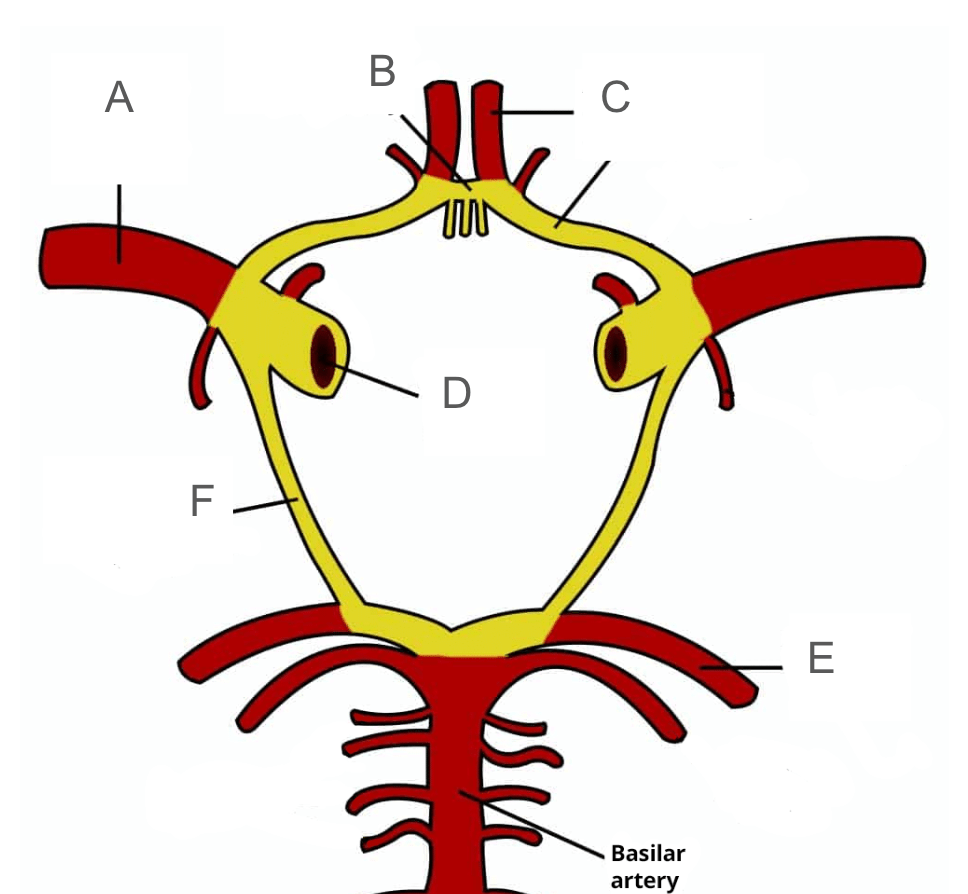
A: Middle cerebral artery
B: Anterior communicating artery
C: Anterior cerebral artery
D: Internal carotid artery
E: Posterior cerebral artery
F: Posterior communicating artery
800
What is a normal V/Q ratio, what does a high V/Q indicate, and what does a low V/Q indicate?
Normal = 0.8
High v/q means ventilation exceeded perfusion, so there is inadequate blood flow (pulmonary embolism)
Low v/q means perfusion exceeds ventilation (atelectasis, pneumonia)
800
What is the Henderson-Hasselbalch equation, and what does it tell us?
Relates pH, bicarbonate, and PaCO2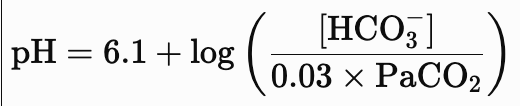
800
What are factors that shift the oxy-hemoglobin curve to the left? What does a shift to the left mean?
Increased affinity
Lower CO2, temperature, 2,3 BPG
Higher pH
800
How does the sliding filament model work?
A nerve impulse releases calcium, which moves the blocking proteins troponin
Troponin pulls tropomyosin off of actin, making it available for binding
Myosin attaches to actin (cross bridge0 and does a "power stroke", shortening the muscle
New ATP resets myosin to do another power stroke