S
T
U
D
Y
100
What do we call the dotted line labeled "D" 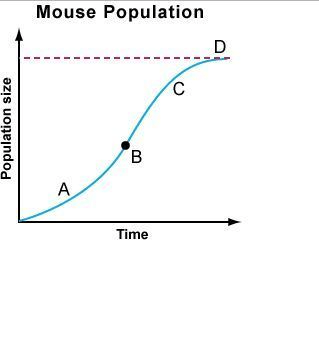 Public
Carrying Capacity
100
Which of these is not an example of conservation?
A)Laws that limit how many fish can be caught
B)Paving roads that lead to a new housing project
C)A crop rotated to a new field each year
D)Counting the number of rhinos in a area over a period of years.
Paving roads that lead to a new housing project
100
What is the largest cause of deforestation?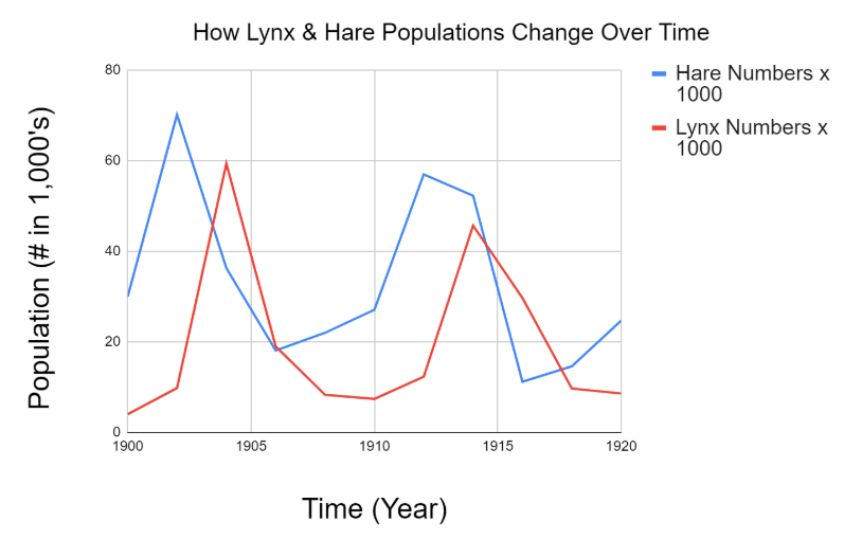
Agriculture.
100
What is biodiversity?
A big variety of organisms/abiotic factors within an ecosystem
100
Which of widespread change would most severely affect a bird population?
A)long period of intense rain
B)long period of severe drought
C)slow, gradual warm-up
D)slow, gradual cool-down
Long period of severe drought
200
In an ecosystem, what is the carrying capacity?
the maximum number of individuals of a population that the environment can support is the...
200
Scientists believe that an increase in __________ ____________ and other pollutants has caused a significant increase in global temperatures.
Carbon Dioxide
200
What is the name of Mr. Riggs wife or what is her job?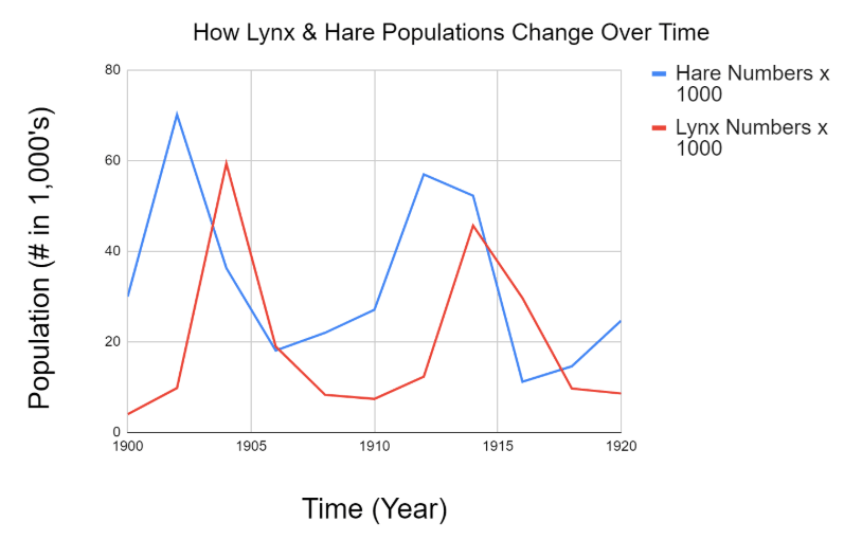
Ann - Nurse
200
What is the difference between biotic and abiotic factors?
Biotic factors are living organisms and Abiotic factors are non-living factors in an ecosystem.
200
How does deforestation adversely affect ecosystems?
It takes away animal habitats and sources for food.
300
Identify a possible limiting factor that can cause the mouse population to reach its carrying capacity. 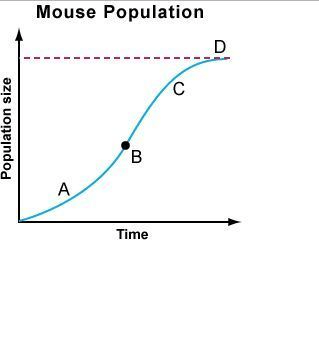
Limiting Factors: predators, habitat, competition for resources
300
Give at least 2 examples of ABIOTIC limiting factors
drought, severe winter, natural disaster, virus-caused diseases, etc.
300
Why does the predator population lag behind the prey population? (i.e. predators increase AFTER the prey increase)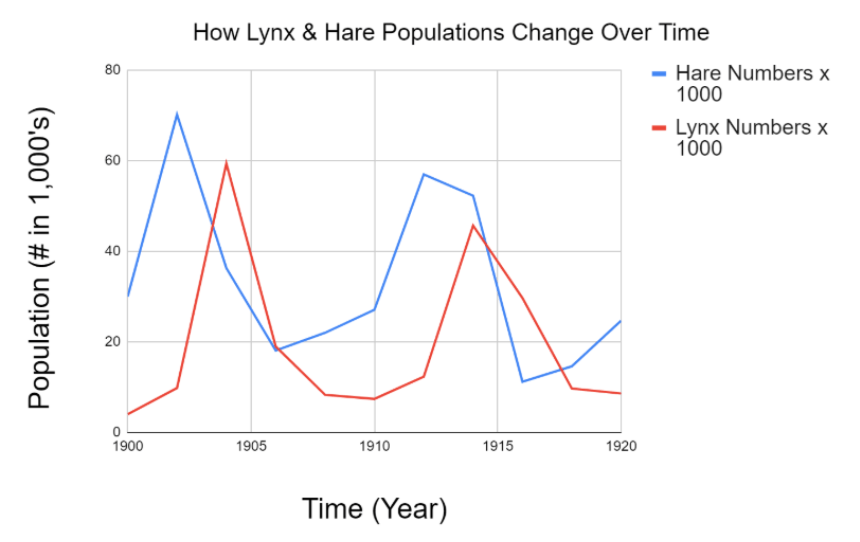
The prey is the food for the predator, so the increase in the prey means an increase in food for the predator. So, the predator population can grow.
300
What are the 3 R's of Conservation?
Reduce/Reuse/Recycle
300
Several kinds of birds live on a small island. A massive storm comes through and destroys most of the plants where the birds feed and build nests. What kind of bird most likely survives?
A)Birds with the highest number
B)Birds that can fly the farthest
C)Birds with the strongest beaks
D)Birds most able to adapt
Birds most able to adapt.
400
What is the carrying capacity? 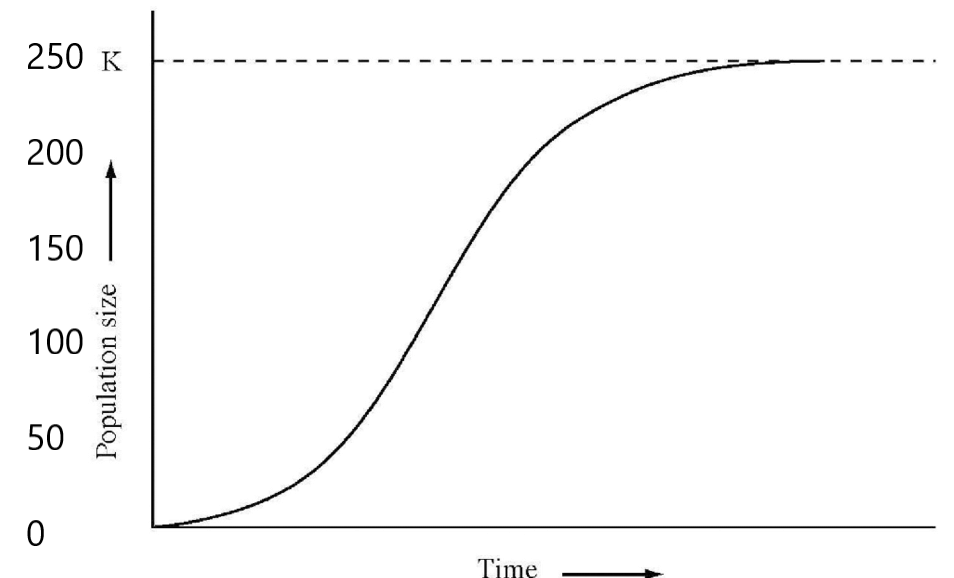
about 250
400
In a forest ecosystem, which of the following is the best example of a limiting factor for a rabbit population?
a. the robin (bird) population
b. amount of grass/flowers available
c. the amount of sunlight
d. rabbits have no limiting factors
b. amount of grass/flowers available
400
Why does the hare population decrease?
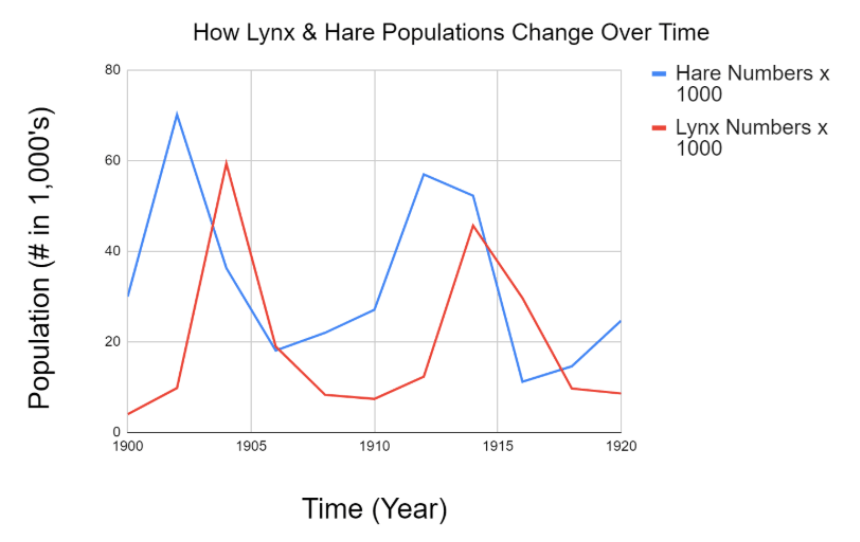
There are more predators at that time, so they are getting eaten more
400
Excess nutrients in fertilizers run into water ecosystems and may cause _______________.
Eutrophication
400
True or False
The filling in of wetlands areas for vacations homes will decrease the population of many species.
True
500
Which of the following might cause the carrying capacity of this rabbit population to DECREASE?
a. increase in food for a few years
b. fewer predators
c. harsh winters for a few years
d. more resources available in the ecosystem
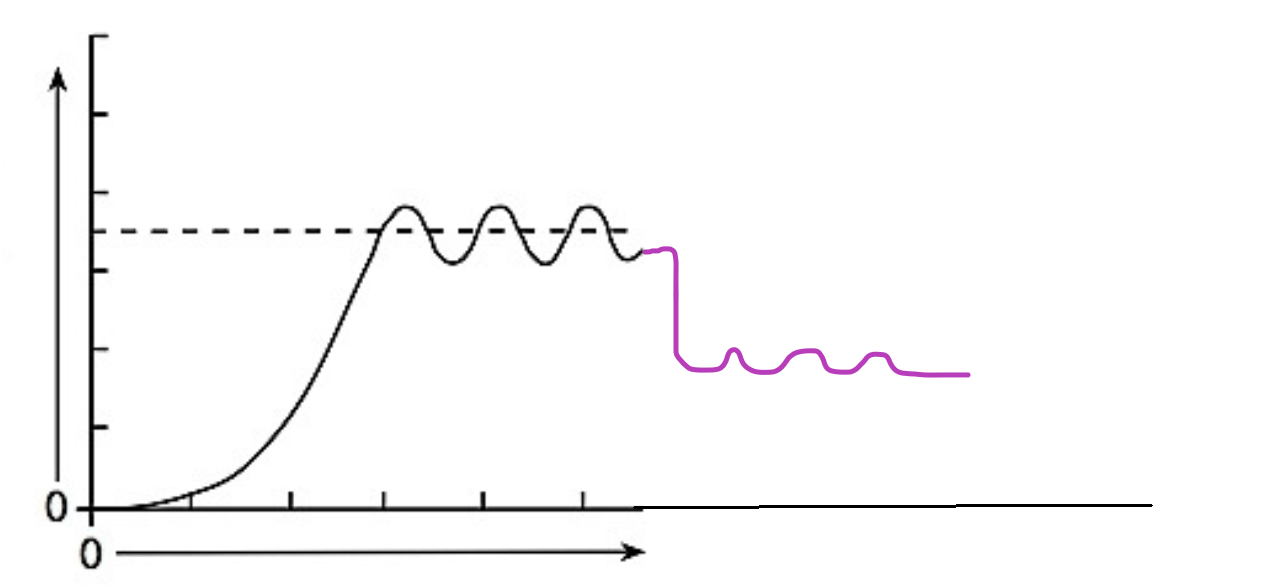
c. harsh winters for a few years
500
Based on this graph, what is the limiting factor for the hare population? 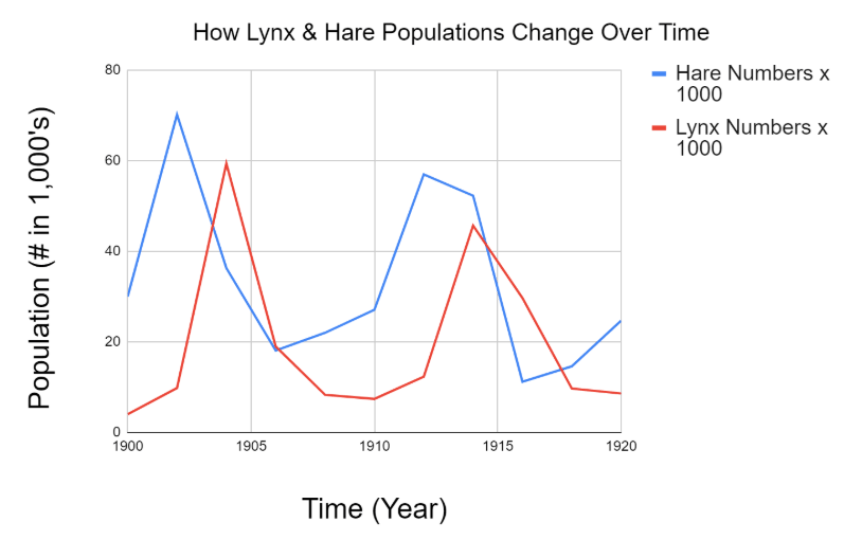
the lynx population
(just like what we saw with the ecological pyramids, there are more primary consumers like the hare than there are top predators like the lynx)
500
What is the limiting factor for the lynx? 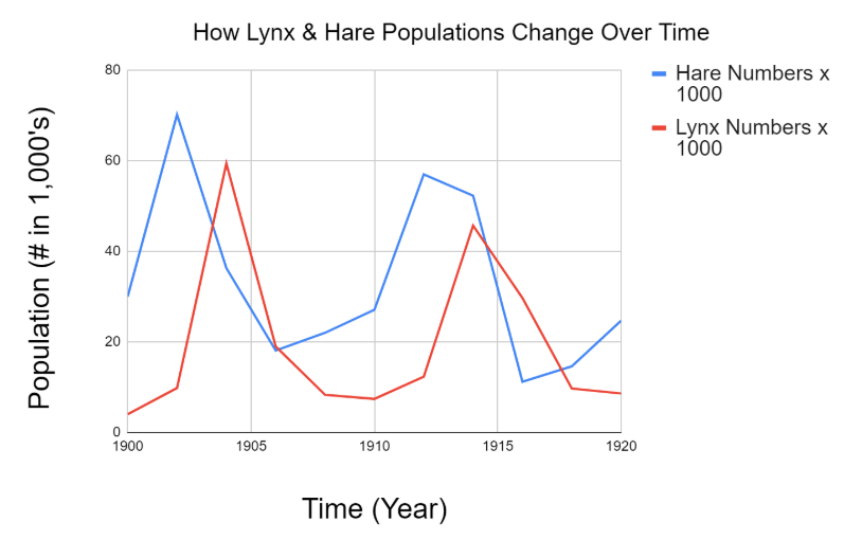
The hare
500
Define sustainability
Meets the needs of the present without compromising the ability of future generations to meet their needs.
500
Mr. Riggs uses a pH meter to test a water sample form the New River. For what purpose is he most likely testing the water?
A)To understand how people use the river
B)To determine the age of the river.
C)To learn what organisms can survive in the river.
D)To find the depth of the river.
To understand what organisms can survive in the river.