Slavery
Compromises
Economics
Abolitionists
War
100
This 1852 novel by Harriet Beecher Stowe was so influential that Abraham Lincoln reportedly called her "the little woman who wrote the book that started this great war
Uncle Tom's Cabin
100
This 1854 Act repealed the Missouri Compromise and led to a period of violence known as "Bleeding Kansas."
Kansas-Nebraska Act
100
This was the nickname given to the South’s leading cash crop, which made up over half of all U.S. exports by 1860
King Cotton
100
former enslaved person, she was the most famous "conductor" of the Underground Railroad, never losing a single "passenger."
Harriet Tubman
100
He won the Election of 1860 without carrying a single Southern state, leading to immediate talk of secession.
Abraham Lincoln
200
This was the term for the secret network of people and safe houses that helped enslaved people escape to the North or Canada.
Underground Railroad
200
The term "popular sovereignty" describes the policy where voters in a territory would decide for themselves whether to allow THIS institution.
Slavery
200
While the South relied on agriculture, the North’s economy was increasingly based on this.
Industry/Manufacturing
200
This brilliant orator and former slave published his autobiography in 1845, making him a leader in the North of the abolitionist and civil rights movement
Frederick Douglass
200
This was the first state to secede (leave) the Union in December 1860.
South Carolina
300
This machine, invented by Eli Whitney, was intended to make work easier but actually led to a massive increase in the demand for enslaved labor.
Cotton Gin
300
This state was admitted to the Union as a free state as part of the Compromise of 1850.
California
300
By 1860, the North had significantly more of these than the South, allowing for faster transport of goods and eventually troops.
Railroads
300
This radical abolitionist led a raid on the federal arsenal at Harpers Ferry, hoping to start a slave revolt.
John Brown
300
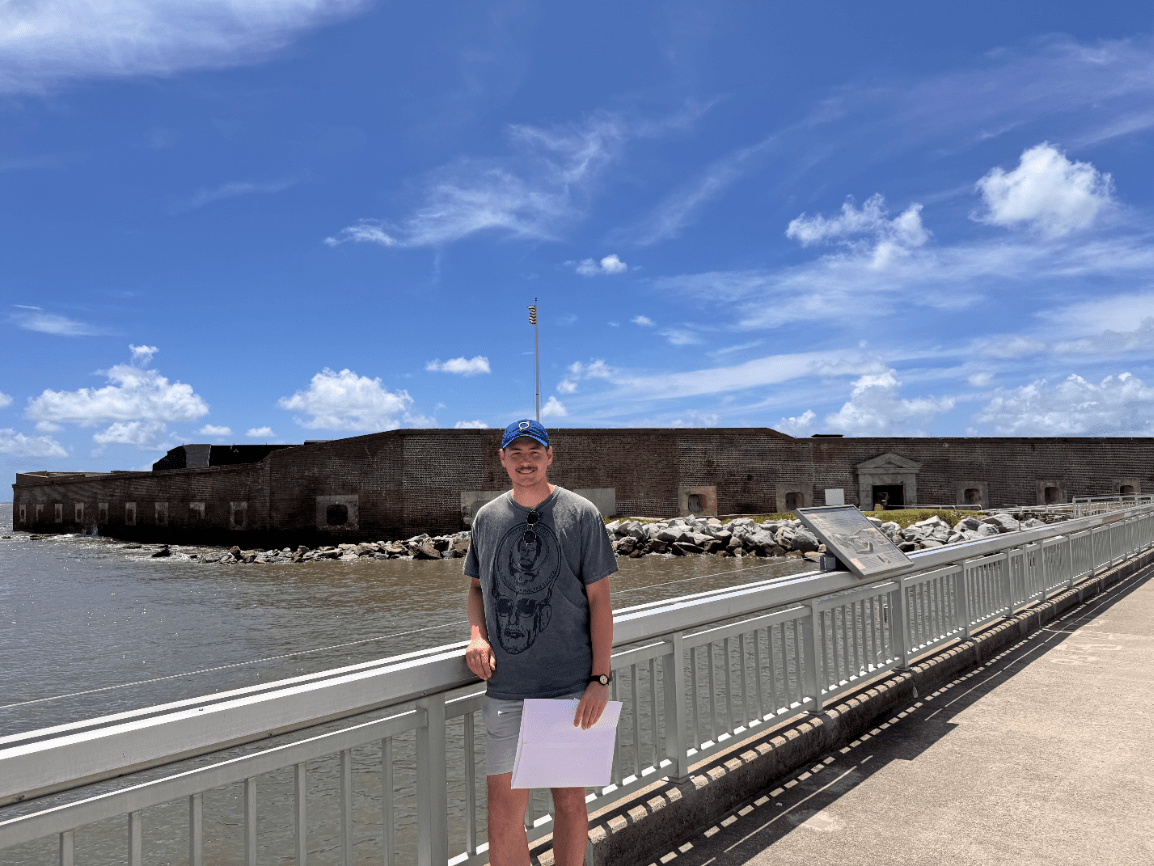
Mr. Davison is pictured here in front of Fort Sumter, where Confederate forces fired the first shots of the Civil War in THIS port city
Charleston, South Carolina
400
Part of the Compromise of 1850, this law required Northerners to help capture runaway slaves, sparking outrage in free states.
Fugitive Slave Act
400
This 1820 agreement drew an imaginary line at the 36°30' parallel; slavery was banned north of it and allowed south of it
Missouri Compromise
400
The South relied on "Enslaved Labor," while the North’s economy was built on this type of labor system
Free Labor (Wage Labor)
400
These two sisters from South Carolina moved North to speak out against slavery and for women's rights.
Grimke Sisters
400
This was the official name of the new country formed by the eleven Southern states that seceded.
Confederate States of America (Confederacy)
500
This 1857 Supreme Court ruling stated that enslaved people were property, not citizens, and had no right to sue in court.
Dred Scott Decision
500
With the Missouri Compromise, when Missouri was admitted as a slave state, THIS STATE was admitted as a free state
Maine
500
This is a tax on imported goods, which protected Northern factories but made goods more expensive for Southern farmers, also something Donald Trump's presidency has been concerned with recently
Tariffs
500
He was a white abolitionist who published The Liberator and called for the "immediate and uncompensated" end of slavery.
William Lloyd Garrison
500
Known as the turning point of the war, this Pennsylvania battle ended General Lee's invasion of the North and resulted in the highest casualties
Battle of Gettysburg