Celestial Bodies
S = Solar
Planets
Gravity
More Vocab
100
A large natural object that orbits around a planet, some are covered with ice and craters
Moon
100
This location is between the terrestrial planets and the Jovian planets
Asteroid Belt
100
These are the inner smaller, rocky and hotter planets
Terrestrial Planets
100
An object would weight _______ on the moon.
Less
100
The force that pulls objects with mass toward each other.
Gravity
200
This object is at the center of our solar system and makes up about 99.9% of our solar systems total mass.
What is the sun?
200
Short period comets can take unto 200 years to orbit the Sun. These short period Comets originate from this location.
The Kuiper Belt
200
These are the outer large, gas, colder planets.
Jovian Planets
200
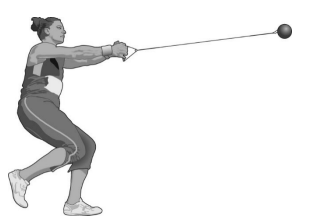
In this image what does the tension on the chain represent?
Gravity
200
A small piece of space debris that enters Earth's atmosphere and burns up, creating a streak of light in the sky. AKA shooting star
Meteor
300
A small, rocky and/or metallic object that has an orbit
Asteroid
300
These are the 3 components needed for life to exist on a planet.
1. Water in liquid form
2. Oxygen in the atmosphere
3. Be in the Habitable Zone
300
The name of the Galaxy we live in
Milky Way Galaxy
300
What causes the moon to follow a circular path instead of flying off into space?
What is the force of gravity?
300
A doughnut-shaped region of icy bodies that orbits the sun beyond Neptune
Kuiper Belt
400
These are space rocks that have been pulled into earth atmosphere and crash into earths surface.
What are meteorites?
400
These two planets are located in the habitable zone in our solar system
Earth and Mars
400
Planet in our solar system that can support life because it is far enough from the sun to have water as a liquid state and also has oxygen in the atmosphere.
Earth
400
Objects that have more _________ have more gravitational pull
Mass
400
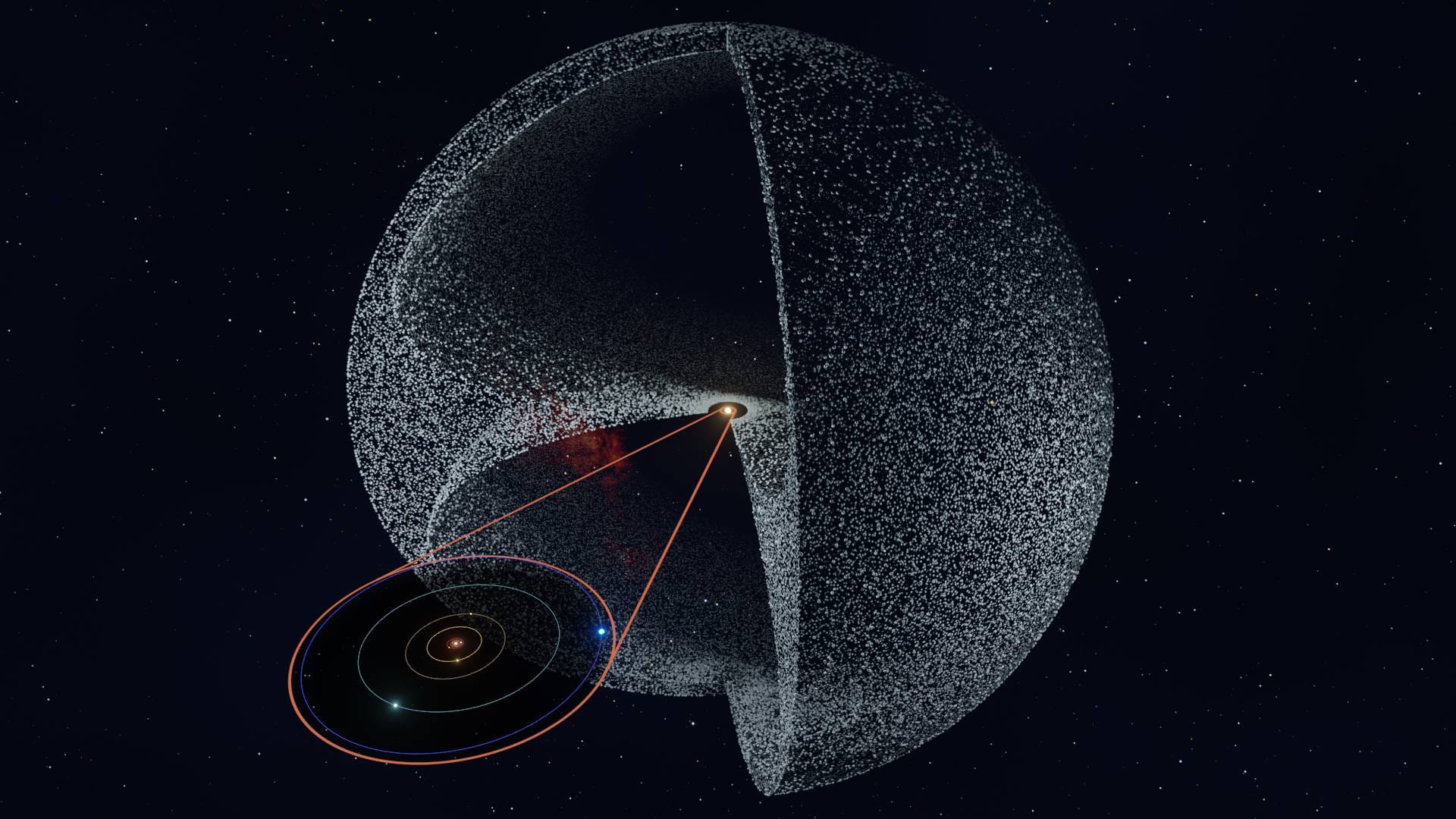
A spherical shell of icy objects that surrounds our solar system and orbits the sun
Oort Cloud
500
A frozen remnant of the solar system's formation, made of dust, rock, and ice that has an orbit
Comet
500
It orbits the sun in an elliptical orbit around the sun, mixture of ice and dust, can come from the Oort Cloud or the Kuiper Belt.
Comet
500
The perfect distance from the sun in our solar system where water can exist in a liquid state.
Habitable Zone/Goldilocks Zone
500
This describes how the force of gravity affects the speed of a planet in orbit.
The ______ the planet is to the sun, the _______ the gravitational pull and the _______ it moves.
What is :The closer the planet is to the sun, the greater the gravitational pull and the faster it moves.
500
Orbital period is another name for
What is the amount of days it takes an object to go around the sun or Orbit.