Cell Structure 1
Cell Structure 2
Transport
Cell Types
Theory
100
Rigid layer that provides protection for plant cells.
Cell Wall
100
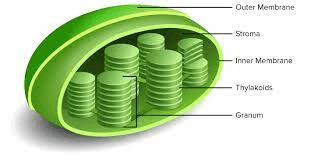 Found only in PLANT cells. Its purpose is photosynthesis.
Chloroplast
100
Does passive transport require ATP/energy AND how do the molecules move?
It does not require ATP/energy and molecules move from high to low concentration
100
Cells that DO posses a clearly defined nucleus and membrane bound organelles.
Eukaryotic
100
Theories are ____________ and Laws are _________.
Can one become the other?
Explanations; Descriptions. NO
200
Protective phospholipid layer ALL cells have that controls what can enter and leave the cell
Cell Membrane
200
Serves as the cell’s command center, sending directions to the cell to grow, mature, divide, or die. It also houses DNA (deoxyribonucleic acid), the cell’s hereditary material.
Nucleus
200
Does active transport require ATP/energy AND how do the molecules move?
Yes it requires ATP/energy, molecules move from low to high concentration
200
A microscopic, single-celled organism that is prokaryotic, meaning it lacks a nucleus and membrane-bound organelles
Bacteria cell
200
What are the three parts of the cell theory?
All living things have cells
All cells come from pre-existing cells
Cells are the building blocks of life
300
Packages molecules processed by the endoplasmic reticulum to be transported out of the cell.
Golgi Apparatus
300
What 3 structures do plant cells have that animal cells do not?
central vacoule, cell wall , chloroplast
300
A form of passive transport that uses transport proteins to help material move from areas of high to areas of low concentration
Facilitated Diffusion
300
ALL cells have what 4 structures?
cell membrane, cytoplasm, ribosomes, DNA
300
Researchers discovered a previously unknown microscopic organism composed of a single cell that carries out all life processes independently.
Basic unit of life.
400
Stores food, water, and waste; extra large in plant cells
Central Vacuole
400
Makes Protein; ALL cells have these
Ribosome
400
The movement of water of water is called?
In a Hypotonic solution the water moves _____ the cell, which causes the cell to _________.
Osmosis
into
swell/burst
400
What is characterized as a eukaryotic cell with a membrane-bound nucleus, lacking a cell wall, and enclosed by a plasma membrane.
Animal Cell
400
Which principle of the cell theory supports the idea that new cells will be made from old cells and replace damaged cells in a scraped knee?
All cells come from pre-existing cells
500
creates energy from food/carbohydrates into ATP that the cell can use.
Mitochondria
500
This is the recycling center of the cell. They digest foreign bacteria that invade the cell, rid the cell of toxic substances, and recycle worn-out cell components.
Lysosomes
500
This organelle in a cell is semipermeable. It regulates the flow of nutrients
cell membrane
500
This type of cell has a cell wall, a large central vacuole and chloroplasts
plant cell
500
_________ microscope uses lens to enlarge the specimen.
Scanning Electron Microscope scans the ________ structures and uses detectors to create an image.
Transmission Electron Microscopes view the ________ structures
compound light
surface
internal