History
Atomic
Structure/Models
Structure/Models
Radioactivity
Isotopes
Electron Configuration
Waves/Particles
100
This philosopher is considered to be the earliest recorded reference to atomic theory.
Democritus
100
the atom is composed of these three particles
protons, neutrons, electrons
100
the spontaneous emission of rays or particles from the nucleus of an atom.
nuclear decay
100
Isotopes are considered to be the SAME element.
True
100
The atom has energy levels that are often called ___.
shells
100
Speed of light?
3x10⁸ m/s
200
His opinion about the composition of matter in the universe dominated the world for ~2 millennia
Aristotle
200
These subatomic particles are positively charged
protons
200
This radiation requires at least 4 meters of lead to block.
gamma radiation
200
Mass number represents...
#protons + #neutrons
200
This principle states that only two electrons can occupy an orbital
Pauli exclusion principle
200
6.626 x 10⁻³⁴ J*s
Plank's constant (h)
300
William Crookes famously discovered "negatively charged particles" using what instrument?
cathode ray tube
300
How is mass distributed in an atom?
dense core/nucleus/ mostly empty space
300
Which type of radioactive decay does not produce a different element?
gamma decay
300
In isotope notation, the superscript represents __.
mass number
300
Electrons must fill lowest energy states first
Aufbau principle
300
The wavelength of light is usually measured in this unit.
nanometer (nm)
400
This experiment helped determine the mass and charge of an electron.
Oil drop experiment
400
Atoms that possess the the same number of protons, but a different number of neutrons.
isotopes
400
The process of emitting a He2+ ion
alpha decay
400
Quantifies the occurrence of a particular isotope in nature.
relative/natural abundance
400
Orbitals of the same energy must be singly occupied by electrons before being doubly occupied.
Hund's rule
400
Waves can be described purely as waves using what equation?
c = wavelength(frequency)
500
This experiment proved that an atom is mostly empty space with dense core called nucleus.
Gold foil experiment
500
If an atom loses or gains electrons, then it is referred to as an ___.
ion
500
Deflected toward a positively charged plate.
beta particle
500
what does the number 14 represent in "nitrogen-14"?
mass number
500
electron configuration of He2+
none
500
The energy of a photon can be expressed as...
E = hv =hc/lambda
600
What particle was used by Rutherford to investigate the structure of gold atoms.
alpha particle
600
The heaviest subatomic particle
neutron
600
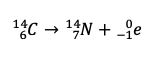
What type of decay is this?
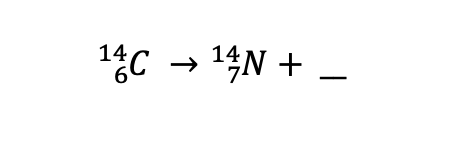
Beta decay
600
What is the average mass of of an element that has isotope A (70 amu; 50% abundance) and isotope B (71 amu; 50% abundance)?
70.5 amu
600
Unabbreviated electron configuration of carbon (C)
1s22s22p2
600
Calculate the frequency of a photon that has 6.6 x 10⁻³⁴ J of energy. You can round.
1 s-1 (Hz)
700
Dalton revived the _ _.
atomic theory
700
Atomic number represents what?
number of protons
700
Nuclei of atoms can be forced apart in a process called
nuclear fission
700
What determines the identity of an element?
#protons
700
How many orbitals are in the d-sublevel?
5 orbitals
700
What is the mass of a photon?
massless
800
Dalton's theory was 100% correct. T/F
False
800
Negatively charged particles
electrons
800
The wavelength of __ are so small that they can blast through DNA.
gamma rays
800
This is neutral in its charge.
neutron
800
How many electrons can fit inside of the third shell?
18 electrons
800
Which travels faster? radio waves or gamma waves?
Neither...
c = 3.0 x 10⁸ m/s for all electromagnetic radiation.
900
Proposed the first quantum model of the atom.
Niels Bohr
900
What element has an atomic number of 7
nitrogen
900
Which radiation is the most harmful?
gamma radiation
900
Too many extra neutrons will cause an atom to become __.
unstable
900
How many valence electrons in the valence shell of krypton (Kr)?
8 (full valence shell = noble gas)
900
Which electromagnetic radiation can travel the furthest distance?
radio waves
1000
Concluded that energy from light was quantized into little energy packets called photons.
Planck
1000
How many electrons does carbon have?
6 electrons
1000
Thin sheet of paper can block this
alpha particle
1000
How many neutrons are in an element with 6 protons and a mass number of 14
8 neutrons
1000
What sublevels are in the 3rd shell?
3s, 3p, 3d
1000
The types of light exist on a ___.
(electromagnetic) spectrum
1100
Famously concluded that it is impossible to know both the position and motion of an electron.
Heisenberg
1100
An electron absorbs a photon and is promoted to a higher shell/energy level.
excitation
1100
Not effect by electric field from charged plates
gamma rays
1100
An element has isotopes A, B, C with masses 12, 13, and 14 amu, respectively. The average atomic mass is 12.30 amu. Which isotope has the higher abundance?
isotope A
1100
Abbreviated electron configuration of chloride (Cl-)
[Ar]
1100
With increasing wavelengths, the frequency of light ___.
decreases
1200
His wave equations were used to determine how electrons are arranged around the nucleus.
Schrödinger
1200
Electrons occupy 3 dimensional volumes of space surrounding the nucleus.
Orbitals
1200
Whats happens to the nucleus of an atom after beta decay?
neutron converted to proton 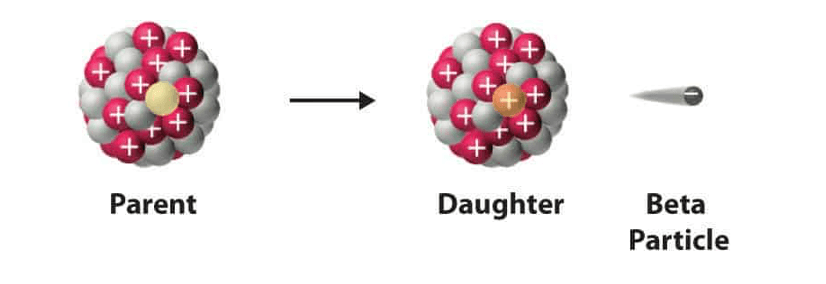
1200
Element X has average atomic mass of 100 amu
isotope X1 (101.5 amu; 30% abundance)
isotope X2 (99.0 amu; ----------)
What is the abundance of isotope B? You can round.
70%
1200
The abbreviated electron configuration of Caesium (Cs)?
[Xe]6s
1200
Particles (e.g. protons and electrons) can also behave like waves. What equation describes this phenomena?
de Broglie wave-particle equation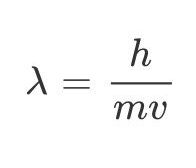
7777
In the early 20th century, lithium (Li) was utilized as a mood-stabilizer in what soft drink?
7-up