Random: Volcano & Earthquake
What are Earthquakes?
Boundaries & Faults
Studying Earthquakes
Earthquake Effects
100
What type of volcano is this?
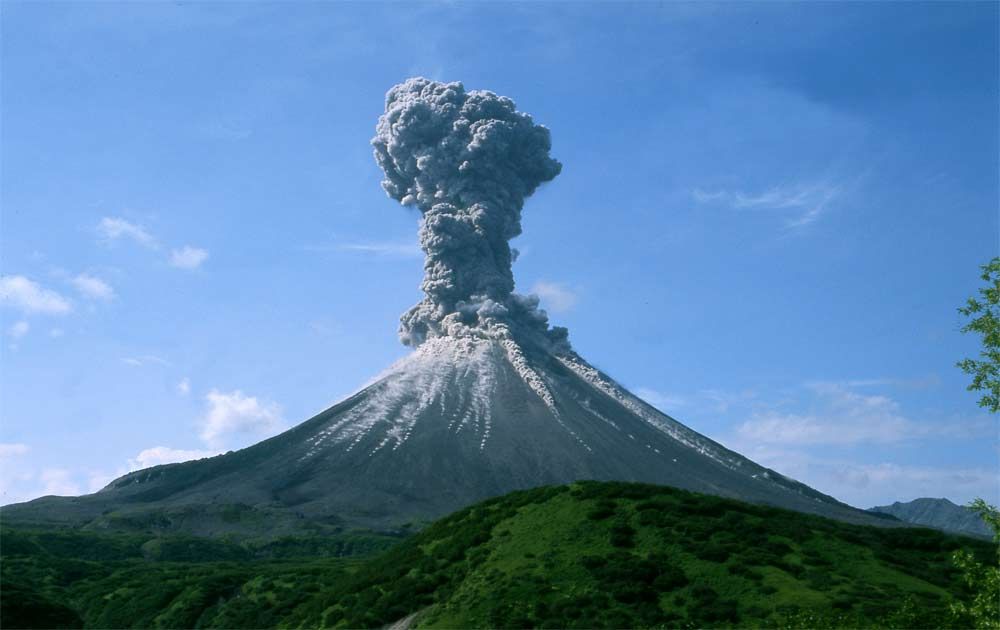
What is composite?
100
Thin, outermost layer of the Earth
What is the crust?
100
What type of boundary is this?
/GettyImages-483766933-56c6e7fd3df78cfb37869a63.jpg)
What is divergent?
100
The point inside the Earth where the earthquake actually begins
What is the focus?
100
The amount of damage or effects caused by an earthquake
What is intensity?
200
If an area has had many _____ in the past, it is more likely to have a higher earthquake hazard level.

What are earthquakes?
200
Areas where plates collide, pull away, or slide past each other
What are tectonic plate boundaries?
200
What type of fault is this?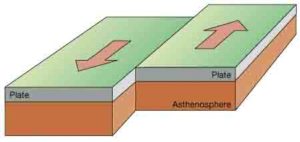
What is transform?
200
The measure of an earthquake's strength
What is magnitude?
200
The closer you are to the epicenter of an earthquake, the _____ the intensity.
What is higher?
300
Earthquakes become less destructive the further you get from the epicenter because _____ lose energy as they travel.

What are seismic waves?
300
Movement or shaking of the ground that happens when blocks of rock move suddenly and release energy
What is an earthquake?
300
At a convergent boundary, one plate can slip under the other and melt into the mantle.

What is subduction?
300
A drawing or tracing of earthquake motion

What is a seismogram?

300
What 2 natural disasters can occur due to an earthquake?
What are tsunamis and landslides?
400
This type of volcano usually erupts only once in its lifetime.
What is cinder cone?
400
A break in Earth's crust where blocks of rock slide against each other
What is a fault?
400
The San Andreas fault is an example of a ________, or boundary with many interconnected faults.
What is a fault zone?
400
The more accurate system of earthquake strength used today measures the physical effects of an earthquake, such as the distance the fault moved.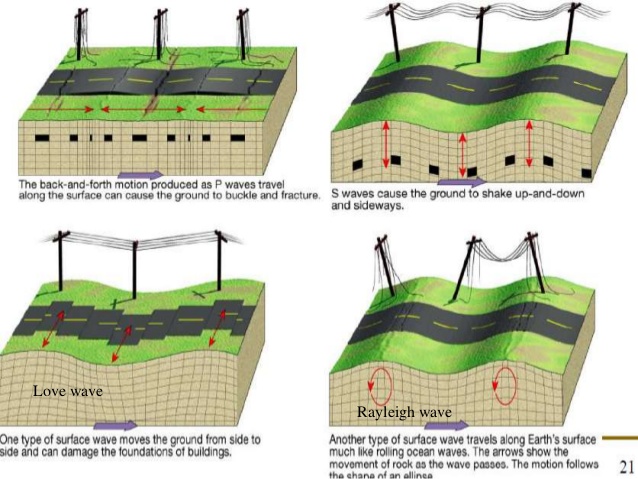
What is the moment magnitude scale?
400
Liquefaction occurs when loose, sandy soil with high water content is shaken, causing the ground to become “liquid." In contrast, this type of ground is less likely to increase shaking than sandy soil.

What is solid rock?
500
An active volcano is one that has had at least one eruption in the last # years.
What is 10,000?
500
Faults and earthquakes can happen along _____, but not always.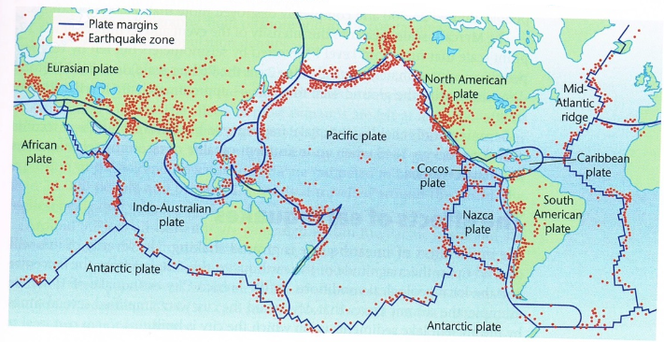
What are boundaries?
500
This landform can be created at convergent boundaries.
What are mountains? 
500
On the Richter scale, each number increase represents a 10x increase in shaking (ex. a Richter scale 2 earthquake is 10x as strong as a 1). Earthquakes can range from x to y on the Richter scale, with y being the strongest.
What is 0 to 9?
500
Flexible construction materials are less likely to break in an earthquake because they can move with the seismic waves. Name 2 construction materials that are flexible and 2 that break easily during an earthquake.
What are brick and concrete (inflexible) and wood and steel (flexible)?