Food Webs A
Bioaccumulation
Resistance to Disease
Food Webs B
Random
100
An animal that eats both plants and animals is a _______?
Omnivore
100
Bioaccumulation is the ___________ concentration of something (like chemicals) in animal populations.
increasing (or growing)
100
______________ is the ability to fight off harmful substances or germs.
Immunity
100
An animal that eats only plants is a _______?
Herbivore
100
The smallest "whole piece" of a thing possible
atom
200
What are producers?
Plants, they produce their own food
200
Lizards eat bugs that have a concentration of chemicals inside them. A hawk then eats those lizards.
Which animal has the highest concentration of chemicals in its body?
The hawk
200
If you do not catch a disease when others do, you might be __________.
Immune
200
Where are plants on the food pyramid or food web?
Bottom, First, or Base
200
a tiny substance made up of one or more kinds of atoms
molecule
300
The food web has different ________ levels.
Trophic
300
Assuming chemicals are found on the plants at the base of this food web, which animal would have the highest concentration of chemicals in its body? 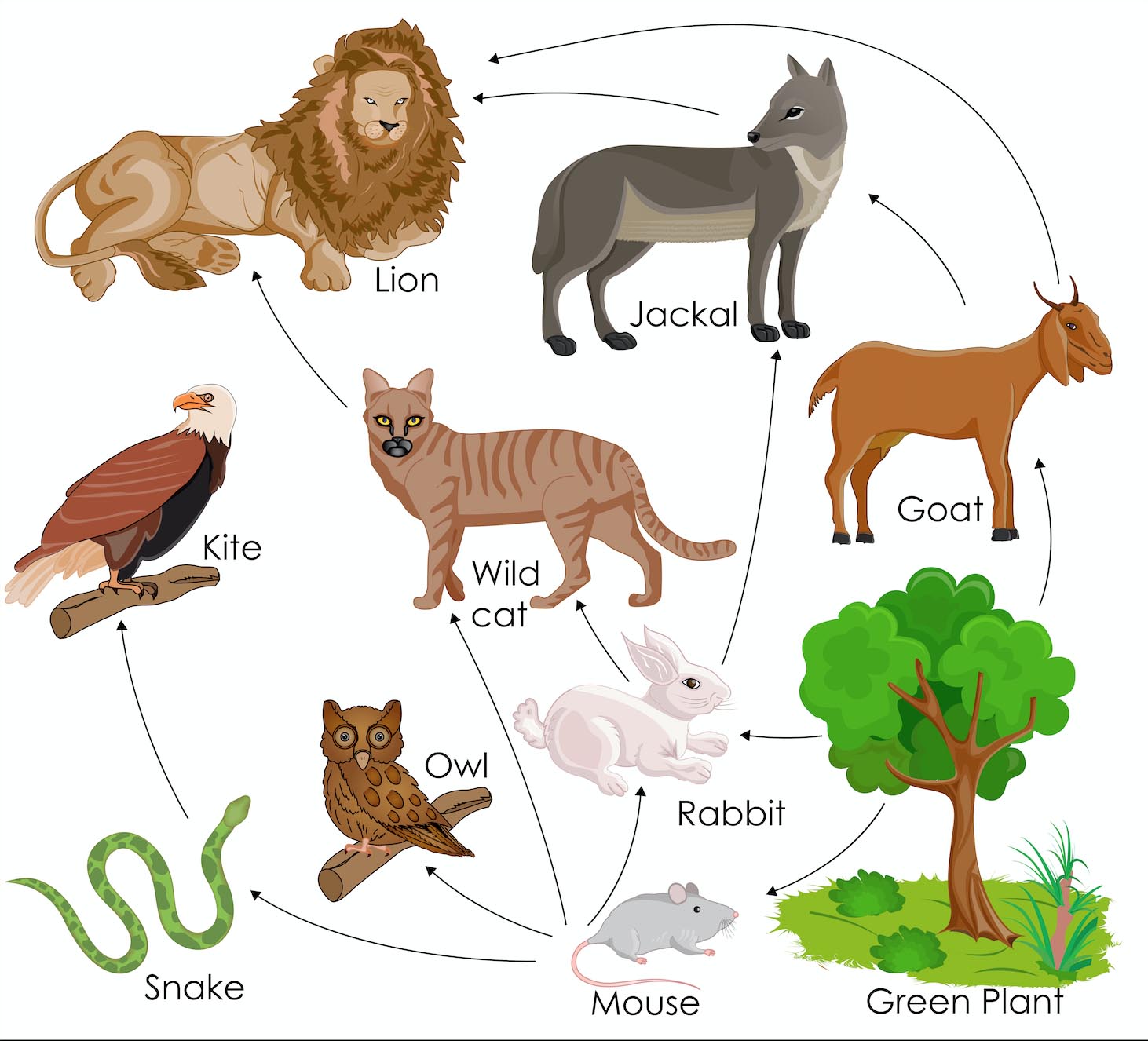
Lion
300
True or False: Some house flies had natural immunity to DDT?
True
(page 49)
300
The organisms that eat plants on the food web are the ___________ consumers.
Primary
300
To ______ means to rot and break down into nutrients.
decompose
400
Put these animals in the right order for the food chain:
phytoplankton, killer whale , seal , krill, penguin
phytoplankton-->krill-->penguin-->seal-->killer whale
400
This pesticide was banned because of its harmful effects through bioaccumulation?
DDT
400
Another name for shots or vaccines
Immunizations
400
Who is the secondary consumer in this food chain?
grass-->rabbit-->snake-->eagle
Snake
400
A mushroom is an example of a ____________. It breaks down nutrients or food for tiny plants or animals.
Decomposer
500
In this food web:
grass-->rabbit-->snake--->eagle
The eagle is a _________ consumer.
tertiary
500
Through bioaccumulation, what did DDT cause to happen to the eagle eggs?
The eggs became fragile and would break before the baby birds were ready to hatch
500
In the Middle Ages, the plague swept through Europe. Many people died because their immune systems couldn't fight off the plague died. Those with immunity survived and had children.
Today, the plague still exists, but very few people get sick from it. Using the information provided, explain why that is?
Because those who survived the plague had children who inherited immunity from their parents
500
The arrows between organisms in the food web represent the flow of _________.
energy
500
_____________ of energy is the scientific law that says energy can be neither created nor destroyed.
Conservation
(on page 62)