Rocks
Water
Soil
W.E.D.
W.E.D.
100
Formed underground from maga
Intrusive igneous rocks
100
In this diagram what shows the formation of clouds.
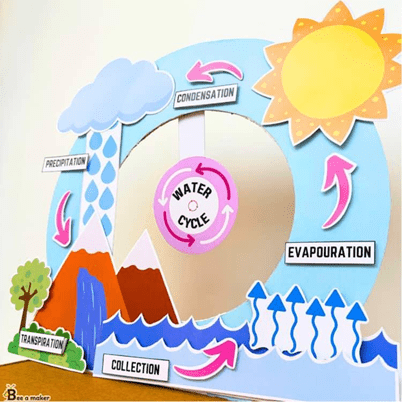
condensation
100
Too much water causes this
Landslides
100
W.E.D.
weathering erosion deposition
100
Describe weathering
the breaking down of rocks
200
Formed from heat a pressure
Metamorphic rocks
200
Water does this to rocks underground that become volcanoes
lowers the melting point
200
At this water percentage level wind erosion has little effect on soil.
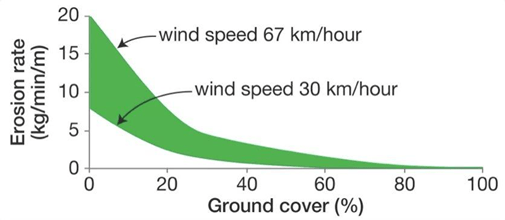
80%
200
Describe wind erosion.
wind picks up and transports small, fine particles such as sand and dust.
200
This is when broken material is moved and dropped.
deposition
300
Sediments compacted and cemented
Sedimentary rocks
300
When water turns into vapor.
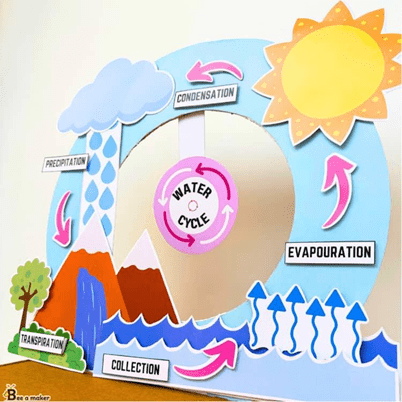
evaporation and transpiration
300
When soil water is at capacity this can occur.
stability
300
Describe glacial erosion.
occurs when moving ice scrapes, plucks, and carries rocks and sediment across the land
300
This is the most destructive force on Earth.
water
400
Formed from lava
Extrusive igneous rocks
400
In the hydrological cycle, this releases energy.
Condensation
400
As h2o increases in soil this decreases.
wind erosion
400
Describe water erosion.
when rivers, streams, rainfall, or runoff carry sediment from one place to another.
400
In this diagram what is the rock formed from weathering, erosion and deposition.
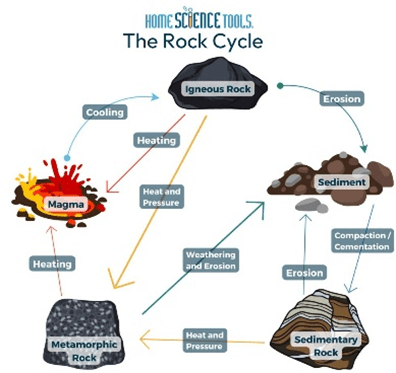
sedimentary rock
500
These are made from minerals and you can find them outside
rocks
500
Water enters cracks, freezes and cracks rocks
frost wedging
500
A lack of water increases the risk of this.
wind erosion
500
In what environment is wind erosion most effective.
deserts
500
A place where sediments are deposited
delta, alluvial fans