Biomolecules
Enzymes & Homeostasis
Cells & Organelles
DNA, RNA & Proteins
Cell Division
Cell Energy
100
This macromolecule stores genetic information and includes DNA and RNA.
What are nucleic acids?
100
Enzymes speed up reactions by lowering this.
What is activation energy?
100
This organelle controls what enters and leaves the cell.
What is the cell membrane?
100
This molecule carries the instructions for making proteins from DNA to the ribosome.
What is mRNA?
100
This type of cell division produces two genetically identical daughter cells for growth and repair.
What is mitosis?
100
This process uses light energy to make glucose.
What is photosynthesis?
200
A student eats pasta before a game. The body mainly breaks this macromolecule into simple sugars for quick energy.
What are carbohydrates?
200
Moving materials across the cell membrane without using energy is known as this type of transport.
What is passive transport?
200
This organelle is the site of protein synthesis.
What are ribosomes?
200
Put these in order from start to finish in protein synthesis: DNA, protein, mRNA.
What is DNA, then mRNA, then protein?
200
During this stage of mitosis, chromosomes line up in the middle of the cell.
What is metaphase?
200
This organelle is the main site of aerobic cellular respiration.
What is the mitochondrion?
300
Which macromolecule is most directly responsible for speeding up chemical reactions and also helping determine cell structure and function?
What are proteins?
300
A student tests enzyme activity at 5°C, 25°C, and 75°C. The enzyme works best at 25°C and stops working at 75°C. The best explanation is that high temperature changed the enzyme’s ______.
What is its shape or active site?
300
Unlike eukaryotic cells, prokaryotic cells do not have this membrane bound structure that stores DNA.
What is a nucleus?
300
If the order of bases in DNA changes, the most direct result may be a change in the order of these in a protein.
What are amino acids?
300
Why is mitosis important in multicellular organisms?
What is growth and repair?
300
Which process produces ATP without oxygen and includes lactic acid fermentation or alcoholic fermentation?
What is anaerobic respiration?
400
Which macromolecule is the main part of cell membranes and also stores long-term energy?
What are lipids?
400
The substance an enzyme acts on and binds to at its active site is called this.
What is the substrate?
400
A cell has a nucleus, mitochondria, and other membrane bound organelles. It is best classified as this type of cell.
What is a eukaryotic cell?
400
During protein synthesis, this type of RNA brings amino acids to the ribosome.
What is tRNA?
400
A skin cell has 46 chromosomes before mitosis. After mitosis, each daughter cell will have this many chromosomes.
What is 46?
400
These structures in plant leaves open and close to allow carbon dioxide to enter for photosynthesis.
What are stomata?
500
List the monomer for each biomolecule (polymer).
What are nucleotides, monosaccharides, amino acids, and fatty acids/glycerol
500
A cell uses energy to move sodium ions from an area of low concentration to an area of high concentration. What process is occurring?
What is active transport?
500
This organelle in plant cells captures light energy for photosynthesis.
What is the chloroplast?
500
Replicate, Transcibe and Translate the following sequence:
AGG TTC AAT GGC TAA
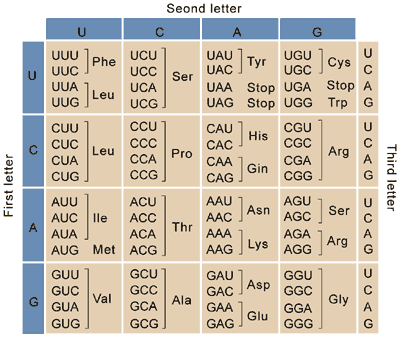
TCC AAG TTA CCG ATT
AGG UUC AAU GGC UAA
Arg, Phe, Asn, Gly, STOP
500
Why are daughter cells produced by mitosis usually genetically identical to the parent cell?
What is DNA is copied before division and chromosomes are evenly separated into each daughter cell?
500
A plant is placed in darkness for two days. Which process can still occur in its cells, and why?
What is cellular respiration, because cells still need ATP and respiration does not require light?