Properties and Changes
Matter Pt.1
Matter Pt.2
SI units
Sig-figs & Sci. notation
100
Color is an example of what kind of property, physical or chemical?
Physical!
100
What process does a substance undergo to convert from a gaseous state to a liquid state?
Condensation!
100
In terms of matter, how would we classify a compound?
As a pure substance!
100
How many mm are in 1 m?
1000!
When you see the prefix "m" or hear "milli-", you know that were talking about a number 1000x smaller than the base unit.
100
How many sig figs are present in the following value:
00.0505
3!
200
What is the correct way to describe a physical change?
A change in which matter changes form but not chemical identity.
200
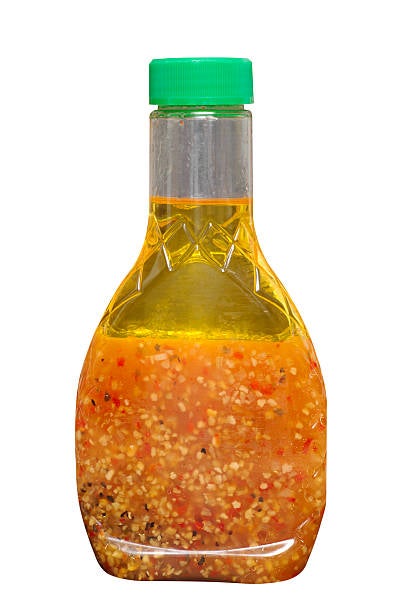
This Italian dressing would be best described as a ______ mixture.
Heterogenous Mixture.
200
Matter that can be separated by a physical process would be considered a(n):
Mixture!
200
Convert 1000cm to m.
100m!
(100cm = 1m) or... (1x102cm = 1m)
200
How many sig-figs are present in:
12,570,100
6!
300
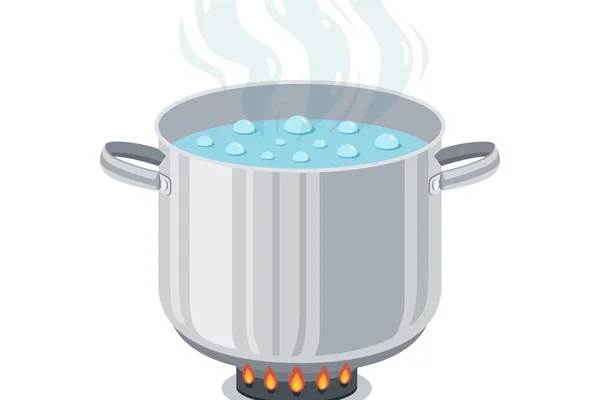
I heat water on the stove, and it starts to boil. This must be due to a _____ property.
Physical and Intensive Property!
Water boils when it reaches its boiling point. Boiling points can be observed without changing the chemical identity of a substance and does not depend on the quantity of a substance.
Physical because the chemical identity is not changed.
Intensive because the boiling point is not dependant on quantity of water.
300
Matter that cannot be separated by a physical process would be considered a(n):
Pure Substance!
300
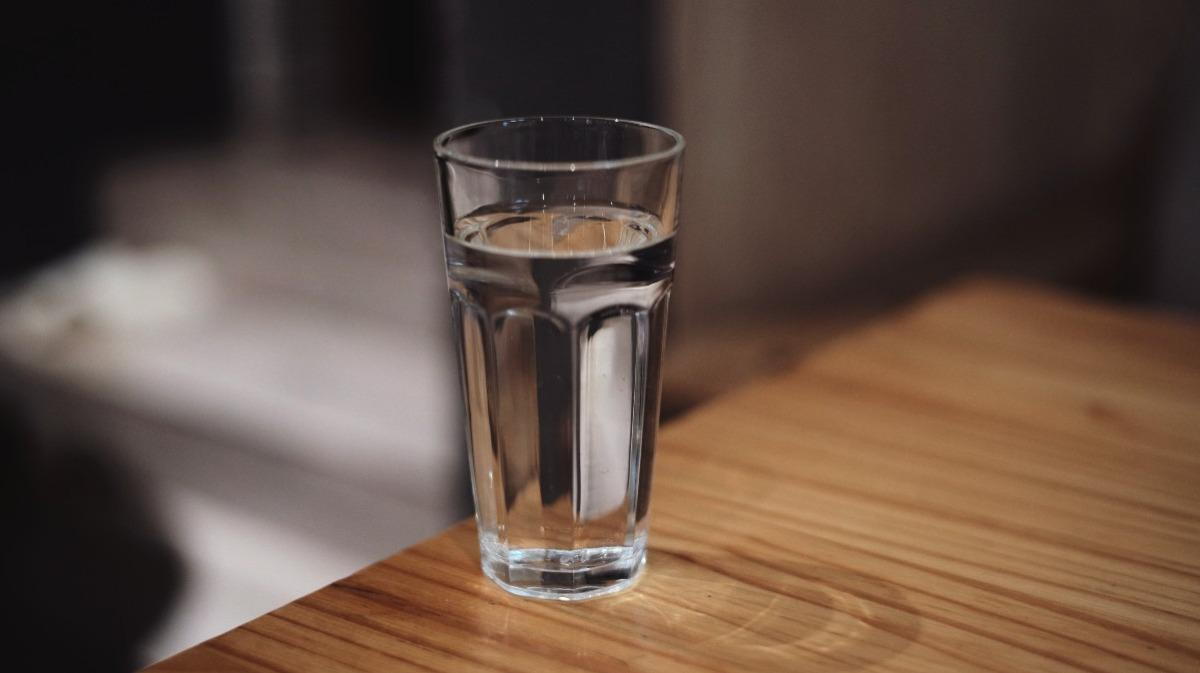
A glass of salt-water would be what kind of mixture?
A homogenous mixture!
300
Convert 108 L to mL.
108000 mL
1L = 1000mL
milli= x 103 or x 1000
300
How many sig-figs are in:
00.0564030
6!
400
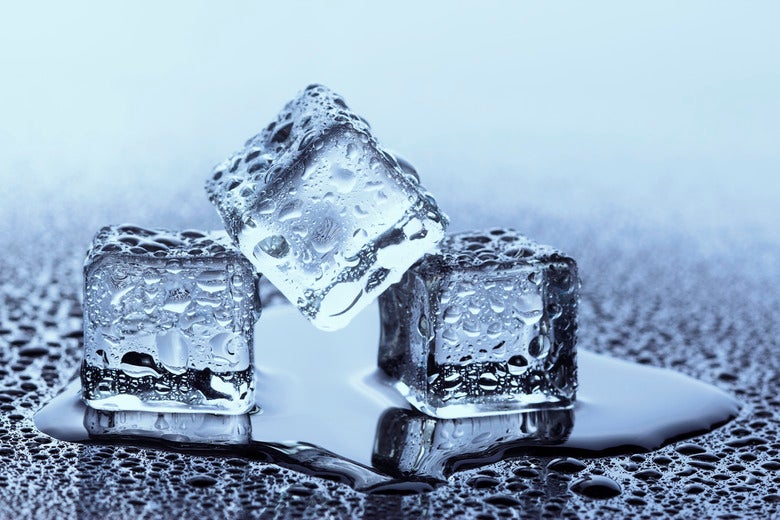
I left an ice cube out on the counter, and it started to melt soon after! This is an example of a ____ change.
Physical! The water is going from a solid state to a liquid state, nothing changes about the chemical identity :)
400
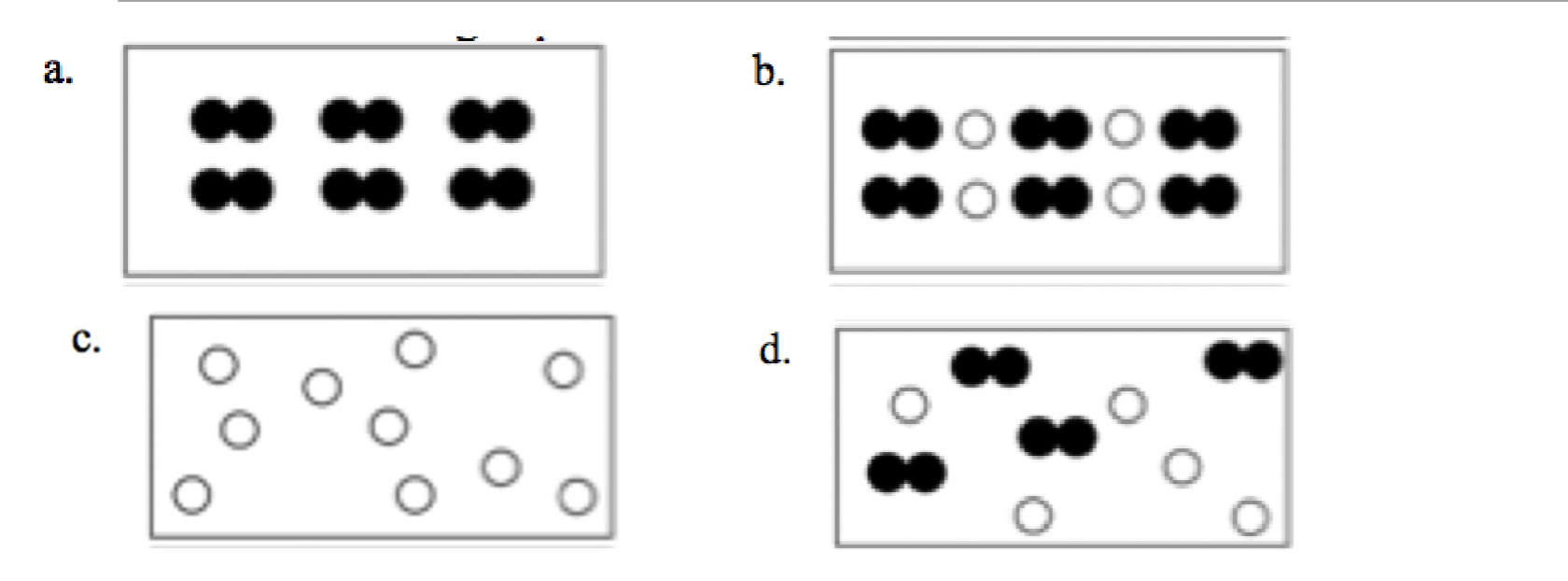
Which of the following depicts a heterogenous mixture?
A; B; C; or D
D is heterogenous!
A looks like an element, B looks like a compound, and C looks like a homogenous mixture.
400
In chronological order, what phase changes does water vapor undergo to become ice?
1st: Condensation from gas to liquid
2nd: Freezing from liquid to solid
400
Convert 165cm to km.
0.00165 km
1m = 100cm (or 1cm = 0.01m)
1km= 1000m (or 1m= 0.001km)
400
Which of these numbers has the greater number of sig-figs?
135.70 or 13570
135.70 has the most sig-figs!
Since the 0 comes after a decimal AND a non-zero digit, we consider it significant. We can read this number as an exact value, while the other value is rounded and not as precise.
500
What is the difference between Intensive and Extensive properties?
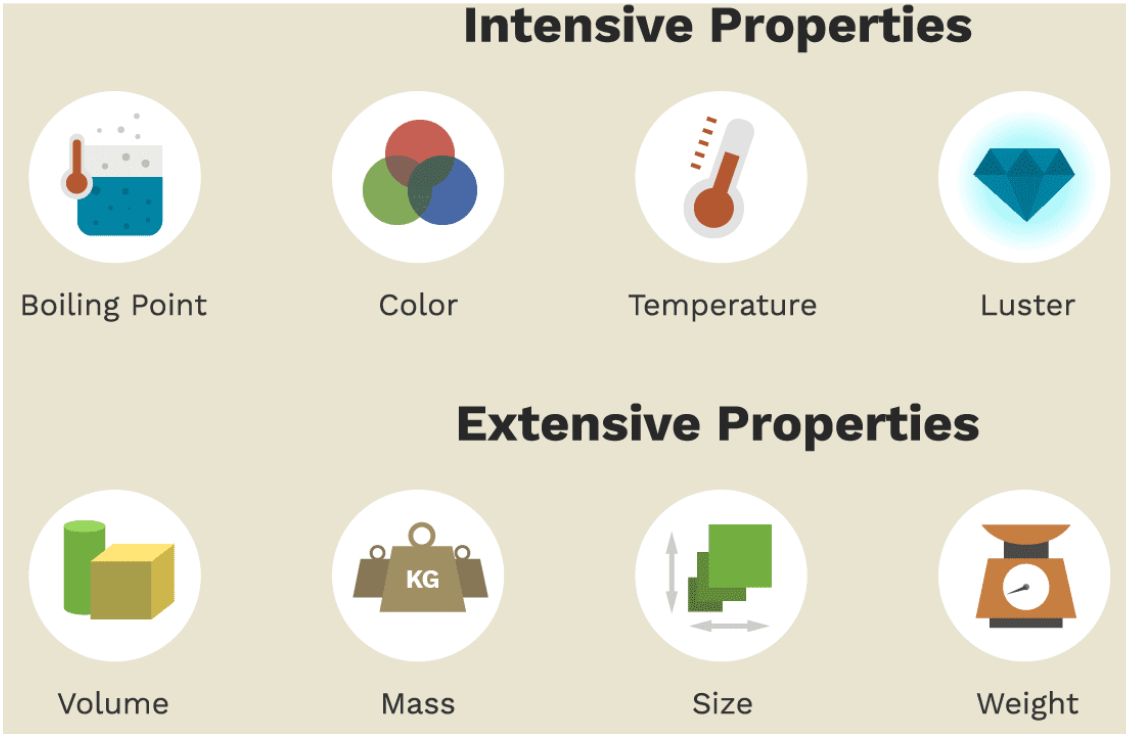
Intensive properties are independent of quantity while extensive properties are dependant upon quantity.
500
What phase change is an ice cube going through if it changes from a solid phase to a gas phase?
Sublimation!
Sublimation = solid -> gas
Deposition= gas -> solid
500
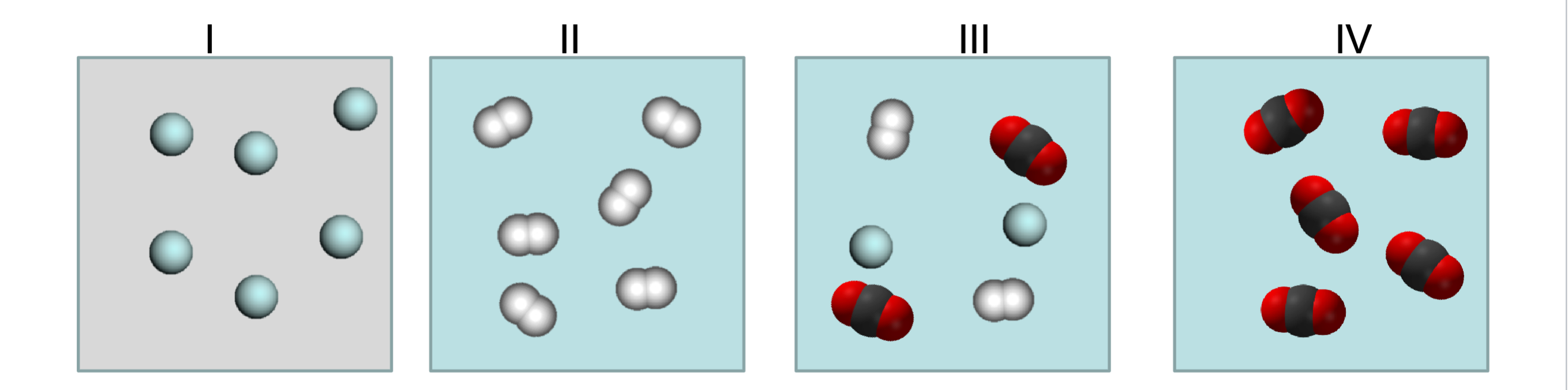
Which of these atomic and/or molecular views represents an element?
IV; I; I and II; or III
I and II
500
Convert 345nm to m. Report your answer in Scientific notation.
3.45 x 10⁻⁷m
1m = 109nm
1nm = 10-9m
(nm are suuuuper small!)
500
Report your answer in the correct units and number of sig figs .
2.31km/5.7km
0.41km
Multiplication & Division rules say that our answer's sig-figs are dictated by the number with the least number of sig-figs.
(Addition & subtraction rules = dictated by the number with the least amount of decimal places)