Periodic Trends & Families
Atomic Structure
Matter, Changes, KMT
Sig figs, Conversions, Gas Laws
Nuclear Chemistry
Electron Arrangement
100
A row on the periodic table
Period
100
The particle responsible for the identify of an element.
Proton
100
Type of matter made of only one type of atom or compound.
pure substance
100
The measurement for this amount with the correct number of sig figs.
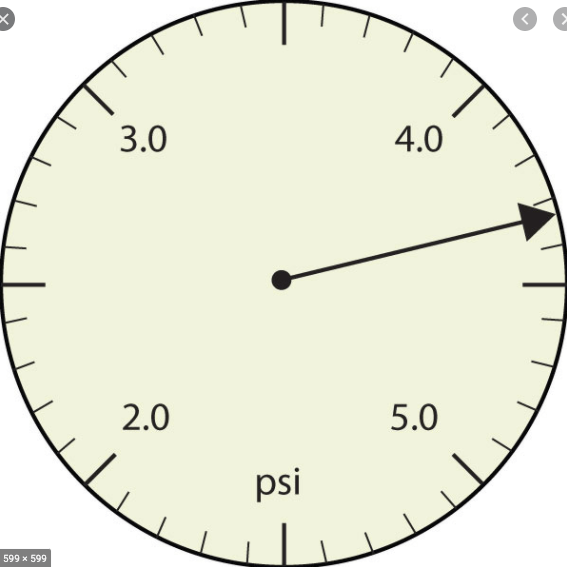
4.33 psi
100
Type of energy released in a nuclear reaction.
Gamma radiation
100
What is an orbital? How many electrons fit in one orbital?
A 3D area where electrons are likely to be found. 2 electrons can fit in one orbital (spinning in opposite directions).
200
Highly reactive nonmetals with 7 outer electrons
Halogens
200
Identify the element and give the overall charge for an element with 15 protons, 16 neutrons and 18 electrons.
Phosphorus, -3
200
Statement about all matter based on kinetic molecular theory.
All matter is made of particles in constant motion.
200
Use dimensional analysis to convert 130 inches to meters.
(1 yard = 0.9144 meter)
3.3 meters
200
The largest type of particle released during radioactive decay. (in nuclear symbol notation)
42He (alpha particle)
200
What would the be the principal and angular quantum numbers for an electron in a 4d orbital?
P = 4, A = 2
300
Reactive metals with two outer electrons that may be found in their pure form in nature.
Alkaline earth metals
300
Hyphen notation and nuclear symbol notation for the most common isotope of the element with 74 protons.
Tungsten - 184, 18474W
300
Relationship between temperature and kinetic energy.
They are directly proportional.
300
Number of atoms in 25.0 grams of calcium.
3.76 x 10²³ atoms
300
An isotope has a half life of 4.5 years. If you have 400. g of the sample, how much will be left after 13.5 years?
50.0 g
300
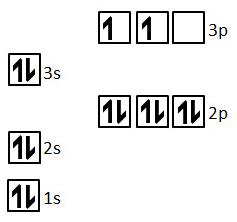
Draw the orbital diagram for Silicon (Si)
400
1)The trend across a period.
2) The trend down a group.
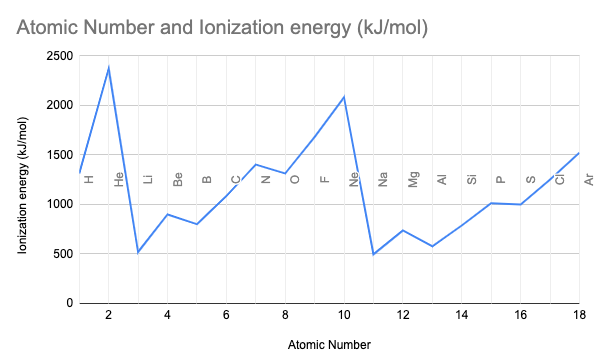
1) Increasing
2) Decreasing
400
What is the difference between an isotope and an ion?
Isotopes have different numbers of neutrons (different mass), while ions have different numbers of electrons (different charge)
400
Compare the movement of a hydrogen molecule and a water molecule at the same temperature.
The hydrogen molecule would be moving with a higher velocity than the water molecule.
400
A 30.0 L sample of nitrogen inside a rigid, metal container at 20.0 °C is placed inside an oven whose temperature is 50.0 °C. The pressure inside the container at 20.0 °C was at 3.00 atm. What is the pressure of the nitrogen after its temperature is increased to 50.0 °C?
3.31 atm
400
What is the process used for creating new elements larger than uranium?
Artificial Transmutation
400
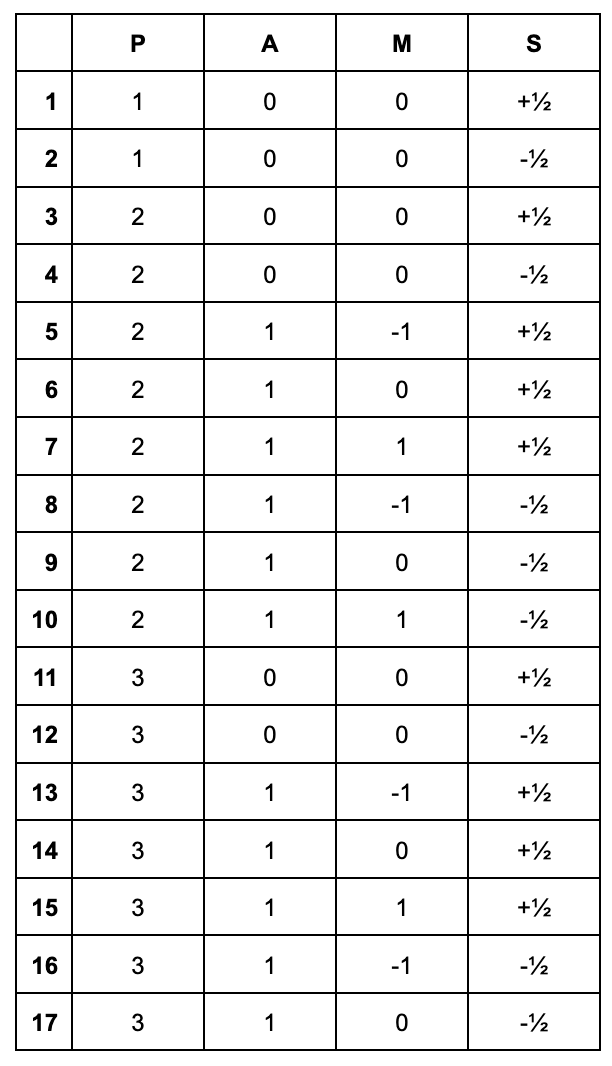
Write out the quantum numbers for all of the electrons in chlorine.
500
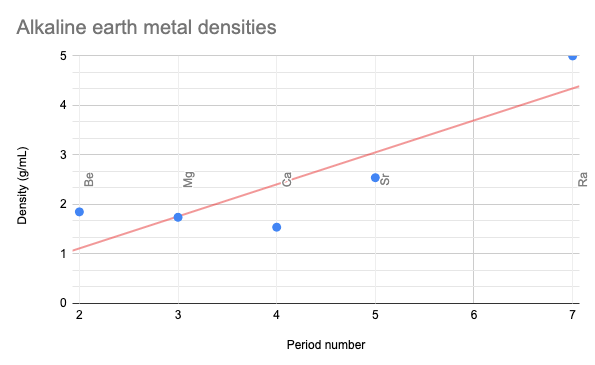 Identify the missing element and give the density based on the graph.
Barium, 3.6g/cm3
500
Draw how an atom becomes a cation. Draw how an atom becomes an anion.

500
Rocks can be used to store heat in solar-heated homes. If the specific heat of the rocks is 0.821 J/g-C, what temperature change would 50,000 g of rocks undergo if they emitted 450,000 J of heat?
10 degrees (1 SF)
500
At what temperature in Celsius, does a 48.5g sample of argon gas fill a container of 4.56L at 2.50 atm?
-159 degrees Celsius
500
Write an equation for the beta decay of thorium-232.
23290Th --> 0-1e + 23291Pa
500
Draw the orbital diagram, write the complete electron configuration, and write the noble gas configuration for plutonium (Pu)
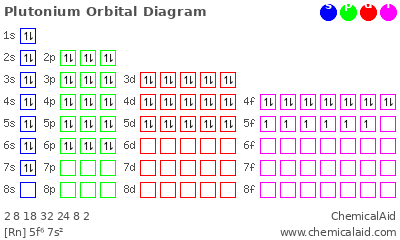
1s22s22p63s23p64s23d104p65s24d105p66s24f145d106p67s26d15f5
[Rn]7s26d15f5