Name That Bond
Terms and Vocab
T/F
Rules
Grab-bag
100
One or more pairs of shared electrons
Covalent
100
Mobile valence electrons in a metallic bond that are shared between all the atoms in the bond are called
delocalized electrons
100
During bonding, atoms want to bond with other atoms to attain a lower energy state to become more stable.
True
100
Name at least 2 examples of elements which do not obey the octet rule
1. transition metals
2. inner transition metals
3. the first few elements on the P.T.
100
Name 1 example of a "network covalent substance" that provide exceptions to the normal covalent compound properties.
Diamond or quartz
200
Molecule with Oxygen and Sulfur
Covalent (nonmetals)
200
The attraction between opposite charges is called a ______________ force.
electrostatic
200
The greater the difference in electronegativity between 2 atoms, the lesser the polarity of the resulting molecule after they bond
False
200
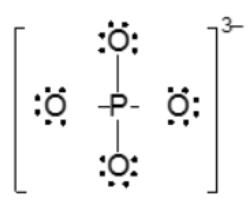
It has gained 3 electrons to help satisfy the octet rule for all the atoms
200
δ+
What does this mean?
Partial positive charge, used in electronegativity differences between atoms in a molecule.
300
Molecule with Oxygen and Sodium
Ionic - metal and nonmetal
300
____________ ions are made up of 2+ atoms and often act as single charged particles in chemical reactions.
Polyatomic
300
Metallic bonds are characterized by loose transfer of electrons between 2 atoms.
False - electron-sea theory
300
Name all correct properties for metals using the electron-sea theory:
a. luster
b. conductivity
c. brittleness
d. ductility
A, B, D
300
The measure of the ability of an atom to attract electrons in a bond is:
a. polarity
b. electronegativity
B. electronegativity
400
Hard, brittle crystals
high melting points
lusters
Covalent
400
Mixture of atoms of a metal bonding with another element
Alloys
400
A chemical's molecular shape determines its function, ability to help medicine, overall properties.
True
400
Every line or dash in a Lewis structure represents what
2 electrons
400
Name all options that are properties of ionic compounds:
a. solids have high melting points
b. solids are good heat conductors
c. solids easily split or cleaved
d. liquids are good electrical conductors
A, C, D
500
ΔEN (or the difference in electronegativity) present within this bond might easily be above 3.0
Ionic - very large electronegativity differences between atoms in a bond
500
Ratio of cations to anions in an ionic compound is expressed in a chemical formula called a __________ _____
Formula unit
500
The orderly arrangement of ions in a 3D pattern in a compound is called an ionic network.
False - crystal lattice
500
Some atoms can share up to how many pairs of electrons?
1 pair (single bond)
2 pairs (double bond)
3 pairs (triple bond)
500
Give the correct formula unit for a molecule involving Na and O?
Na2O