Matter
Molecules
Chemical Reactions
Acids, Bases, & pH
Challenge Questions
100
What do the red circles represent? 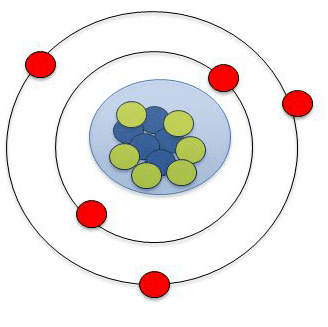
Electrons
100
When two atoms are connected, the connection is called a ______________.
Bond!
100
True or False: _______ All chemical reactions occur spontaneously.
False! Or else when we go to the beach we will be swimming in gases!
100
The pH of a solution is tested, and it is found to be a basic solution. Of the following choices, what could the pH have been?
A) 3
B) 9
C) 7
D) 5
B)
100
Which of the following is a base?
A) Orange Juice
B) Water
C) Vinegar
D) Dishwashing Detergent
D) Dishwashing Detergent
200
What is the atomic number of the atom that has 11 protons, 11 electrons and
12 neutrons?
Atomic #= 11
200
Which one is the correct formation of the water molecule? 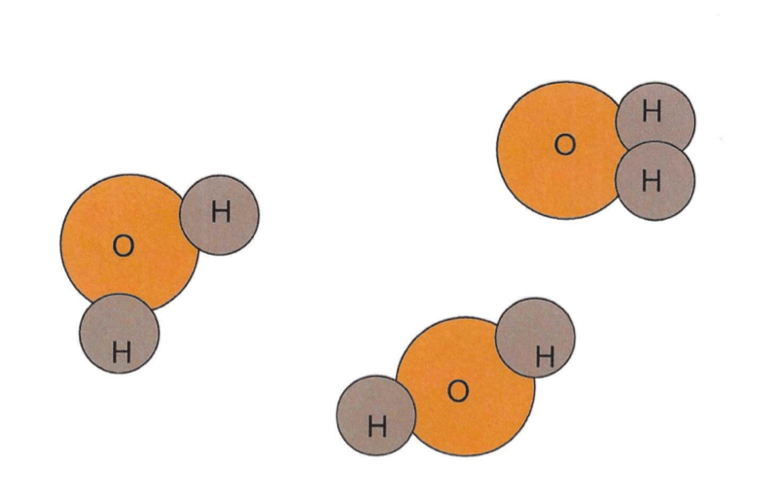
The bent one! The one on the left!
200
What does Spontaneous mean?
It means to occur by itself!
200
True or False: If red litmus paper turns blue, the solution is acidic.
False: Blue litmus paper would turn red, if the solution is acidic.
Red litmus paper would turn blue, if the solution is basic.
200
True or False: Most of the weight of the atom is in protons and the neutrons.
True!
300
The letter C is carbon’s represents _________. 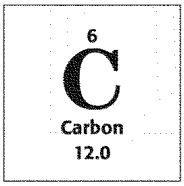
Atomic Symbol
300
How many bonds does oxygen typically form? _____________ Why? ________________________________________________________
Oxygen only forms 2 bonds because it already has 6 electrons in its outer shell!
300
What kind of reaction is this?
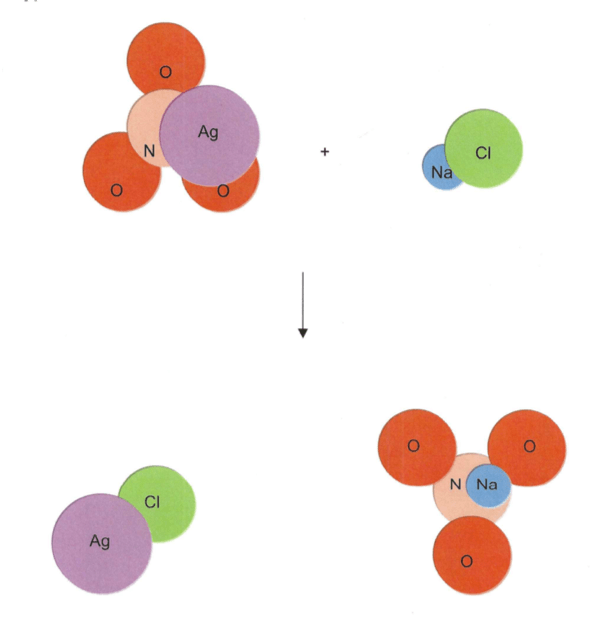
Exchange Reaction
300
What are the 3 Ways to Measure pH?
pH paper (also called litmus paper)
pH meter
acid-base indicator
300
Holly has an unknown substance in a beaker. She wants to determine the relative pH of the unknown substance. She places a piece of blue litmus paper into the substance, and the litmus paper stays blue.
The substance in the beaker is _______________.
A base
400
Where are electrons likely to be found?
Electron Cloud (Electron Space)
400
When two different atoms bond and do not share electrons, they have formed a(n) __________________ bond.
Ionic Bond
400
Has a reaction happen in the picture below? How do you know? 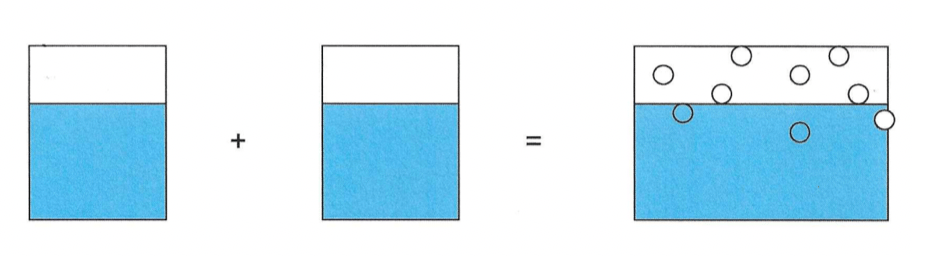
Yes because there are bubbles coming out of the solution!
400
In an acidic solution, blue litmus paper turns what color?
Red!
400
Answer the following picture. Is the following bond a covalent or ionic bond? Why?
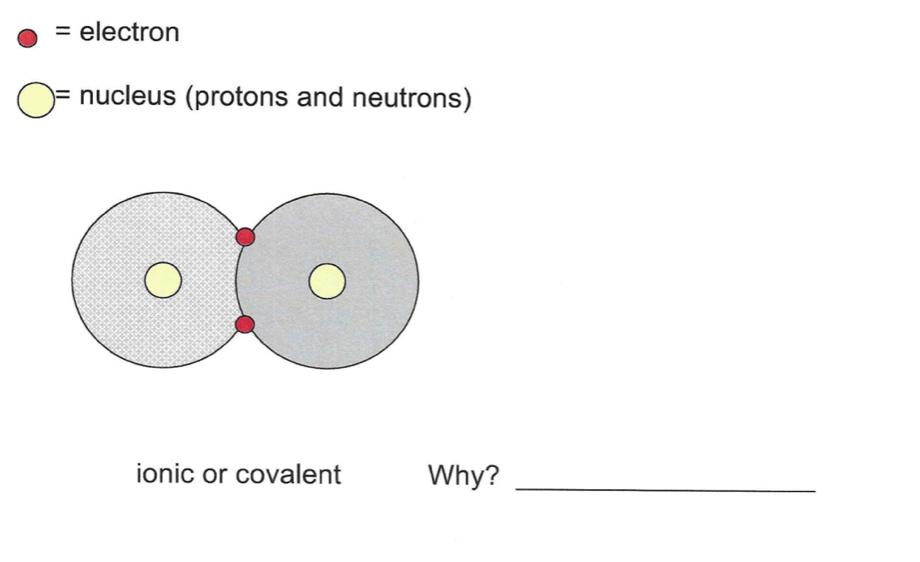
It is a covalent bond because the electrons are being shared between the two atoms.
500
Label the following picture. 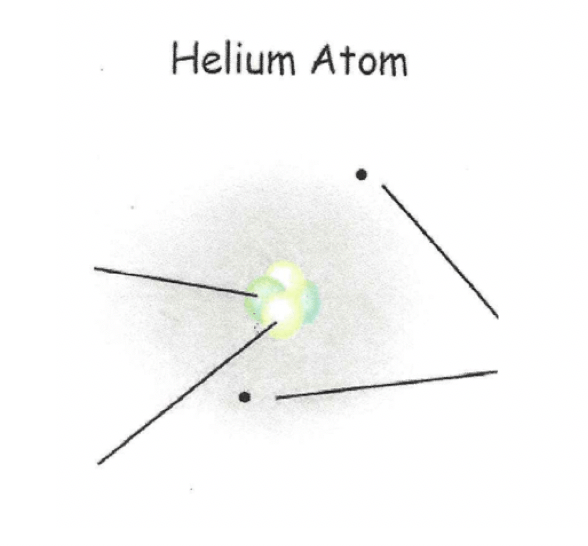
Black Circles= Electrons
Green Circles= Either Protons or Neutrons
Yellow Circles=Either Protons or Neutrons
500
What type of bond is shown on the picture below? Why? 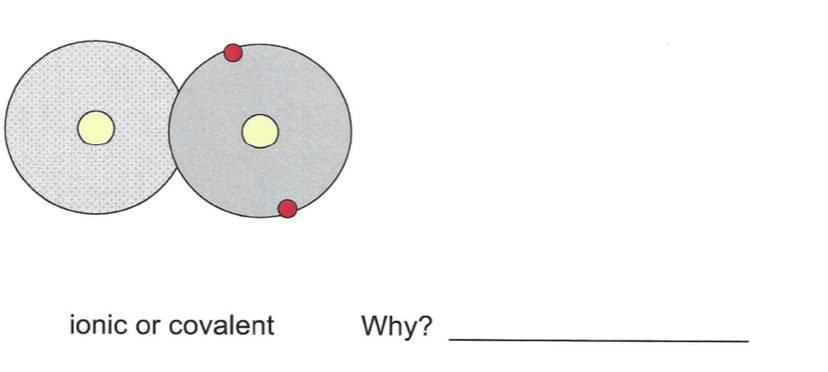
Ionic because the electrons are not being shared!
500
What kind of reaction is this? 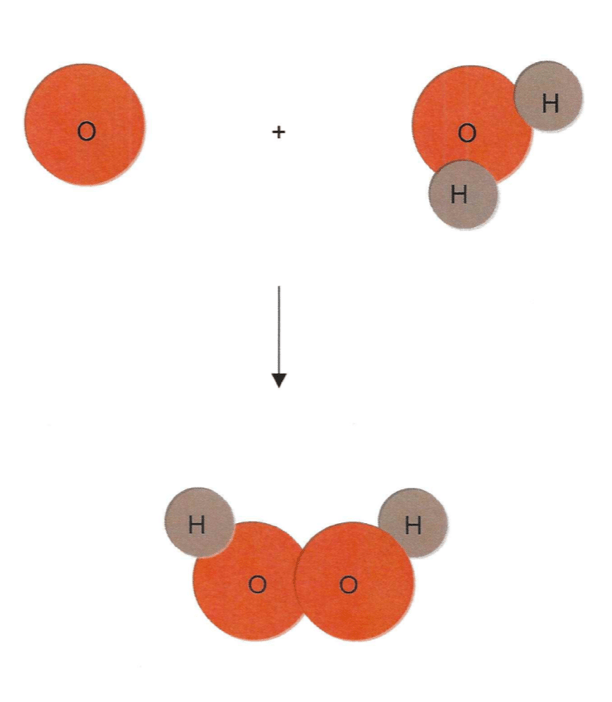
Combination Reaction!
500
Which of the following is an acid?
A) shampoo
B) baking soda
C) orange juice
D) water
C) Orange Juice
500
Carrie's teacher hands out test tubes filled with different chemicals and tells the students to identify their liquid as an acid, base, or neutral chemical. Carrie's test tube contains a clear chemical. She adds phenolphthalein to her test tube and gently moves the tube from side to side. A few moments later, the chemical in the test tube turns bright pink.
What type of solution does Carrie have?
The solution is basic!